| Gastroenterology Research, ISSN 1918-2805 print, 1918-2813 online, Open Access |
| Article copyright, the authors; Journal compilation copyright, Gastroenterol Res and Elmer Press Inc |
| Journal website https://gr.elmerpub.com |
Short Communication
Volume 19, Number 6, December 2026, pages 341-346

Emergency Department Presentation Prior to Diagnosis of Gastroesophageal Cancer: Clinical Characteristics, Diagnostic Timelines, and Survival Outcomes
Hiroko Aoyamaa, c  , Katherine Lajkoszb, Yvonne Bacha, Sokaina Akhtara, Prietha Thavakumarana, Simer Kaur Sainia, Alana St Bernarda, Raymond Janga, Eric Chena, Elena Elimovaa
aDivision of Medical Oncology and Hematology, Princess Margaret Cancer Centre, University Health Network, University of Toronto, Toronto, Canada
bDepartment of Biostatistics, University Health Network, University of Toronto, Toronto, Canada
cCorresponding Author: Hiroko Aoyama, Division of Medical Oncology and Hematology, Princess Margaret Cancer Centre, University Health Network, University of Toronto, Toronto, Canada
Manuscript submitted September 4, 2026, accepted November 19, 2026, published online November 27, 2026
Short title: Emergency Presentation and Cancer Diagnosis
doi: https://doi.org/10.14740/gr2191
| Abstract | ▴Top |
Background: Emergency department (ED) presentation may represent an important pathway to the diagnosis of gastroesophageal cancer, yet the characteristics of these presentations and their association with outcomes remain poorly described.
Methods: We conducted a retrospective cohort study of patients presenting to the University Health Network (UHN) EDs in Toronto, Canada, between June 1, 2020, and May 1, 2025, who were subsequently diagnosed with gastric or esophageal cancer following ED-initiated investigations. Data were extracted from an institutional clinical database. Demographic and clinical variables included age, sex, Eastern Cooperative Oncology Group (ECOG) performance status, Charlson Comorbidity Index (CCI), stage, treatment receipt, and Gustave Roussy Immune Score (GRIm-Score). Presenting symptoms were abstracted from triage documentation. Overall survival (OS) was estimated using Kaplan–Meier methods.
Results: Of 1,150 patients with gastroesophageal cancer seen at UHN during the study period, 107 patients (9.3%) were included (median age 73 years; 78% male). Most had ECOG 0–1 (69%), and median CCI was 4. Gastric cancer accounted for 57% of cases, and 54% presented with metastatic disease. Abdominal pain was the most common presenting symptom in gastric cancer (43%), while dysphagia predominated in esophageal cancer (43%). Sixteen patients (15%) presented with upper gastrointestinal bleeding symptoms. Median time from ED presentation to diagnosis was 4 days (interquartile range (IQR) 2–10). Among the 85 patients (79%) who received cancer-directed therapy, the median time from ED presentation to treatment initiation was 44 days (IQR 22–64). Median follow-up was 7.3 months (IQR 3.2–16.9), and median OS was 10.6 months (95% confidence interval (CI) 6.5–19.0). Estimated 2-year OS was numerically lower among patients with bleeding-related presentations than among those without (21% vs. 35%), although estimates were imprecise due to the small subgroup size. Survival appeared numerically lower among bleeding presentations with anemia, although estimates were imprecise due to small numbers.
Conclusions: ED presentation provides an important clinical context for the diagnosis of gastroesophageal cancer. This cohort was characterized by a high prevalence of advanced-stage disease and limited OS. Further investigation is warranted to better understand presenting symptom patterns and early clinical markers that may help identify patients with adverse oncologic outcomes.
Keywords: Gastroesophageal cancer; Emergency department; Emergency presentation; Diagnostic timeline; Upper gastrointestinal bleeding; Overall survival
| Introduction | ▴Top |
Gastroesophageal cancers remain the leading cause of cancer-related mortality worldwide, with poor prognosis largely attributable to advanced-stage presentation [1]. Emergency presentation represents an important diagnostic pathway in gastroesophageal malignancy and may identify patients with substantial clinical needs. Understanding the clinical characteristics and outcomes of patients diagnosed following emergency department (ED) evaluation is important for identifying potential gaps in the diagnostic pathway. Population-based data from Ontario, Canada, suggest that more than one-third of patients with cancer visit the ED within 90 days preceding diagnosis [2].
Because many tertiary cancer centers do not provide comprehensive emergency services, patients with undifferentiated symptoms are frequently evaluated in general EDs prior to formal oncologic assessment. However, the presenting characteristics and outcomes of patients diagnosed with gastroesophageal cancer following ED evaluation remain incompletely described. We anticipated that this population would have substantial symptom burden and potentially prolonged diagnostic intervals, reflecting the challenges of recognizing and investigating gastroesophageal malignancies in the acute care setting. We therefore conducted a descriptive cohort study of patients presenting to the ED who were subsequently diagnosed with gastric or esophageal cancer.
| Materials and Methods | ▴Top |
We identified patients with gastric or esophageal cancer who were seen at University Health Network (UHN), a comprehensive teaching hospital network in Toronto, Canada, between June 1, 2020, and May 1, 2025. ED-initiated diagnosis was defined as identification of gastric or esophageal cancer based on investigations initiated during a UHN ED encounter, including computed tomography or esophagogastroduodenoscopy. Data were extracted from an institutional clinical database [3–5]. The study was approved by the University Health Network Research Ethics Board (Approval No. 23-5888), which waived the requirement for informed consent due to the retrospective nature of the study. This study was conducted in compliance with the ethical standards of the responsible institution on human subjects as well as with the Helsinki Declaration.
Demographic and clinical variables included age, sex, Eastern Cooperative Oncology Group (ECOG) performance status, Charlson Comorbidity Index (CCI), disease stage, treatment receipt, and Gustave Roussy Immune Score (GRIm-Score). Presenting symptoms were extracted from triage nurse documentation using the recorded chief complaint, with one primary symptom assigned per patient. Anemia at ED presentation was defined using sex-specific hemoglobin thresholds: hemoglobin < 130 g/L in males and < 120 g/L in non-pregnant females.
Continuous variables are presented as mean (± standard deviation) or median (interquartile range (IQR)), and categorical variables as frequency (%). Overall survival (OS) was defined from ED presentation to death from any cause or last follow-up and estimated using the Kaplan–Meier method. Among patients who received treatment, the median time from ED presentation to treatment initiation was calculated descriptively. In the overall cohort of 107 patients, time to treatment initiation was analyzed using the cumulative incidence function, treating death before treatment initiation as a competing event. Log-rank tests and Gray’s tests were used to compare OS and the cumulative incidence of treatment initiation, respectively, between patients with bleeding-related and non-bleeding-related presentations. All tests were two-sided, and P < 0.05 was considered statistically significant. This report follows the Strengthening the Reporting of Observational Studies in Epidemiology (STROBE) guideline [6].
| Results | ▴Top |
Among 1,150 patients with gastroesophageal cancer seen at UHN during the study period, 107 (9.3%) met the definition of ED-initiated diagnosis, defined as a new diagnosis of gastric or esophageal cancer based on investigations initiated during an ED encounter, including computed tomography or esophagogastroduodenoscopy. The patient selection process is illustrated in Figure 1. Baseline demographic and clinical characteristics of the study cohort are summarized in Table 1. Median age was 73 years, and 78% were male. Most patients had good baseline functional status, with 69% having an ECOG performance status of 0–1. The median CCI was 4. Sixty-five patients (61%) had a GRIm-Score of 1–3, suggesting a high prevalence of immune-nutritional vulnerability within the cohort. Gastric cancer accounted for 57% of cases, while 54% of patients had metastatic disease at diagnosis.
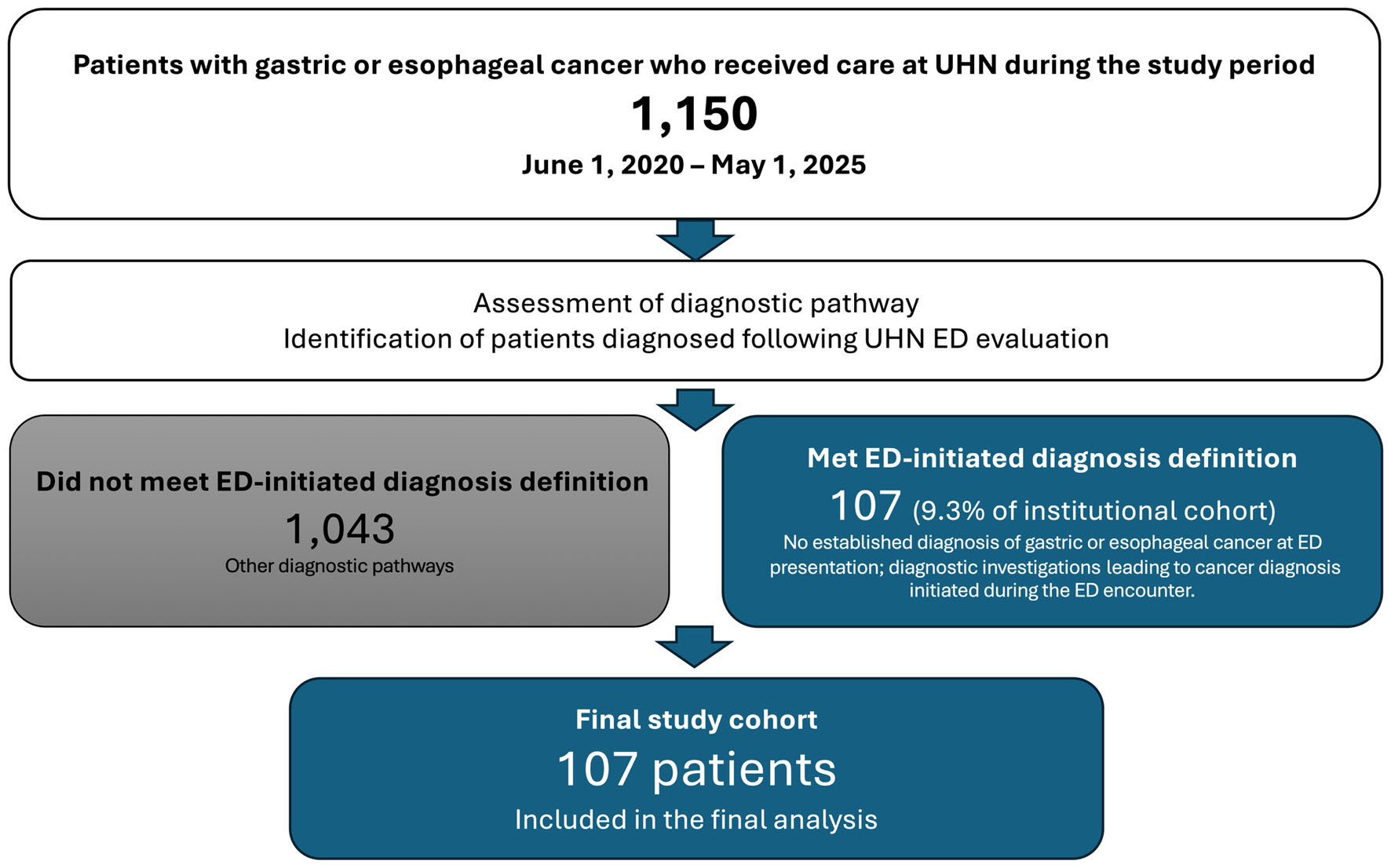 Click for large image | Figure 1. Patient selection flow diagram. A total of 1,150 patients with gastric or esophageal cancer received care at University Health Network (UHN) between June 1, 2020, and May 1, 2025. Of these, 107 patients (9.3%) met the definition of emergency department (ED)-initiated diagnosis, defined as a new diagnosis of gastric or esophageal cancer based on diagnostic investigations initiated during a UHN ED encounter. These 107 patients constituted the final study cohort. The remaining 1,043 patients did not meet the definition of ED-initiated diagnosis. |
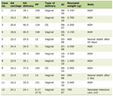 Click to view | Table 1. Baseline Characteristics, Clinical Features, and Presenting Symptoms of Patients With Gastroesophageal Cancer Diagnosed Following Emergency Department Presentation |
Presenting symptom patterns differed according to tumor location. Among patients with gastric cancer, abdominal pain was the most common presenting symptom (43%), while dysphagia was the most common presenting symptom among patients with esophageal cancer (43%). Sixteen patients (15%) presented with upper gastrointestinal bleeding symptoms, including melena or hematemesis.
Median time from ED presentation to diagnosis was 4 days (IQR 2–10) (Fig. 2). Among the 85 patients (79%) who received cancer-directed therapy, the median time from ED presentation to treatment initiation was 44 days (IQR 22–64). Of the 22 patients who did not receive treatment, 17 died before treatment initiation and 5 were censored.
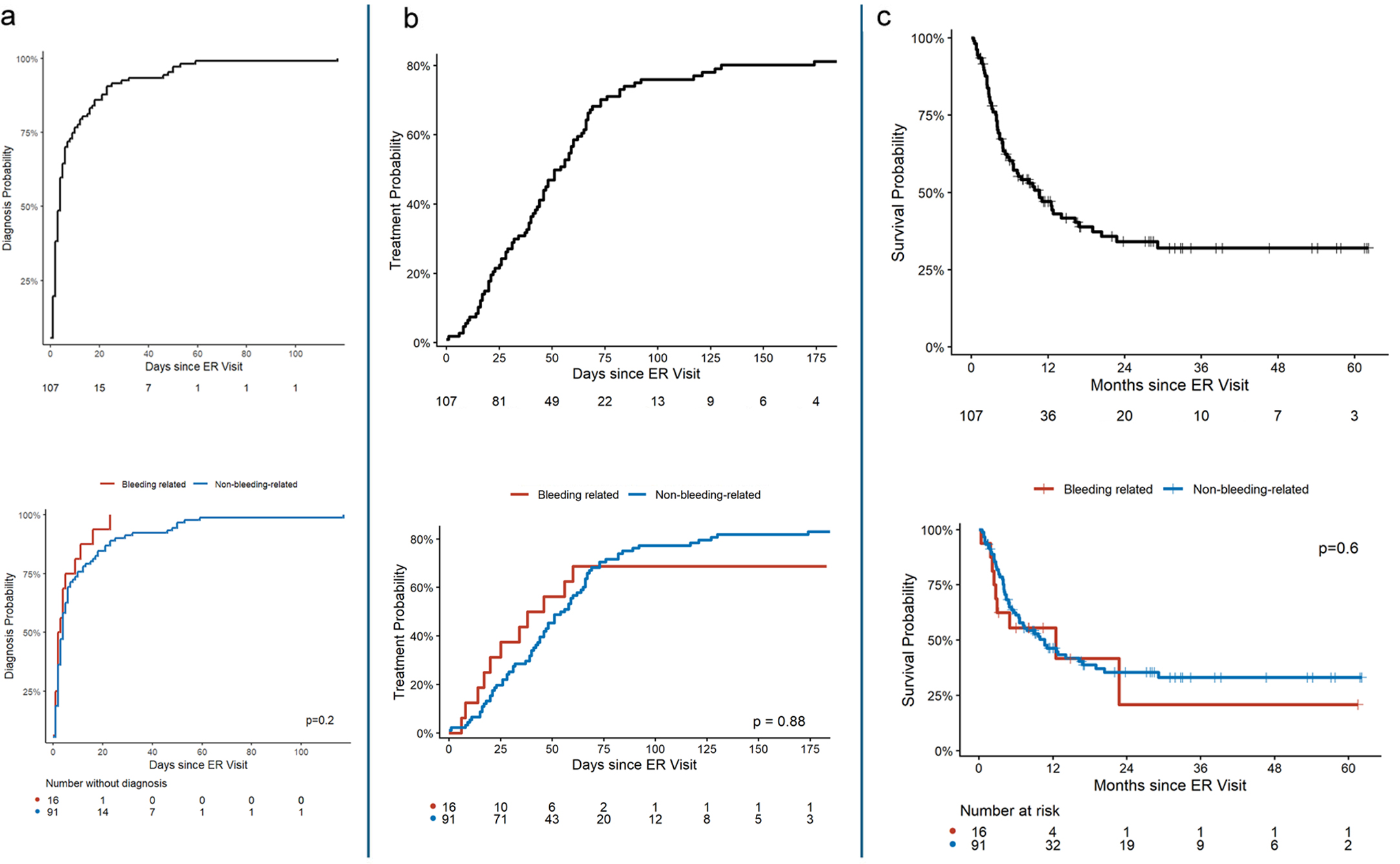 Click for large image | Figure 2. Time-to-event analyses following emergency department (ED) presentation in patients with gastroesophageal cancer. Time-to-event analyses following ED presentation are shown for the overall cohort and stratified by the presence of bleeding-related symptoms at presentation. (a) Time to cancer diagnosis, estimated using the Kaplan–Meier method. (b) Cumulative incidence of treatment initiation estimated using the cumulative incidence function, with death before treatment initiation treated as a competing event. (c) Overall survival, estimated using the Kaplan–Meier method. Survival and time-to-event outcomes were calculated from the date of ED presentation. Bleeding-related symptoms included presentation with melena or hematemesis. Curves were estimated using the Kaplan–Meier method. ER: emergency room. |
In the overall cohort of 107 patients, the cumulative incidence of treatment initiation was estimated using a competing-risk approach, with death before treatment initiation treated as a competing event. The cumulative incidence of treatment initiation was 8% (95% confidence interval (CI), 4–15%) at 14 days, 27% (95% CI, 19–36%) at 30 days, 41% (95% CI, 32–50%) at 45 days, 59% (95% CI, 48–67%) at 60 days, and 75% (95% CI, 65–82%) at 90 days. When stratified by presentation category, the cumulative incidence of treatment initiation was 19% (95% CI, 4–41%), 38% (95% CI, 15–61%), 50% (95% CI, 23–72%), 69% (95% CI, 38–87%), and 69% (95% CI, 38–87%) at 14, 30, 45, 60, and 90 days, respectively, among patients with bleeding-related presentations. Corresponding estimates among patients with non-bleeding-related presentations were 7% (95% CI, 3–13%), 25% (95% CI, 17–35%), 40% (95% CI, 30–50%), 57% (95% CI, 46–66%), and 76% (95% CI, 66–84%). There was no statistically significant difference in the cumulative incidence of treatment initiation between the two groups (Gray’s test, P = 0.88).
During a median follow-up of 7.3 months (IQR 3.2–16.9), median OS for the entire cohort was 10.6 months (95% CI, 6.5–19.0). A total of 63 patients died during follow-up, while 44 patients were censored at the end of follow-up. Deaths occurred in 9 of 16 patients with bleeding-related presentations and 54 of 91 patients with non-bleeding-related presentations. Estimated 2-year OS was 21% (95% CI, 4–99%) among patients presenting with bleeding-related symptoms and 35% (95% CI, 26–48%) among those without bleeding-related symptoms. The corresponding numbers at risk at 24 months were 1 and 19, respectively. Kaplan–Meier curves crossed over time, suggesting potential non-proportional hazards. Survival estimates in the bleeding-related subgroup were imprecise due to the small sample size and limited number of patients remaining at risk during extended follow-up.
Among patients presenting with bleeding-related symptoms, survival appeared numerically lower among patients with anemia at presentation, although CIs were wide because of the small subgroup size.
| Discussion | ▴Top |
In this cohort of patients diagnosed with gastroesophageal cancer following ED presentation, over half had metastatic disease at diagnosis, and OS was limited. These findings provide further insight into the clinical characteristics and outcomes of patients diagnosed with gastroesophageal cancer through emergency care pathways. A recent population-based study from Ontario reported higher mortality among patients with cancer who had an ED visit in the 90 days preceding diagnosis compared with matched patients without a pre-diagnostic ED visit [7]. While our study does not include an outpatient comparison group and therefore cannot directly assess this association, our findings provide a more detailed characterization of the clinical presentation and diagnostic pathway among patients with gastroesophageal cancer diagnosed following ED evaluation.
The short interval from ED presentation to diagnosis indicates that diagnostic investigations were completed within a relatively short timeframe following ED presentation in this cohort. However, the high prevalence of advanced disease highlights the broader challenge of earlier symptom recognition and pre-diagnostic evaluation in gastroesophageal malignancy.
Presenting symptom patterns differed according to tumor location, with dysphagia predominating in esophageal cancer and pain in gastric cancer. Patients presenting with upper gastrointestinal bleeding had numerically lower estimated long-term survival, although these findings were highly imprecise given the small subgroup size. We additionally observed numerically lower survival among bleeding-related presentations accompanied by anemia, although these findings should be interpreted cautiously given the limited sample size.
Previous studies have associated anemia at diagnosis with adverse outcomes in gastroesophageal cancer [8–10]. However, few studies have examined hemoglobin measured at the time of pre-diagnostic ED presentation. These findings are hypothesis-generating and support further investigation of presenting symptom phenotypes and hematologic parameters identified during ED evaluation as potential early markers of adverse oncologic outcomes.
Strengths of this study include detailed characterization of the ED-to-diagnosis pathway and use of contemporaneous triage documentation to minimize retrospective reporting bias. Limitations include the retrospective single-center design, modest cohort size, and inability to assess potential prior ED use outside our institution. Furthermore, the absence of an outpatient comparison group precludes direct comparisons of disease stage, diagnostic intervals, or survival between ED and outpatient diagnostic pathways. Consequently, our findings should be interpreted as descriptive observations of this specific ED cohort rather than evidence of an independent effect of ED presentation on disease stage or survival. This limitation will be addressed in future work using population-based Institute for Clinical Evaluative Sciences (ICES) data.
Conclusion
ED presentation is an important clinical context in which gastroesophageal cancer may be diagnosed, with many patients presenting with advanced-stage disease and poor survival outcomes. This study provides a detailed characterization of the clinical features and diagnostic pathways of patients diagnosed following ED evaluation. Further investigation is warranted to better understand presenting symptom patterns and early clinical markers that may help identify patients with adverse oncologic outcomes.
Acknowledgments
None to declare.
Financial Disclosure
None to declare.
Conflict of Interest
None to declare.
Informed Consent
The requirement for informed consent was waived by the University Health Network Research Ethics Board due to the retrospective nature of the study.
Author Contributions
Hiroko Aoyama: conceptualization; data curation; formal analysis; investigation; methodology; project administration; resources; validation; visualization; writing – original draft; writing – review and editing. Katherine Lajkosz: formal analysis; methodology. Yvonne Bach, Sokaina Akhtar, Prietha Thavakumaran, Simer Kaur Saini, and Alana St Bernard: data curation. Raymond Jang, Eric Chen, and Elena Elimova: writing – review and editing.
Data Availability
The data supporting the findings of this study are available from the corresponding author upon reasonable request.
Abbreviations
CCI: Charlson Comorbidity Index; CI: confidence interval; ECOG: Eastern Cooperative Oncology Group; ED: emergency department; GRIm-Score: Gustave Roussy Immune Score; ICES: formerly known as the Institute for Clinical Evaluative Sciences; IQR: interquartile range; OS: overall survival; STROBE: Strengthening the Reporting of Observational Studies in Epidemiology; UHN: University Health Network
| References | ▴Top |
- Sung H, Ferlay J, Siegel RL, Laversanne M, Soerjomataram I, Jemal A, Bray F. Global cancer statistics 2020: GLOBOCAN estimates of incidence and mortality worldwide for 36 cancers in 185 countries. CA Cancer J Clin. 2021;71(3):209-249.
doi pubmed - Grewal K, Calzavara A, McLeod SL, Eskander A, Savage DW, Thompson C, Borgundvaag B, et al. Emergency department use before cancer diagnosis in Ontario, Canada: a population-based study. CMAJ. 2024;196(37):E1252-E1261.
doi pubmed - Bach Y, Sharma D, Aoyama H, Ma LX, Barron CC, Wang X, Akhtar S, et al. Ramucirumab and paclitaxel in second or greater lines of therapy in patients with HER2-positive gastroesophageal cancer: a single center study. Oncologist. 2025;30(3).
doi pubmed - Baccili Cury Megid T, Sharma D, Baskurt Z, Xiaolu Ma L, Wang X, Barron CC, Jang RW, et al. Integrating patient-reported outcomes into prognostication in gastroesophageal cancer: results of a population-based retrospective cohort analysis. Oncologist. 2024;29(4):316-323.
doi pubmed - Ma LX, Espin-Garcia O, Bach Y, Aoyama H, Allen MJ, Wang X, Darling GE, et al. Comparison of four clinical prognostic scores in patients with advanced gastric and esophageal cancer. Oncologist. 2023;28(3):214-219.
doi pubmed - von Elm E, Altman DG, Egger M, Pocock SJ, Gotzsche PC, Vandenbroucke JP, Initiative S. The strengthening the reporting of observational studies in epidemiology (STROBE) statement: guidelines for reporting observational studies. Lancet. 2007;370(9596):1453-1457.
doi pubmed - Grewal K, Calzavara A, McLeod SL, Eskander A, Savage DW, Thompson C, Borgundvaag B, et al. Emergency department use prior to cancer diagnosis and mortality. JAMA Netw Open. 2025;8(7):e2522585.
doi pubmed - Jokela EMK, Kauppila JH, FINEGO group. Preoperative hemoglobin count and prognosis of esophageal cancer, a population-based nationwide study in Finland. Eur J Surg Oncol. 2022;48(3):548-552.
doi pubmed - Zhang F, Cheng F, Cao L, Wang S, Zhou W, Ma W. A retrospective study: the prevalence and prognostic value of anemia in patients undergoing radiotherapy for esophageal squamous cell carcinoma. World J Surg Oncol. 2014;12:244.
doi pubmed - Huang XZ, Yang YC, Chen Y, Wu CC, Lin RF, Wang ZN, Zhang X. Preoperative anemia or low hemoglobin predicts poor prognosis in gastric cancer patients: a meta-analysis. Dis Markers. 2019;2019:7606128.
doi pubmed
This article is distributed under the terms of the Creative Commons Attribution 4.0 International License (CC BY 4.0), which permits unrestricted use, distribution, and reproduction in any medium, including commercial use, provided the original work is properly cited.
Gastroenterology Research is published by Elmer Press Inc.