Gastroenterology Research, ISSN 1918-2805 print, 1918-2813 online, Open Access
Article copyright, the authors; Journal compilation copyright, Gastroenterol Res and Elmer Press Inc
Journal website https://gr.elmerpub.com

Original Article

Volume 18, Number 4, August 2025, pages 192-201


Endoscopic Biliary Drainage in Malignant Biliary Strictures: A Prospective Analysis Based on Real-World Data

Figures

Figure 1.
Figure 1. Multivariate Cox regression model for predicting variables associated with stent dysfunction in patients with malignant biliary stricture. Variables with statistical significance in the univariate model (represented in red) were applied in the multivariate model, which are represented in blue. For patients with malignant stenosis, the height of the distal stenosis is designated as the reference point. This distinction is vital for understanding the analyses and interpretations presented in the study, as it underscores the importance of comparing results across different statistical models. Such clarity enhances the reader’s ability to interpret the findings meaningfully and informs subsequent discussions on the implications of the data.
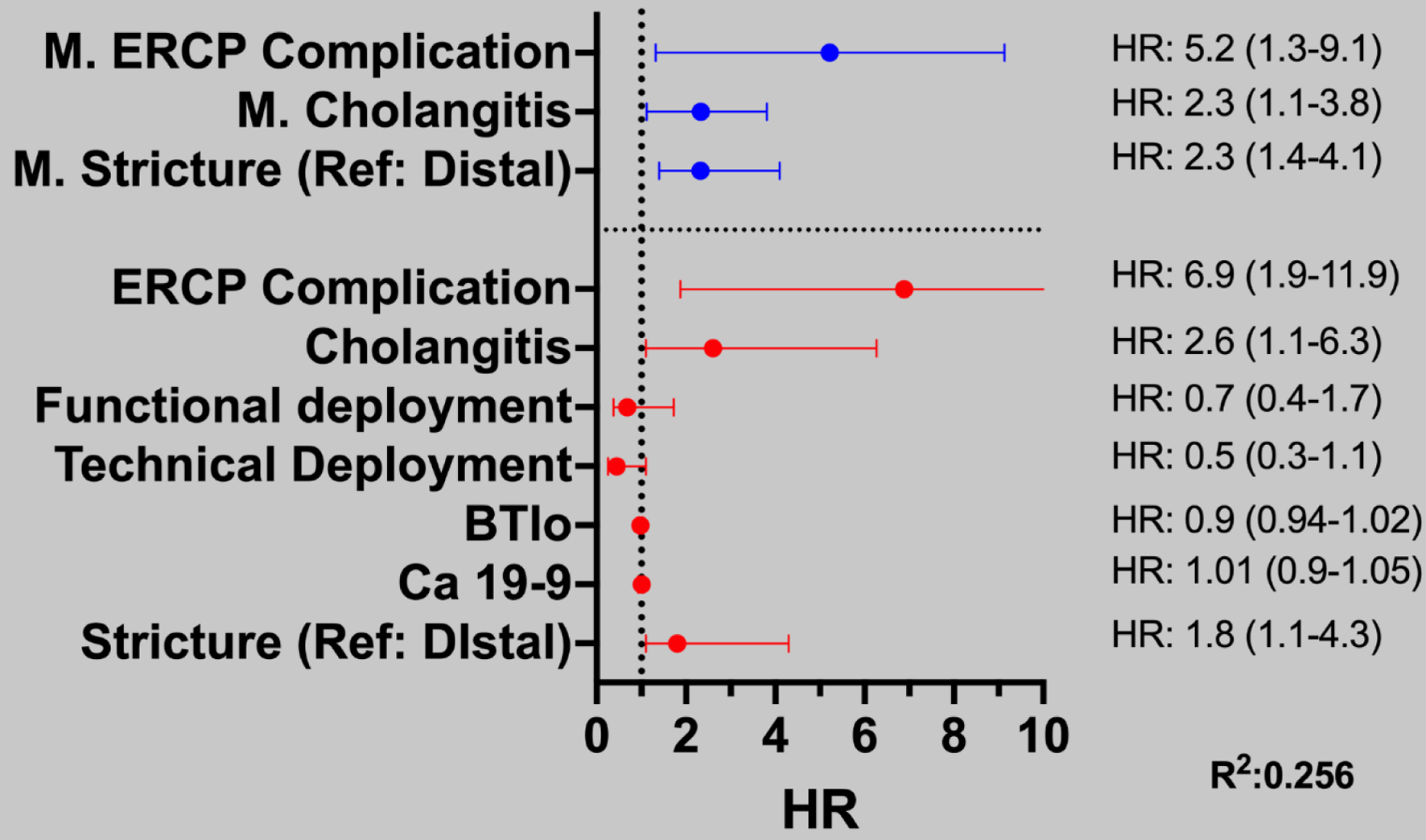
Figure 2.
Figure 2. Multivariate Cox regression model for predicting variables associated with mortality in patients with malignant biliary stricture. Variables with statistical significance in the univariate model (represented in red) were applied in the multivariate model, which are represented in blue. For patients with malignant stenosis, the height of the distal stenosis is designated as the reference point. This distinction is vital for understanding the analyses and interpretations presented in the study, as it underscores the importance of comparing results across different statistical models. Such clarity enhances the reader’s ability to interpret the findings meaningfully and informs subsequent discussions on the implications of the data.
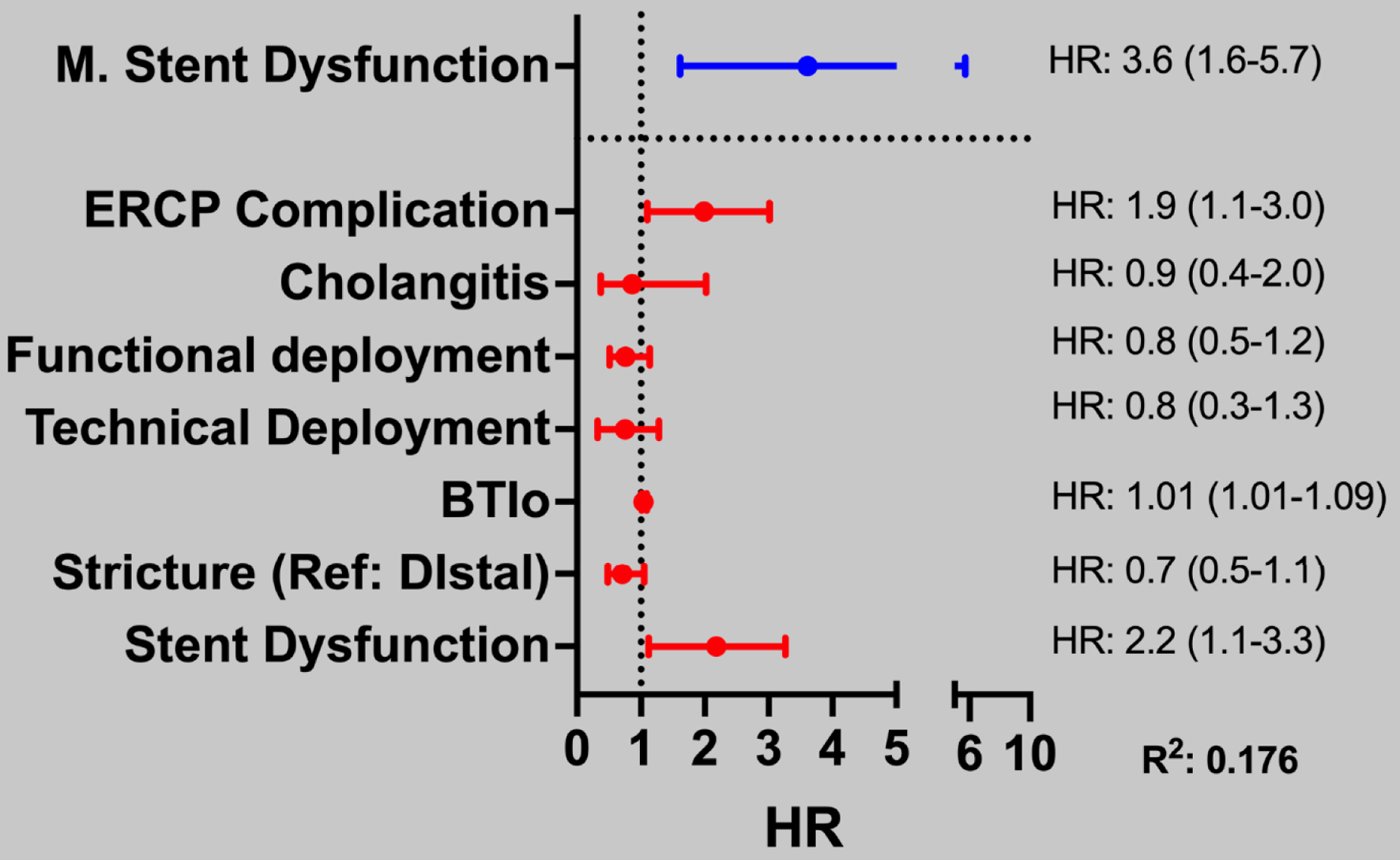
Figure 3.
Figure 3. Cumulative event for stent dysfunction or mortality in patients with malignant biliary stricture by type of stricture and type of stent.
Figure 4.
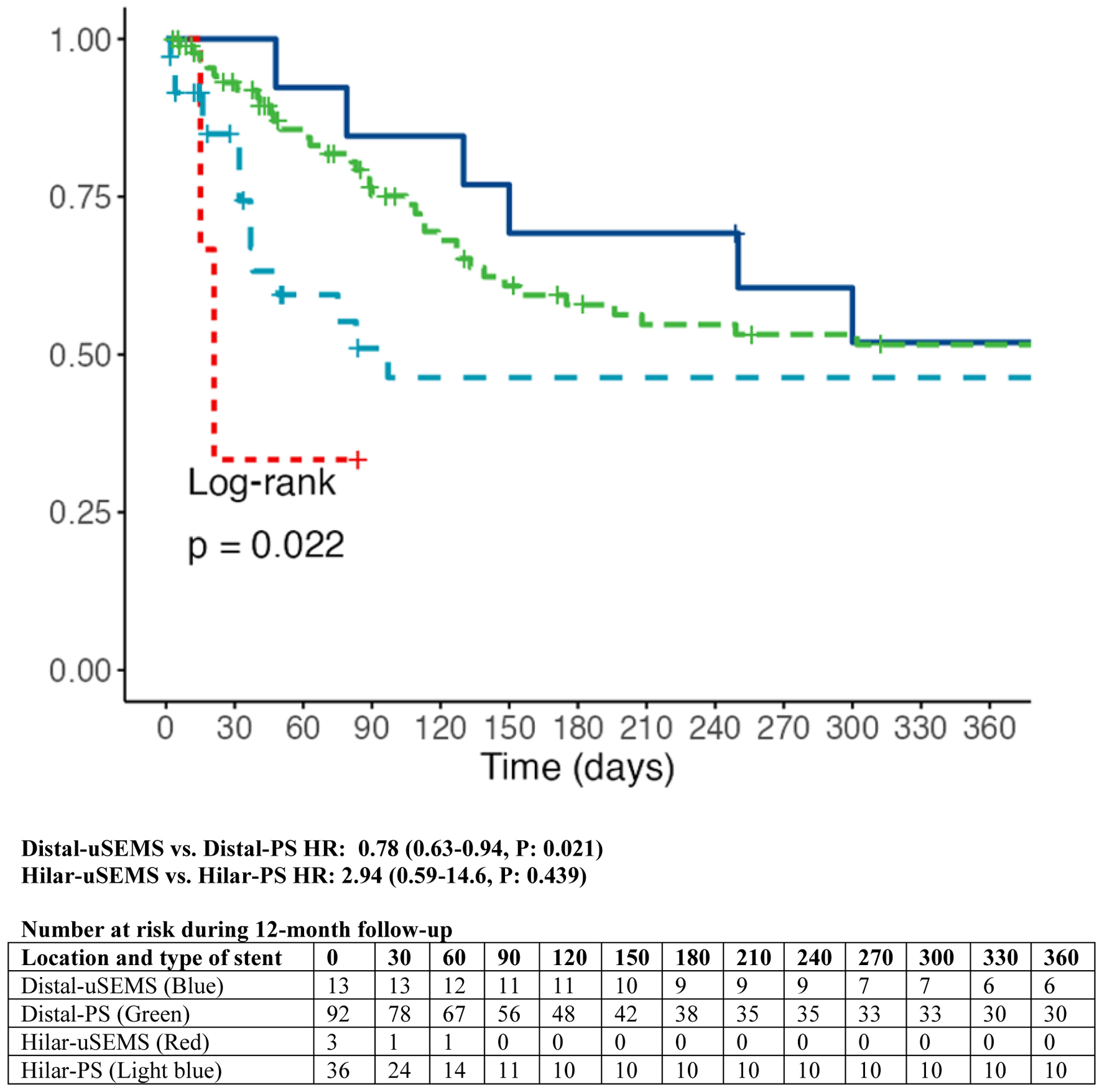
Figure 4. Survival analysis in patients with malignant biliary strictures according to location of the stricture and type of stent.

Tables

Table 1. Characteristic of Patients With Malignant Biliary Stenosis Based on Location of the Malignant Biliary Stricture
 
VariableTotalDistal stenosis (n = 109)Hilar stenosis (n = 38)P-value
*P < 0.05. ERCP: endoscopic retrograde cholangiopancreatography; IQR: interquartile range; NET: neuroendocrine tumor.
Age (years) (IQR)70.5 (60 - 78)72 (61 - 79)66 (55 - 73)0.03*
Sex0.414
  Male69 (46.9%)49 (44.9%)20 (52.6%)
  Female78 (53.1%)60 (55.1%)18 (47.4%)
Diagnosis0.031*
  Pancreas cancer68 (46.3%)64 (58.7%)4 (10.5%)
  Cholangiocarcinoma54 (36.7%)27 (25.7%)27 (71.1%)
  Gallblader cancer6 (4.1%)3 (2.8%)3 (7.9%)
  Ampulla carcinoma7 (4.8%)7 (6.4%)0
  NET2 (1.4%)2 (1.8%)0
  Metastasis7 (4.8%)2 (1.8%)5 (13.2%)
  High-grade lymphoma3 (2.0%)3 (2.8%)0
Type of biliary stent0.226
  Plastic stent128 (87.1%)96 (88.8%)35 (92.1%)
  Metalic stent19 (12.9%)13 (11.2%)3 (7.9%)
Succesful functional drainage0.050*
  Yes109 (74.1%)85 (77.9%)24 (63.2%)
  No38 (34.8%)24 (22.0%)14 (36.8%)
Succesful technical deployment0.001*
  Yes118 (80.3%)104 (95.4%)13 (34.2%)
  No29 (19.7%)5 (4.6%)25 (65.8%)
Total bilirrubin (mg/dL) (IQR)17 (12 - 22.9)17.5 (12 - 23.1)15.2 (10.2 - 22.4)0.686
CA19-9 (U/mL)337 (61 - 1,515)219 (42 - 1,425)679 (35 - 1,945)0.018*
ERCP complication0.002*
  Yes29 (19.7%)15 (13.7%)14 (36.8%)
  No118 (80.3%)94 (86.2%)24 (63.2%)
Stent dysfunction0.005*
  Yes69 (46.9%)46 (42.2%)23 (60.5%)
  No78 (53.1%)63 (57.8%)15 (39.5%)
Mortality64 (43.5%)46 (42.2%)18 (47.4%)0.003*


Table 2. Characteristic of Patients With Biliary Malignant Strictures According to Stricture Location and Type of Stent
 
VariableHigh stricture (n = 38)P-valueLower stricture (n = 109)P-value
PS (n = 35)uSEMS (n = 3)PS (n = 109)uSEMS (n = 13)
*P < 0.05. ERCP: endoscopic retrograde cholangiopancreatography; PS: plastic stents; uSEMS: uncovered self-expanding metal stents.
Pancreas cancer0.5720.532
  Resecable0019 (17.4%)0
  Irresecable1 (2.6%)3 (7.9%)36 (33.0%)9 (8.3%)
  Borderline006 (5.5%)1 (0.9%)
Cholangiocarcinoma0.3420.453
  Distal005 (4.6%)0
  I0018 (22.9%)2 (1.8%)
  II10 (26.3%)1 (2.6%)1 (0.9%)0
  IIIA3 (7.9%)000
  IIIB3 (7.9%)1 (2.6%)00
  IV8 (28.9%)1 (2.6%)00
  NA001 (0.9%)0
ERCP complication
  Bleeding2 (5.7%)1 (33.3%)0.0755 (4.6%)00.032*
  Bacteremia8 (22.8%)03 (2.7%)0
  Perforation1 (2.9%)01 (0.9%)0
  Pancreatitis2 (5.7%)05 (4.6%)1 (7.7%)
  No22 (62.9%)2 (66.7%)82 (75.2%)12 (92.3%)
Stent diameter0.1210.005*
  7 Fr5 (14.3%)02 (1.8%)0
  8.5 Fr20 (57.1%)020 (18.3%)0
  10 Fr10 (28.5%)074 (67.8%)0
  30 Fr03 (100%)013 (11.9%)
Patency (days)28 (4 - 37)84 (84 - 84)0.33386 (38 - 139)249 (150 - 250)0.0001*
Stent dysfunction
  Migration7 (21.2%)00.14616 (14.7%)00.455
  Obstruction15 (45.4%)1 (33.3%)24 (22.0%)5 (38.4%)
  Perforation001 (0.9%)0
  No13 (33.3%)2 (66.7%)55 (50.5%)8 (61.5%)
Succesful technical deployment0.089
  Yes11 (31.4%)2 (66.7%)0.48791 (94.7%)13 (100%)
  No24 (68.5%)1 (33.3%)5 (5.2%)0
Succesful functional deployment0.050*
  Yes25 (71.4%)3 (100%)0.32274 (77.1%)11 (84.6%)
  No10 (28.5%)022 (22.9%)2 (15.4%)