Figures
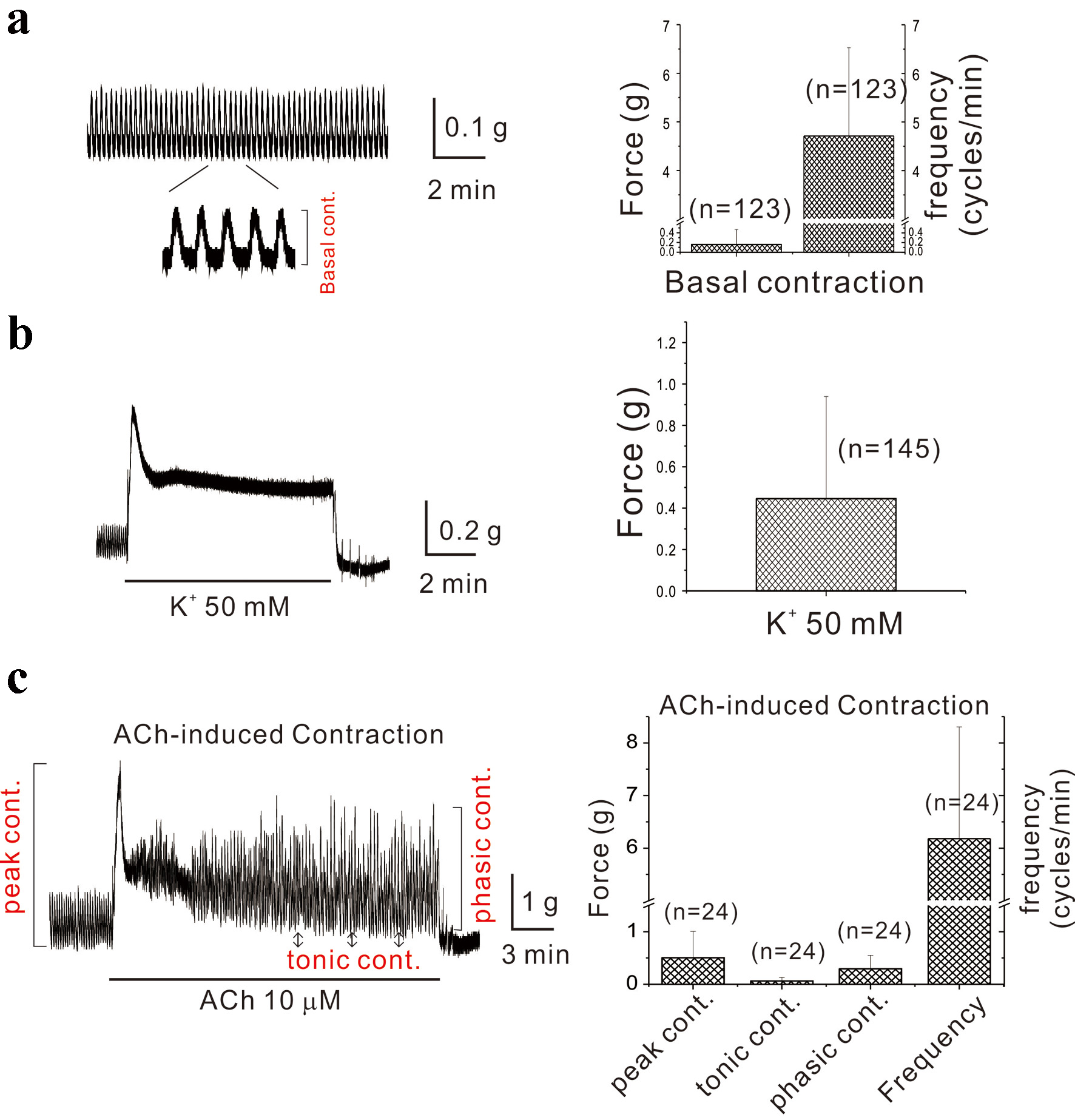
↓ Figure 1. Spontaneous contractions of mouse gastric smooth muscle and acetylcholine-induced periodic contractions. (a) Spontaneous contraction of mouse gastric smooth muscle is demonstrated with an observed force of 0.2 g and a frequency of 4.7 cycles/min (n = 123). The component of basal contraction is indicated as expanded trace. In (b), gastric smooth muscle exhibited a tonic contraction (0.45 g) induced by 50 mM K+ (n = 145). The administration of ACh resulted in AiPC. Immediately following ACh administration (10 µM), as shown in (c), initial contractions were noted, accompanied by overlapping tonic and phasic contractions. The initial and tonic contractions measured 0.50 and 0.06 g, respectively, while phasic contractions were 0.30 g (n = 24). The components of initial, tonic, and phasic contractions are indicated in left panel of (c). ACh: acetylcholine; AiPC: acetylcholine-induced phasic contractions.
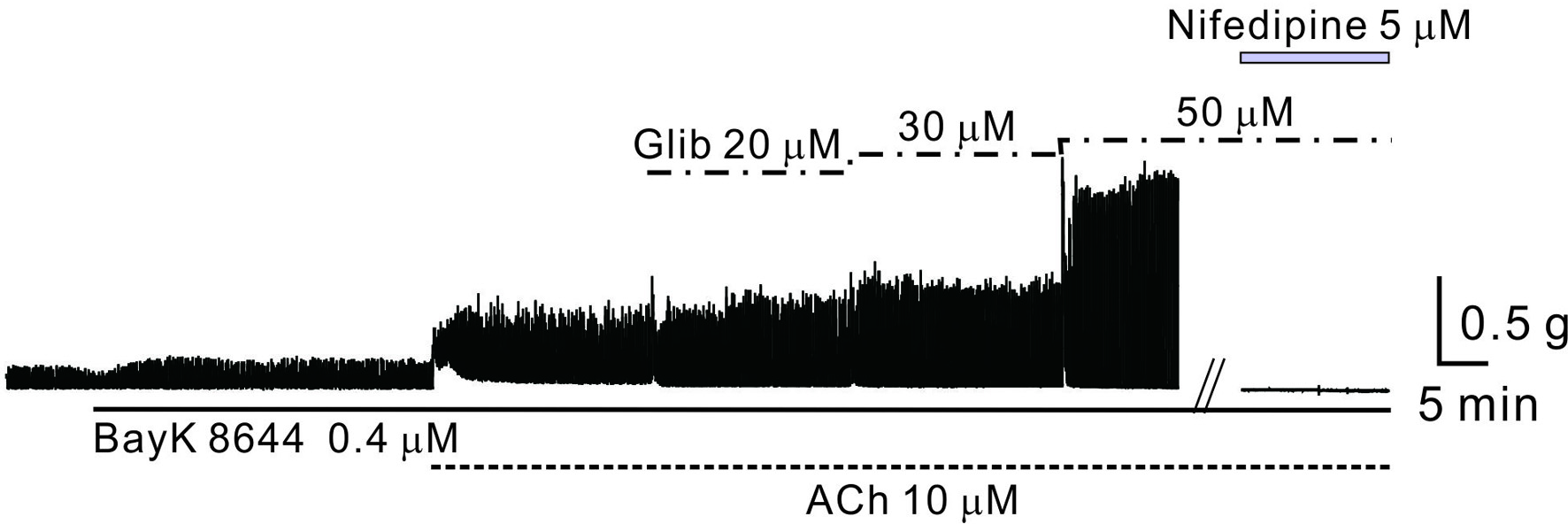
↓ Figure 2. The role of Ca2+ and ATP-sensitive potassium channels in AiPC of mouse gastric smooth muscle. The effects of glibenclamide on AiPC in the presence of BayK 8644 and ACh were examined. AiPC was induced by ACh in the presence of BayK 8644 and significantly amplified following the application of glibenclamide (50 - 80 µM). ACh: acetylcholine; AiPC: acetylcholine-induced phasic contractions.
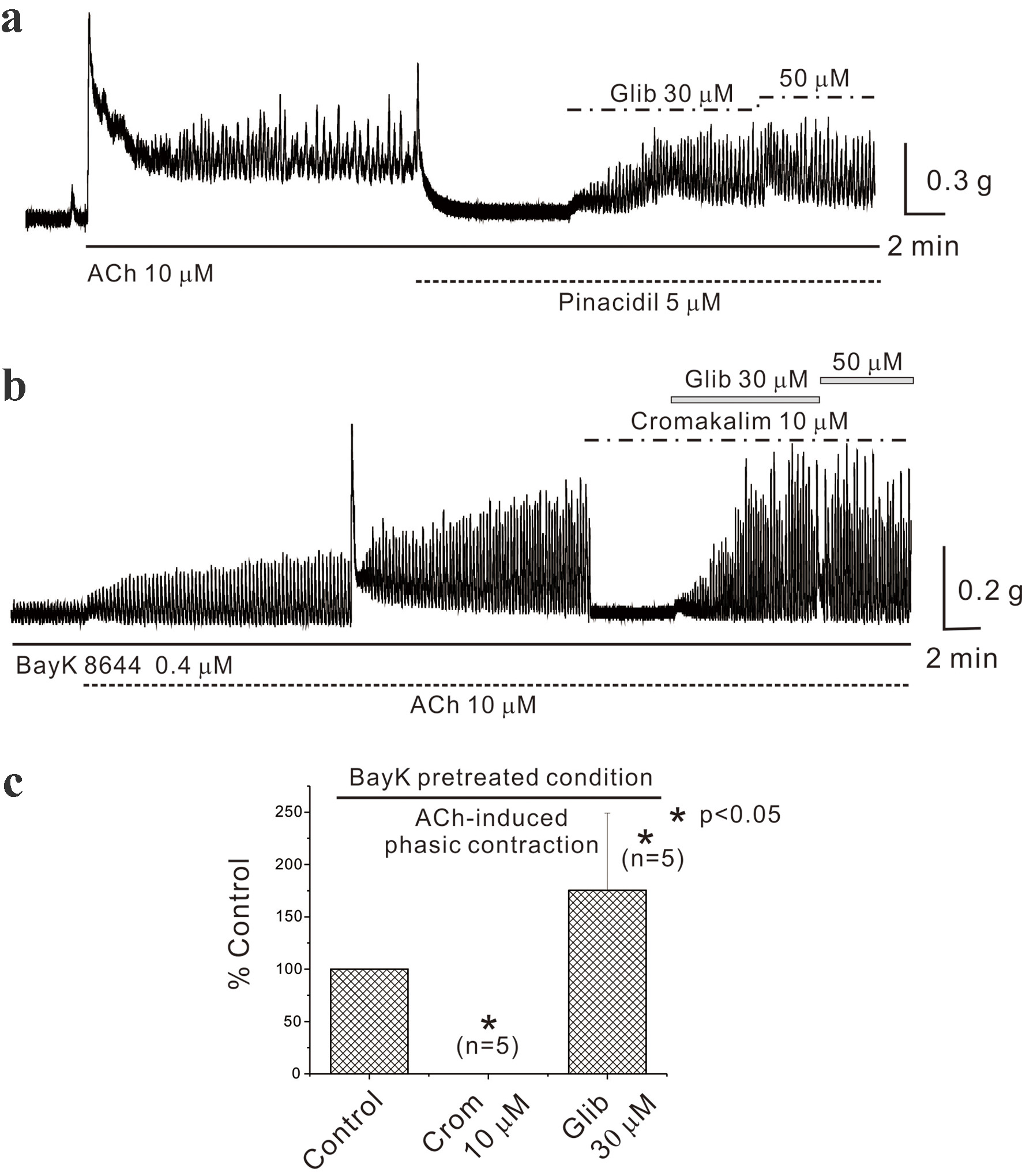
↓ Figure 3. Effects of ATP-sensitive potassium channel opener and blocker in mouse gastric smooth muscle. (a) It demonstrates the inhibition of AiPC by pinacidil (5 µM) and its restoration by glibenclamide in mouse gastric smooth muscle. (b) Cromakalim also inhibited AiPC in the presence of BayK 8644 in a glibenclamide-sensitive manner. Data were summarized in (c) (n = 5). Asterisks show a statistical significance (*P < 0.05). ACh: acetylcholine; AiPC: acetylcholine-induced phasic contractions.
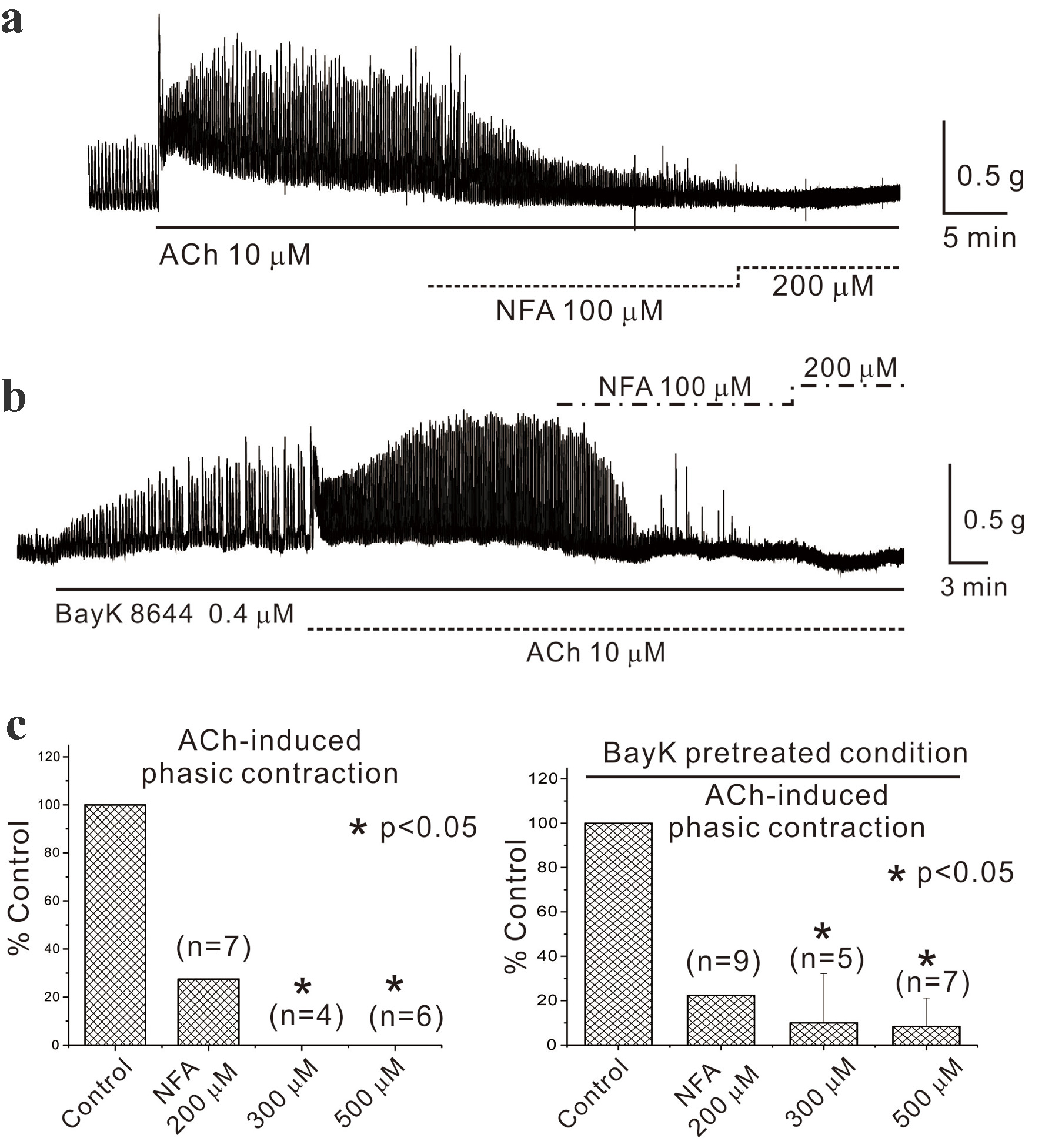
↓ Figure 4. Administration of chloride channel blocker in mouse gastric smooth muscle. (a) and (c, left panel) It reveals that NFA (200, 300, and 500 µM) reduced acetylcholine-induced phasic contractions to 28.0±72.6% (n = 7, P > 0.05), 0% (n = 4, P < 0.05), and 0% (n = 6, P < 0.05) of the control, respectively. Asterisks show a statistical significance (*P < 0.05). In the subsequent step, BayK 8644 (0.4 µM), utilized in previous experiments, was pretreated before administering NFA. As depicted in (b) and (c, right panel), NFA (200, 300, and 500 µM) inhibited AiPC to 22.0±46.3% (n = 9, P > 0.05), 10.0±22.2% (n = 5, P < 0.05), and 8.0±12.8% (n = 7, P < 0.05) of the control, respectively. The data are summarized in Figure 3c. ACh: acetylcholine; AiPC: acetylcholine-induced phasic contractions; NFA: niflumic acid.
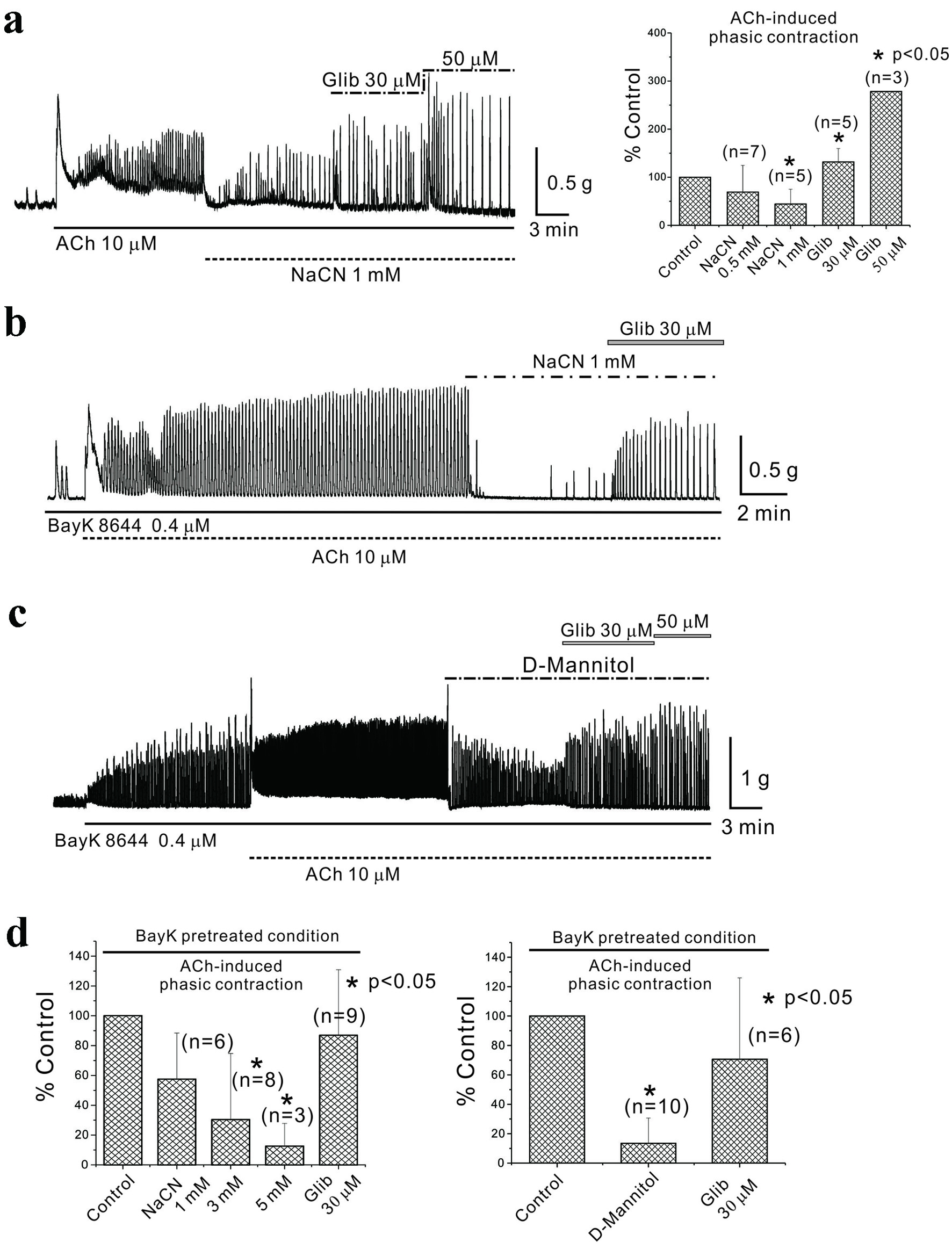
↓ Figure 5. Inhibition of energy metabolism in mouse gastric smooth muscle. (a) NaCN administration inhibited AiPC, which were restored by glibenclamide. NaCN (0.5 mM and 1 mM) reduced AiPC to 69.0±55.4% (n = 7, P > 0.05) and 44.0±30.7% (n = 5, P < 0.05) of the control, respectively, and these inhibitions were reversed by glibenclamide (30 and 50 µM) to 132.0±27.9% (n = 5, P < 0.05) and 278.0% (n = 3), respectively. These data were summarized in (a) (right panel). Asterisks show a statistical significance (*P < 0.05). In (b) and (c), AiPC in the presence of BayK 8644 was studied. (b) It reveals that NaCN (1, 3, and 5 mM) suppressed AiPC to 58±31% (n = 6, P > 0.05), 30±44.3% (n = 8, P < 0.05), and 13±15.3% (n = 3, P < 0.05) of the control, respectively. In (c), AiPC inhibition by D-mannitol is shown. AiPC was reduced to 14.0±17.2% of the control (n = 10, P < 0.05), and this inhibition was offset by glibenclamide to 71.0±55.3% (n = 6, P < 0.05). Data were summarized in (d). Asterisks show a statistical significance (*P < 0.05). ACh: acetylcholine; AiPC: acetylcholine-induced phasic contractions; NaCN: sodium cyanide.
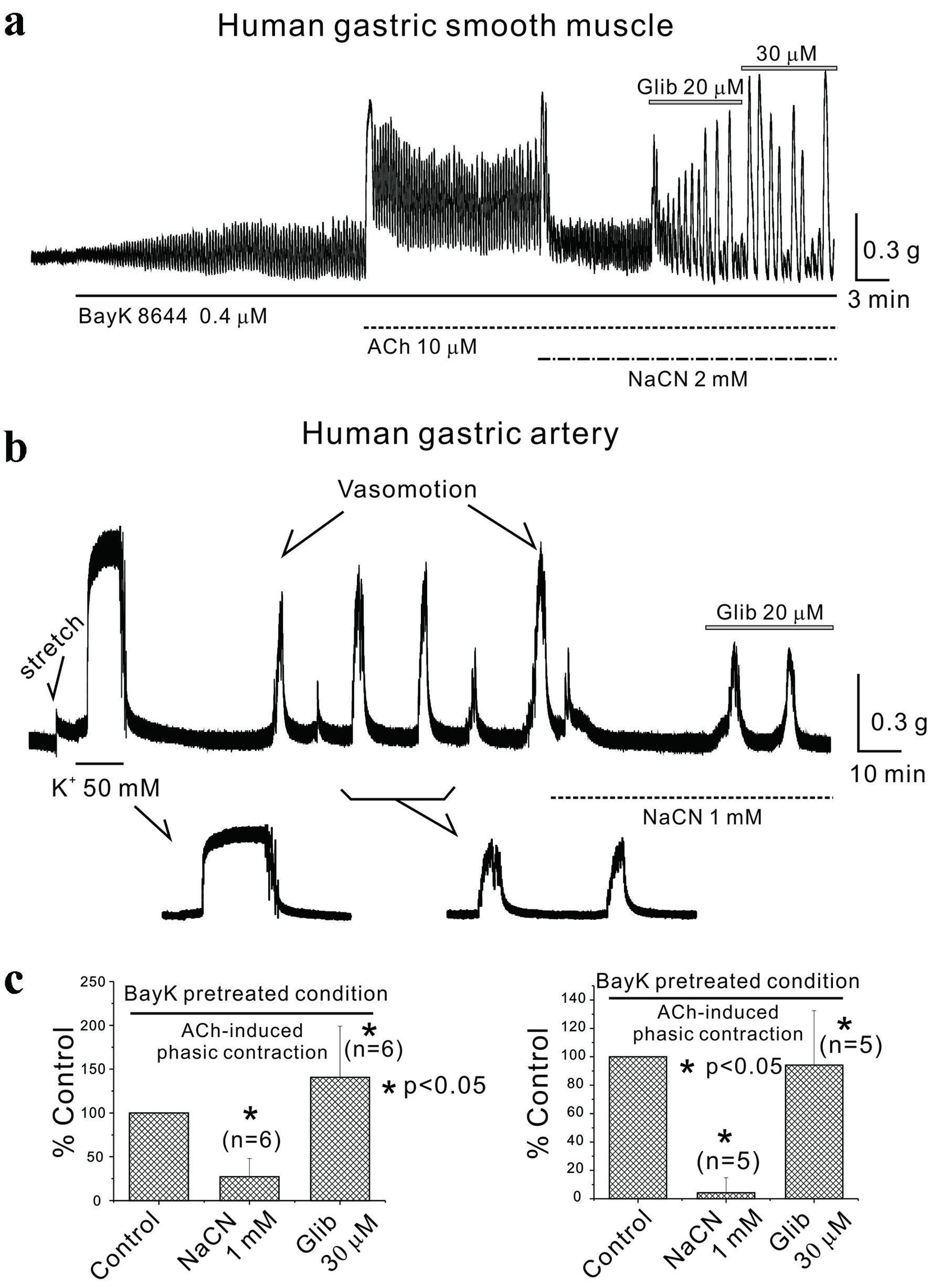
↓ Figure 6. Inhibition of energy metabolism in human gastric smooth muscle and human arterial smooth muscle. (a) In human gastric smooth muscle, following BayK 8644 pretreatment, NaCN inhibited AiPC, which were restored by glibenclamide. NaCN (1 mM) reduced human AiPC in the presence of BayK 8644 to 27.0±20.7% of the control, which was then elevated to 141.0±58.4% with the administration of glibenclamide (n = 6, P < 0.05; c (left panel)). (b) Vasomotion was observed in human arterial smooth muscle and was inhibited by sodium cyanide and restored by glibenclamide. NaCN (1 mM) reduced vasomotion (spontaneous contractions) to 4.0±10.5% of the control, which was restored to 94.0±38.4% by glibenclamide (n = 5, P < 0.05; c (right panel)). All data were summarized in (c). Asterisks show a statistical significance (*P < 0.05). ACh: acetylcholine; AiPC: acetylcholine-induced phasic contractions; NaCN: sodium cyanide.
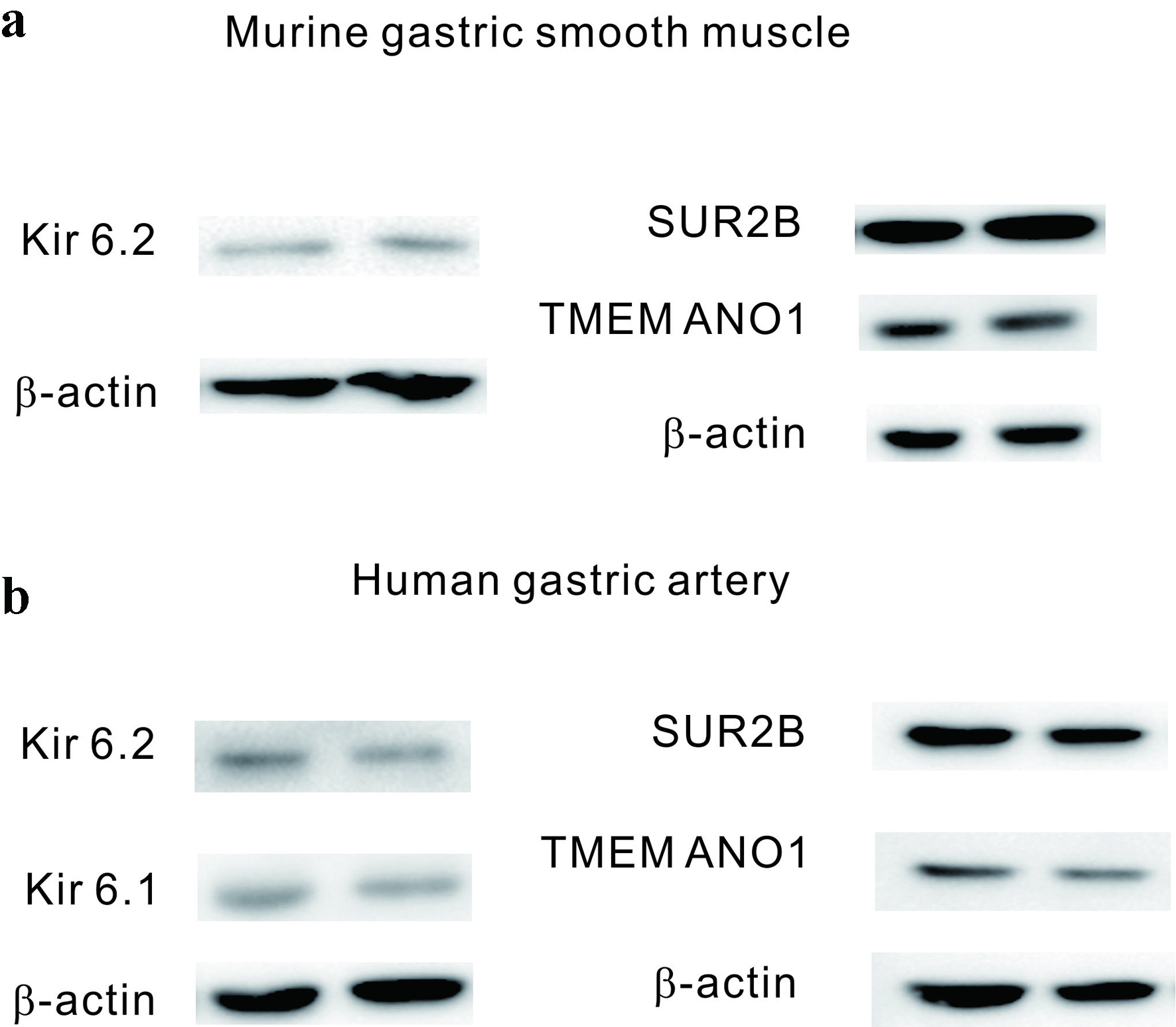
↓ Figure 7. Western blot analysis of mouse gastric smooth muscle and human arterial smooth muscle. (a) In mouse gastric smooth muscle, the component proteins of KATP channels, SUR2B, and Kir6.2, were identified, along with TMEM16A, the component protein of calcium-activated chloride channels. (b) In human arterial smooth muscle, the component proteins of KATP channels, SUR2B, Kir6.1, and Kir6.2, were identified, as well as TMEM16A, the component protein of calcium-activated chloride channels. KATP channels: ATP-sensitive potassium channels.