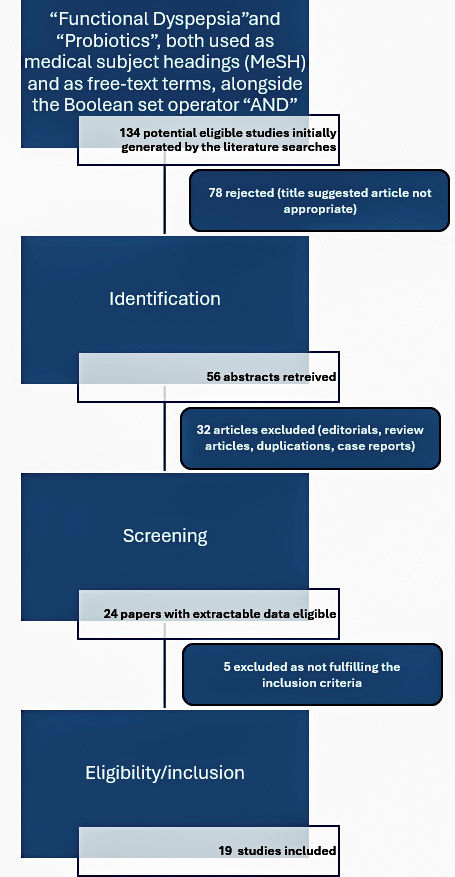
↓ Figure 1. Flow chart describing the identification, screening, eligibility and inclusion of the studies in this analysis.
| Gastroenterology Research, ISSN 1918-2805 print, 1918-2813 online, Open Access |
| Article copyright, the authors; Journal compilation copyright, Gastroenterol Res and Elmer Press Inc |
| Journal website https://gr.elmerpub.com |
Review
Volume 19, Number 6, December 2026, pages 303-320
Reassessing the Role of Probiotics in Functional Dyspepsia: Insights From Current Evidence, Pitfalls, and Future Directions
Figures
Tables
| Study | Country | Sample size | Study | Outcome measured | Single strain or mixture of probiotics | Probiotics used | Other agents used | Treatment duration | Conclusion |
|---|---|---|---|---|---|---|---|---|---|
| aPDS: postprandial distress syndrome score calculated as the mean of postprandial fullness score and early satiety score. bEPS: epigastric pain syndrome score calculated as the mean of epigastric pain score and epigastric burning score. cFD: composite functional dyspepsia score calculated as the mean of postprandial fullness, early satiety, epigastric pain, and epigastric burning scores. FD: functional dyspepsia; FPS: epigastric pain syndrome; PDS: postprandial distress syndrome; FGIDs: functional gastrointestinal disorders; PPIs: proton-pump inhibitors; RCT: randomized clinical trial; SCFA: short chain fatty acids; PAGI-SYM: Patient Assessment of Gastrointestinal Disorders-Symptom Severity Index; CRR: clinical response rate; GSRS: Gastrointestinal Symptom Rating Scale. | |||||||||
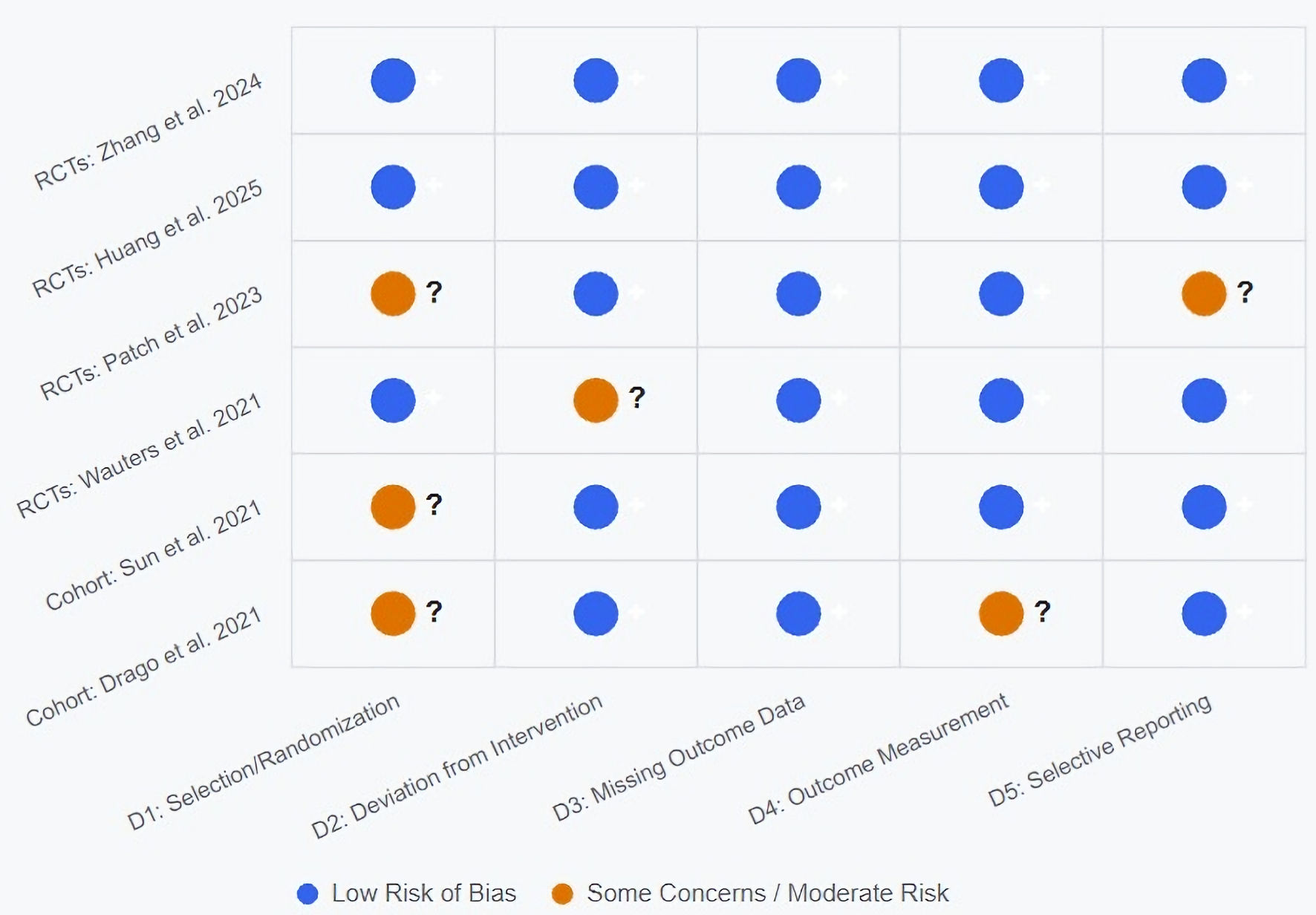
| Huang et al, 2025 [19] | China | 116 FD patients with anxiety and 114 FD patients without anxiety | RCT | Patient Assessment of Gastrointestinal Disorders-Symptom Severity Index (PAGI-SYM); serum inflammatory factors and intestinal mucosal permeability markers (IL-1, IL-6, TNF-α. LPS, zonulin, DAO, I-FABP) | Mixture | Bacillus licheniformis + Bifidobacterium longum + Lactobacillus acidophilus + Enterococcus faecalis | Acid suppression (rabeprazole) + mucosal protection (almagate) + prokinetics (itopride hydrochloride) | 6 weeks | Lower I-FABP values (OR = 0.999, P = 0.036), lower LPS values (OR = 0.998, P = 0.013), and probiotic intervention (OR = 5.138, P = 0.000) were significantly associated with symptom relief |
| Zhang et al, 2024 [20] | China | 200 FD patients to receive placebo (50), rabeprazole (50), BL-99 low dose (50), and BL-99 high (50) dose | RCT | CRR; PDS scorea, EPS scoreb, FD scorec | Single strain | Bifidobacterium animalis subsp. lactis (BL-99) | — | 8 weeks | The CRR in FD score for the BL-99 high group (45 (90.0%)) was significantly higher than that for placebo (29 (58.0%), P = 0.001), BL-99 low (37 (74.0%), P = 0.044) and positive control (35 (70.0%), P = 0.017) groups after 8-week treatment. This effect was sustained until 2 weeks after treatment but disappeared 8 weeks after treatment. |
| Patch et al, 2023 [21] | Australia | Participants (67) with self-reported FGIDs completed a 4-week intervention of BG01 (34) or placebo (33) | Double-blinded RCT | GSRS | Single strain | Bacillus subtilis (BG01-4) | — | 4 weeks | 10% FD improvement (P = 0.04) in the intervention group compared to the placebo |
| Wauters et al, 2021 [22] | Belgium | 68 FD on or off PPIs | Double-blinded RCT | PDS score | Mixture | Bacillus coagulans MY01 + Bacillus subtilis MY02 | 34 (50%) on PPIs | 8 weeks | The proportion of clinical responders was higher with probiotics (12 (48%) of 25) than placebo (6 (20%) of 30; relative risk 1.95 (95% CI, 1.07–4.11); P = 0.028) |
| Sun et al, 2021 [23] | China | 26 FD patients | Cohort | Effect on clinical symptom score; measurement of fecal SCFA levels and metabolites; effect on intestinal microbiota | Single strain | Lactobacillus paracasei (LC-37) | — | 4 weeks | Abdominal pain and belching were significantly decreased after 14 days and almost absent after 28 days of treatment |
| Drago et al, 2021 [24] | Italy | 2,676 FD patients with 1,357 PDS patients in group A and 1,319 EPS patients in group B | Cohort | A progressive-score scale used to evaluate symptoms at the beginning of the trial and at 15 days after the end of treatment | Mixture | Lactobacillus. rhamnosus (LR04) + Lactobacillus. pentosus (LPS01) + Lactobacillus plantarum (LP01) + Lactobacillus delbrueckii subsp. delbrueckii (LDD01) with N-acetylcysteine | +/− with a PPIs, prokinetics, or antacids | 30 days | All patients showed significant improvements in dyspeptic symptoms following treatment. In patients with PDS, probiotic alone resulted in the lowest prevalence of symptoms following treatment, while patients with EPS showed no clear between-treatment differences. |
| Study | Country | Sample size | Study | Outcome measured | Single strain or mixture of probiotics | Probiotics used | Other agents used | Treatment duration | Conclusion |
|---|---|---|---|---|---|---|---|---|---|
| GI: gastrointestinal; FD: functional dyspepsia; SODA: Severity of Dyspepsia Assessment; GSRS: Gastrointestinal Symptom Rating Scale; QoL: quality of life; FSSG: frequency scale for symptoms of gastroesophageal reflux disease; RCT: randomized clinical trial; VAS: visual analogue scale. | |||||||||
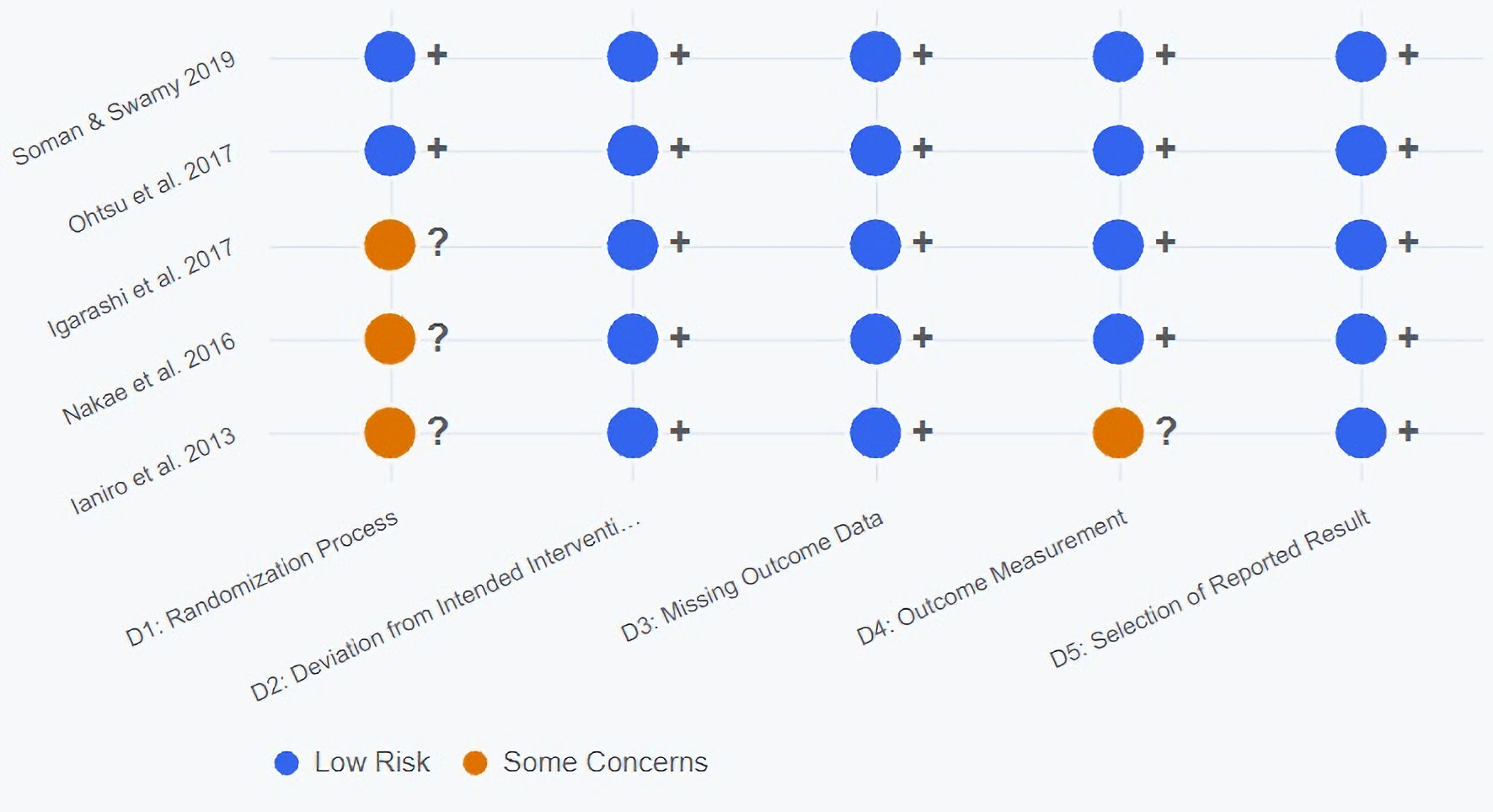
| Soman et al, 2019 [25] | India | 60 adults with symptoms of GI discomfort randomized 1:1 into intervention or placebo groups | Prospective, randomized, double-blind, placebo-controlled, parallel-group study | SODA; GSRS; QoL score | Mixture | Bacillus coagulans (SNZ 1969) + Bacillus clausii (SNZ 1971) + Bacillus subtilis (SNZ 1972) | — | 5 weeks | On day 30, significant improvement was noted in SODA burping/belching (P = 0.025), bloating (P = 0.048), sour taste (P = 0.025), and total (P = 0.007) scores as well as pain (P = 0.003), non-pain (P = 0.04), and satisfaction (P = 0.03) subscores. Significant improvement was also observed in SODA burping/belching (P = 0.011), sour taste (P = 0.011), and total SODA scores (P < 0.001), and in SODA pain (P = 0.005), non-pain (P = 0.06), and satisfaction (P = 0.004) subscores on day 37 |
| Ohtsu et al, 2017 [26] | Japan | 116 FD patients allocated to 1:1 ratio to placebo or probiotics | Double-blind, parallel-group, placebo-controlled RCT | Global assessment (the participant’s impression regarding the overall effect of the 12-week test food intake on gastric symptoms); the elimination rate for the four major symptoms of FD was assessed during the baseline period and after 4, 8, and 12 weeks of test food intake. | Single strain | Lactobacillus gasseri (OLL2716) | Participants were instructed to ingest one unit (85 g) of yogurt made from a mixture of raw milk, dairy products, sugar, a sweetener (stevia), and raw water, fermented with Lactobacillus delbrueckii subsp. bulgaricus and Streptococcus thermophiles | 12 weeks | The impressions regarding the overall effect on gastric symptoms were more positive in the OLL2716 group compared to that in the placebo group (P = 0.073). The elimination rate for major FD symptoms was 17.3 and 35.3% in the placebo and OLL2716 groups respectively (P = 0.048) |
| Igarashi et al, 2017 [27] | Japan | 24 patients with FD and 21 age-matched and gender-matched healthy control volunteers | — | FSSG questionnaire | Single strain | Lactobacillus gasseri OLL2716 | — | 12 weeks | The LG21 yogurt treatment significantly ameliorated epigastric pain-like and postprandial distress-like symptoms in FD patients. |
| Nakae et al, 2016 [28] | Japan | 44 FD patients (aged 20–60 years), and 44 healthy controls | — | FSSG questionnaire | Single strain | Lactobacillus gasseri OLL2716 | — | 12 weeks | OLL27167 treatment significantly ameliorated the FSSG scores for epigastric pain-like and postprandial distress-like symptoms in FD patients (P < 0.001). |
| Ianiro et al, 2013 [29] | Italy | 8 FD patients | “Proof of concept” Study | Questionnaire designed to evaluate the severity of eight GI symptoms (nausea, vomiting, postprandial fullness, halitosis, belching, early satiety, postprandial gastric distension, pain/upper abdominal discomfort quadrants), based on a VAS | Mixture | Lactobacillus reuteri +Lactobacillus rhamnosus + Saccharomyces boulardii | Olive oil + antioxidants for 7 days, no oil for 7 days; olive oil + probiotics for 7 days, no oil for 7 days; and olive oil without any enrichment for 7 days | 28 days | A significant amelioration of nausea was observed in subjects receiving olive oil + probiotics compared olive oil (P < 0.05) or olive oil + antioxidants (P = 0.04). Adding olive oil + probiotics resulted in a significant amelioration of the symptom “pain/discomfort in abdominal upper quadrants” compared to olive oil (P < 0.01). Olive oil + probiotics was more effective than olive oil (P < 0.05) and olive oil + antioxidants (P < 0.05) in relieving belching and also showed greater efficacy in alleviating “postprandial gastric distension” and “postprandial fullness” as compared to olive oil (P < 0.001 for both symptoms) and olive oil + antioxidants (P < 0.001 for gastric distension and P < 0.06 for fullness) |
| Study | Country | Sample size | Study | Outcome measured | Single strain or mixture of probiotics | Probiotics used | Other agents used | Treatment duration | Conclusion |
|---|---|---|---|---|---|---|---|---|---|
| FD: functional dyspepsia; RCT: randomized clinical trial; SCFA: WBFPRS: Wang-Baker FACES Pain Rating Scale; AP: abdominal pain; QoL: quality of life; NRS: numeric rating scale. | |||||||||
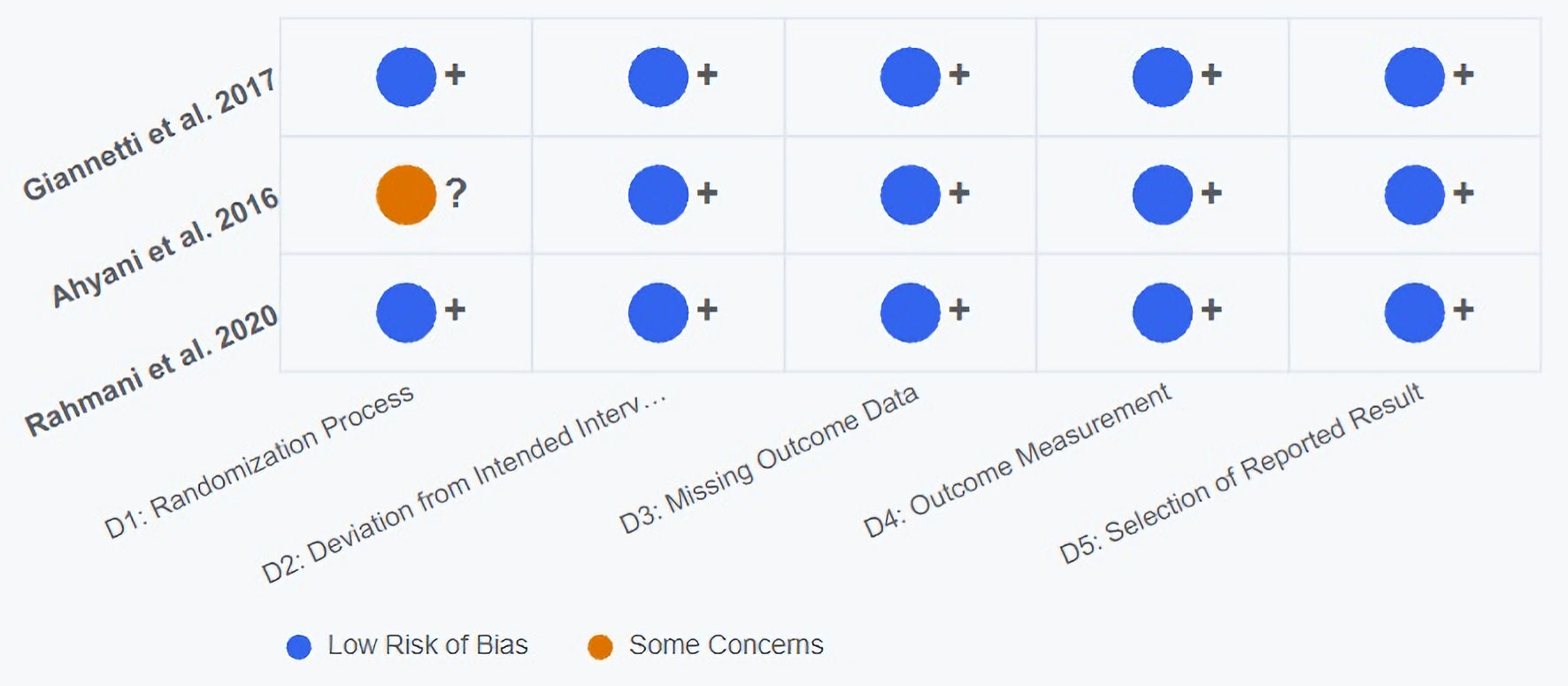
| Rahmani et al, 2020 [31] | Iran | 16 FD pediatric patients on probiotics and 13 patients on placebo | Double blind RCT | Pain intensity measured based on WBFPRS | Single strain | Lactobacillus reuteri | — | 4 weeks | 11 children (68%) showed a significant response to probiotic treatment, compared to the placebo group (P < 0.001). Duration of pain, severity, and frequency significantly reduced in the treatment group (P < 0.001, P < 0.001, and P < 0.001, respectively) |
| Giannetti et al, 2017 [33] | Italy | 25 pediatric FD patients | — | Abdominal pain (AP) resolution and QoL | Mixture | Bifidobacterium infantis (M-63) + Bifidobacterium, breve (M-16V) + Bifidobacterium longum (BB536) | — | FD patients randomized to receive either a mixture of three Bifidobacteria or a placebo for 6 weeks. After a 2-week “washout” period, each patient was switched to the other group and followed up for further 6 weeks | No significant improvement was observed in FD patients in AP and QoL. |
| Ahyani et al, 2016 [32] | Indonesia | 116 FD children | Randomized, double-blind, placebo-controlled trial | For the assessment of pain severity, a numeric rating scale (NRS) for self-assessment was used. | Mixture | Lactobacillus rhamnosus + Lactobacillus acidophilus | Placebo | 2 weeks | The frequency of pain at 2 weeks was significantly reduced in the probiotics group compared to the placebo group (P < 0.001). There was no significant difference in pain duration between the groups. Mean post-treatment pain severity was mild in both groups, with 1.6 (SD 1.14) NRS in the probiotics group and 2.4 (SD 2.79) NRS in the placebo group, but the difference was not significant (P = 0.08) |