| Gastroenterology Research, ISSN 1918-2805 print, 1918-2813 online, Open Access |
| Article copyright, the authors; Journal compilation copyright, Gastroenterol Res and Elmer Press Inc |
| Journal website https://gr.elmerpub.com |
Case Report
Volume 19, Number 5, October 2026, pages 295-301

Pathological Complete Response in Stage IV Human Epidermal Growth Factor Receptor 2-Positive Gastric Cancer With Synchronous Liver Metastases After Conversion Therapy With SOX Plus Cadonilimab and Disitamab Vedotin
Xin Shia, d, Wei Jun Wangb, d, Ke Ji Heb, De Chen Wanga, Xiao Qin Lia, e, Li Xuc, e
aDepartment of Pathology, Sun Yat-sen University Cancer Hospital Gansu Hospital, Lanzhou 730000, China
bDepartment of Liver Surgery, Sun Yat-sen University Cancer Hospital Gansu Hospital, Lanzhou 730000, China
cDepartment of Liver Surgery, State Key Laboratory of Oncology in South China, Guangdong Provincial Clinical Research Center for Cancer, Sun Yat-sen University Cancer Center, Guangzhou 510060, China
dThese authors contributed equally to this work.
eCorresponding Authors: Xiao Qin Li, Department of Pathology, Sun Yat-sen University Cancer Hospital Gansu Hospital, Lanzhou 730000, China; Li Xu, Department of Liver Surgery, State Key Laboratory of Oncology in South China, Guangdong Provincial Clinical Research Center for Cancer, Sun Yat-sen University Cancer Center, Guangzhou 510060, China
Manuscript submitted September 3, 2026, accepted October 21, 2026, published online October 31, 2026
Short title: pCR in HER2-Positive Gastric Cancer
doi: https://doi.org/10.14740/gr2193
| Abstract | ▴Top |
Initially unresectable stage IV gastric cancer is usually treated with systemic therapy. Conversion surgery may be considered in selected patients after a substantial response. Pathological complete response (pCR) in the resected gastric primary and lymph nodes after such treatment is uncommon. We report the case of a 51-year-old male diagnosed with gastric adenocarcinoma (cT3NxM1, clinical stage IV) with synchronous liver metastases. The tumor was human epidermal growth factor receptor 2 (HER2)-positive (3+), proficient in mismatch repair (pMMR), with a programmed death-ligand 1 (PD-L1) combined positive score (CPS) of 30. After three cycles of oxaliplatin + S-1 (SOX) combined with cadonilimab, and disitamab vedotin, computed tomography imaging demonstrated marked tumor regression with nearly complete resolution of liver metastases. The patient underwent radical distal gastrectomy with D2 lymphadenectomy. Postoperative pathology revealed tumor regression grade (TRG) 0—a complete pathological response—with all 33 lymph nodes negative for carcinoma and all surgical resection margins clear (R0). Intraoperative ultrasound confirmed no residual liver metastases. This case illustrates complete pathological regression in the examined gastric and nodal specimens after SOX, cadonilimab, and disitamab vedotin, the patient achieved a pathological complete remission after conversion surgery, accompanied by significant radiological regression of liver lesions. However, it also raises a series of questions for further consideration, such as whether conversion surgery can provide additional benefits after achieving deep tumor regression, the safety of combination therapy, and how to select appropriate candidates for surgery.
Keywords: Gastric cancer; Pathological complete response; Systemic therapy; Cadonilimab; Conversion surgery
| Introduction | ▴Top |
For patients with initially unresectable advanced gastric cancer (GC), systemic therapy remains the cornerstone of treatment. Immune checkpoint inhibitors (ICIs) have improved outcomes in selected advanced-disease populations. CheckMate 649 trial demonstrated a survival benefit from nivolumab plus chemotherapy in human epidermal growth factor receptor 2 (HER2)-negative disease, particularly at higher programmed death-ligand 1 (PD-L1) combined positive scores (CPS) [1]. Other first-line studies have evaluated similar chemotherapy–immunotherapy combinations [2, 3].
Cadonilimab is a bispecific antibody targeting programmed cell death protein 1 (PD-1) and cytotoxic T-lymphocyte-associated protein 4 (CTLA-4). In the COMPASSION-15 trial, cadonilimab plus chemotherapy improved outcomes in HER2-negative advanced gastric or gastroesophageal junction adenocarcinoma [4]. These trial findings do not directly establish its role in a HER2-positive conversion regimen.
Conversion surgery should be considered when initial unresectable disease becomes amenable to complete macroscopic response after induction systemic therapy [5]. Retrospective studies have described ICI-containing conversion strategies, although the treated populations and regimens differ [6, 7].
In this report, we present a 51-year-old man with clinical stage IV GC and multiple liver lesions who received systemic oxaliplatin plus S-1 (SOX), cadonilimab, and disitamab vedotin before conversion surgery. No viable tumor was identified in the gastric resection specimen or sampled lymph nodes.
The focused narrative review addresses ICI-containing systemic therapy followed by conversion surgery in initially unresectable GC.
| Case Report | ▴Top |
Patient information
A 51-year-old Chinese man presented in December 2025 with a 1-month history of epigastric fullness and discomfort. He had no significant past medical history, no family history of GC, and no history of smoking or alcohol abuse.
Initial diagnosis and staging
Esophagogastroduodenoscopy (EGD) revealed an ulcerative-infiltrative lesion involving the gastric angle and antrum, classified as Borrmann type III (advanced GC). Abdominal contrast-enhanced computed tomography (CT) revealed circumferential wall thickening of the gastric antrum, as well as multiple hypodense nodular lesions in the liver (two lesions, maximum diameter 2 cm) consistent with metastatic disease (Fig. 1).
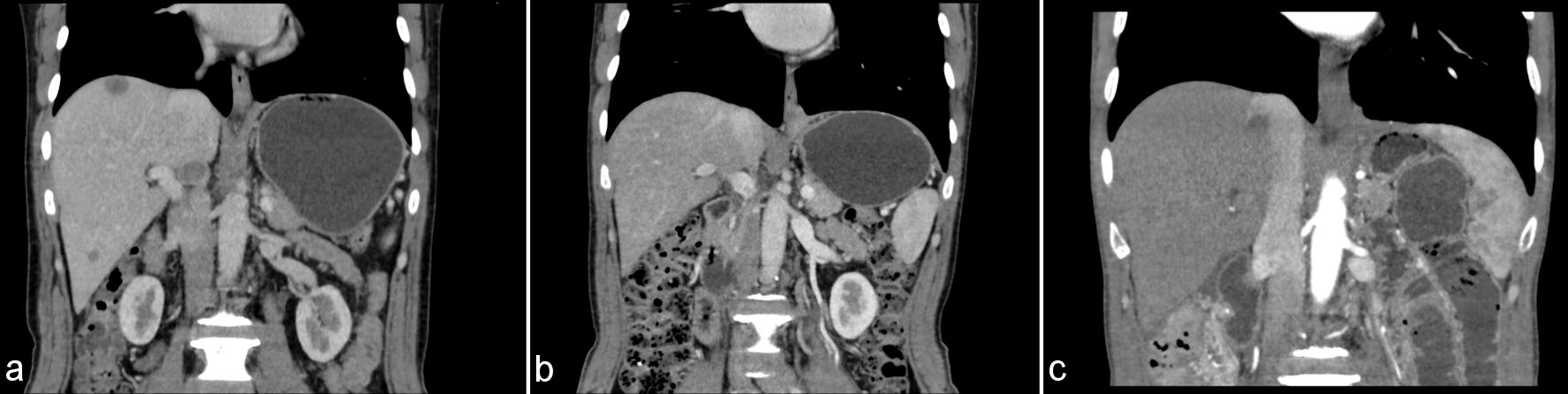 Click for large image | Figure 1. Contrast-enhanced computed tomography (CT) images before and after systemic therapy. (a) Baseline (December 2025) CT showing gastric wall thickening and multiple hypodense liver lesions. (b) Restaging CT (March 2026) showing that the liver lesion is less distinct than before, suggesting that the lesion may be resolving. (c) Restaging CT (October 2026) showing no evidence of hepatic recurrence or new metastatic lesions. |
Histological examination of the biopsy showed moderately to poorly differentiated adenocarcinoma. Immunohistochemistry (IHC) showed HER2 3+ (Fig. 2a–d) and positive expression of mutL homolog 1 (MLH1), postmeiotic segregation increased 2 (PMS2), mutS homolog 2 (MSH2), and mutS homolog 6 (MSH6), consistent with proficient mismatch repair (pMMR) (Fig. 3a–d). The PD-L1 (22C3) CPS was 30, and the Ki-67 index was approximately 90%. Both neuroendocrine markers and Epstein–Barr virus-encoded small RNAs were negative.
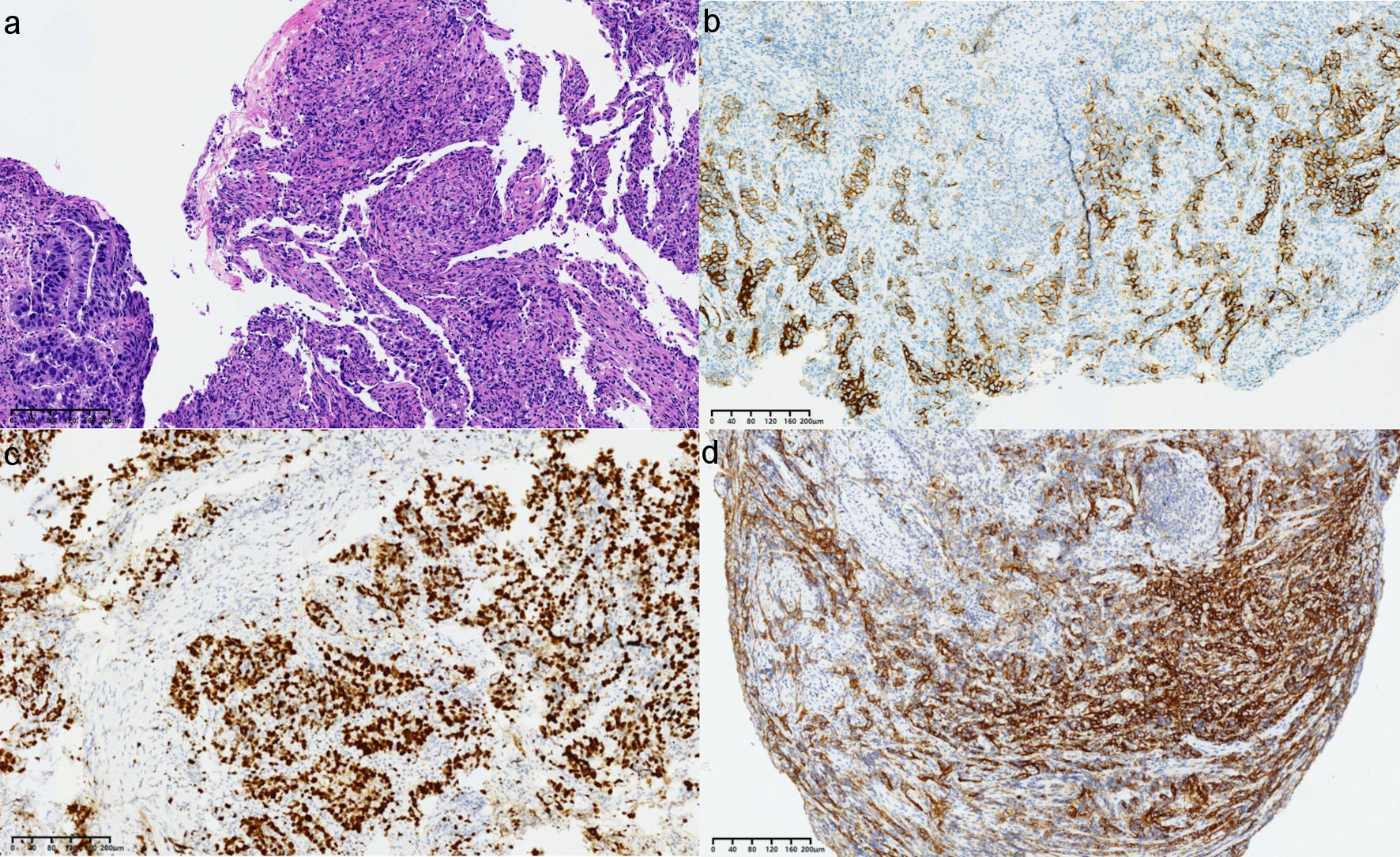 Click for large image | Figure 2. Pre-treatment endoscopic biopsy of gastric carcinoma. (a) Hematoxylin and eosin (H&E) staining, × 10 magnification, poorly differentiated adenocarcinoma. (b) Human epidermal growth factor receptor 2 (HER2) immunohistochemistry (IHC), × 10, 3+ complete membranous staining. (c) Ki-67 proliferation index IHC, × 10, 90%. (d) Programmed death-ligand 1(22C3) IHC, × 10, combined positive score (CPS) = 30. |
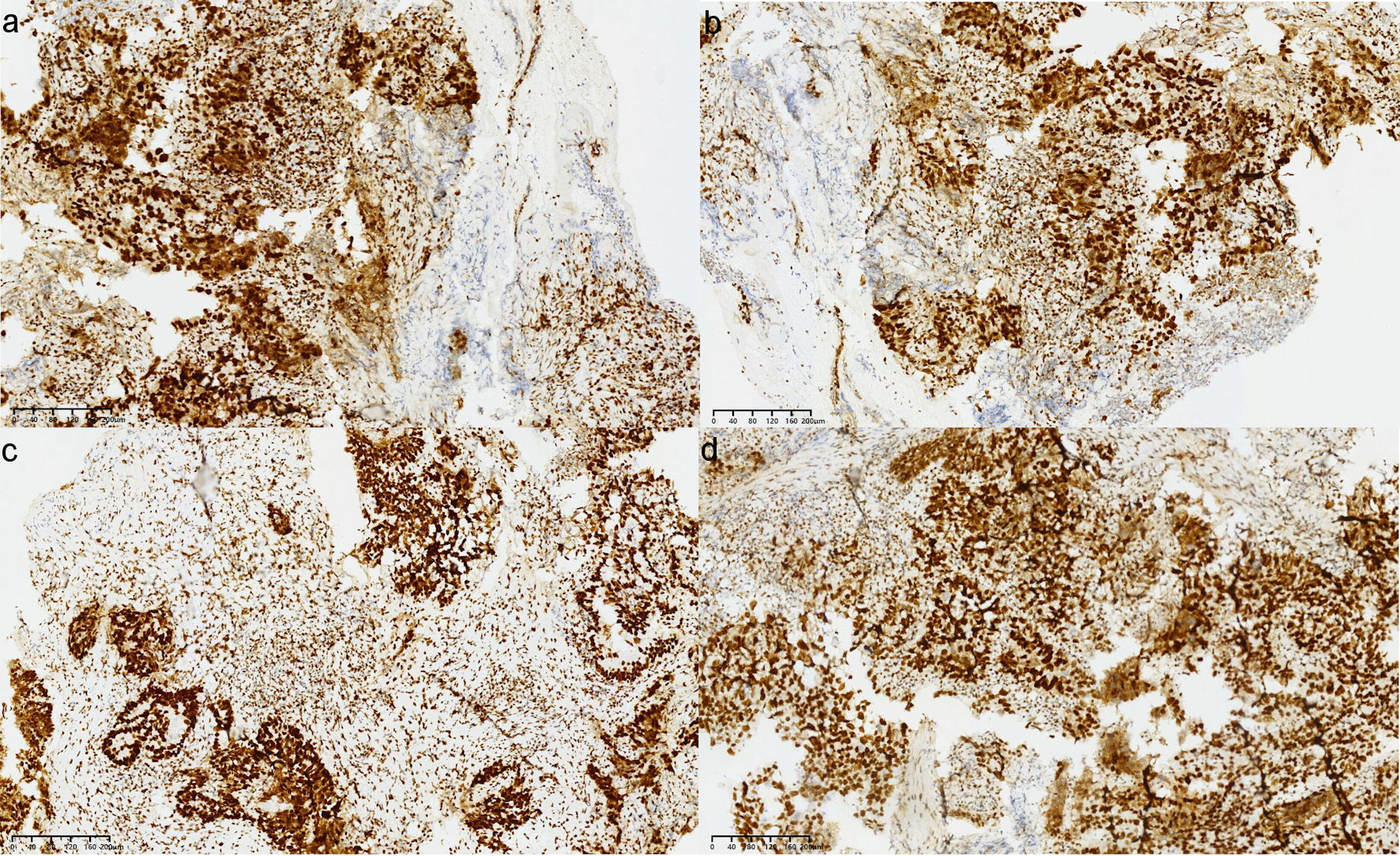 Click for large image | Figure 3. Mismatch-repair protein immunohistochemistry of pre-treatment biopsy specimen (× 10). (a) mutL homolog 1 (MLH1) positive; (b) mutS homolog 2 (MSH2) positive; (c) mutS homolog 6 (MSH6) positive; (d) postmeiotic segregation increased 2 (PMS2) positive, consistent with proficient mismatch-repair (pMMR) status. |
The patient was clinical staged as cT3NxM1, stage IV (gastric adenocarcinoma with synchronous liver metastases).
Systemic treatment
Because the patient was initially unsuitable for curative surgery (multiple liver metastases and para-aortic node metastases), systemic treatment was initiated, comprising oxaliplatin 200 mg/m2 by intravenous infusion (day 1), oral S-1 (tegafur/gimeracil/oteracil) 60 mg twice daily (days 1–14), and cadonilimab 375 mg and disitamab vedotin 120 mg by intravenous infusion. Treatment was repeated every 4 weeks for three cycles.
No significant adverse reactions, bone marrow suppression, or liver-function abnormalities were documented during treatment. Hepatoprotective agents, including polyene phosphatidylcholine and magnesium isoglycyrrhizinate, and antiemetics were administered as needed.
Treatment response assessment
Approximately 5 weeks after three cycles (March 2026), restaging CT showed marked reduction in gastric wall thickening, smaller perigastric, hepatoduodenal, and para-aortic lymph nodes, and near-resolution of the previously visible liver lesions (Fig. 1b). No new lesions were identified.
Carcinoembryonic antigen levels dropped from 7.30 to 3.91 ng/mL. Because the liver lesions had markedly regressed and no new disease was visible, the multidisciplinary tumor board (MDT) considered complete macroscopic resection of the gastric disease feasible and recommended conversion surgery.
Surgery
On April 13, 2026, the patient underwent distal gastrectomy with Billroth II reconstruction and D2 lymphadenectomy (perigastric, celiac, hepatic, splenic, and para-aortic nodal stations), jejunojejunostomy (Braun anastomosis), and abdominal drainage tube placement.
Intraoperative findings included a firm mass at the gastric antrum (approximately 3 × 3 × 2 cm, not penetrating the serosa), enlarged perigastric lymph nodes with fibrotic changes, and a grossly normal liver with no palpable suspicious lesions.
The liver was mobilized and examined using intraoperative ultrasound. Mild steatosis was noted, and no metastatic lesions were detected. No liver lesions were biopsied or resected.
The patient experienced a smooth and rapid postoperative recovery, with no intraoperative or postoperative complications.
The most recent follow-up imaging (contrast-enhanced CT of the abdomen in October 2026) showed no evidence of lesion progression or new lesions, indirectly supporting our clinical judgment of an R0 resection and complete response.
Pathological findings
Gross examination of the gastrectomy specimen revealed a vaguely defined fibrotic area in the antrum corresponding to the previous tumor site, and the entire tumor bed was submitted for histological evaluation.
Microscopic analysis revealed no viable tumor cells, while the presence of fibrosis, inflammation, foamy histiocytes, and multinucleated giant cells were consistent with treatment effect (tumor regression grade (TRG) 0). All 33 examined lymph nodes were negative (0/33), including three with treatment-associated changes (Fig. 4a–f). Gastric resection margins were negative, and the pathological staging was determined to be ypT0N0.
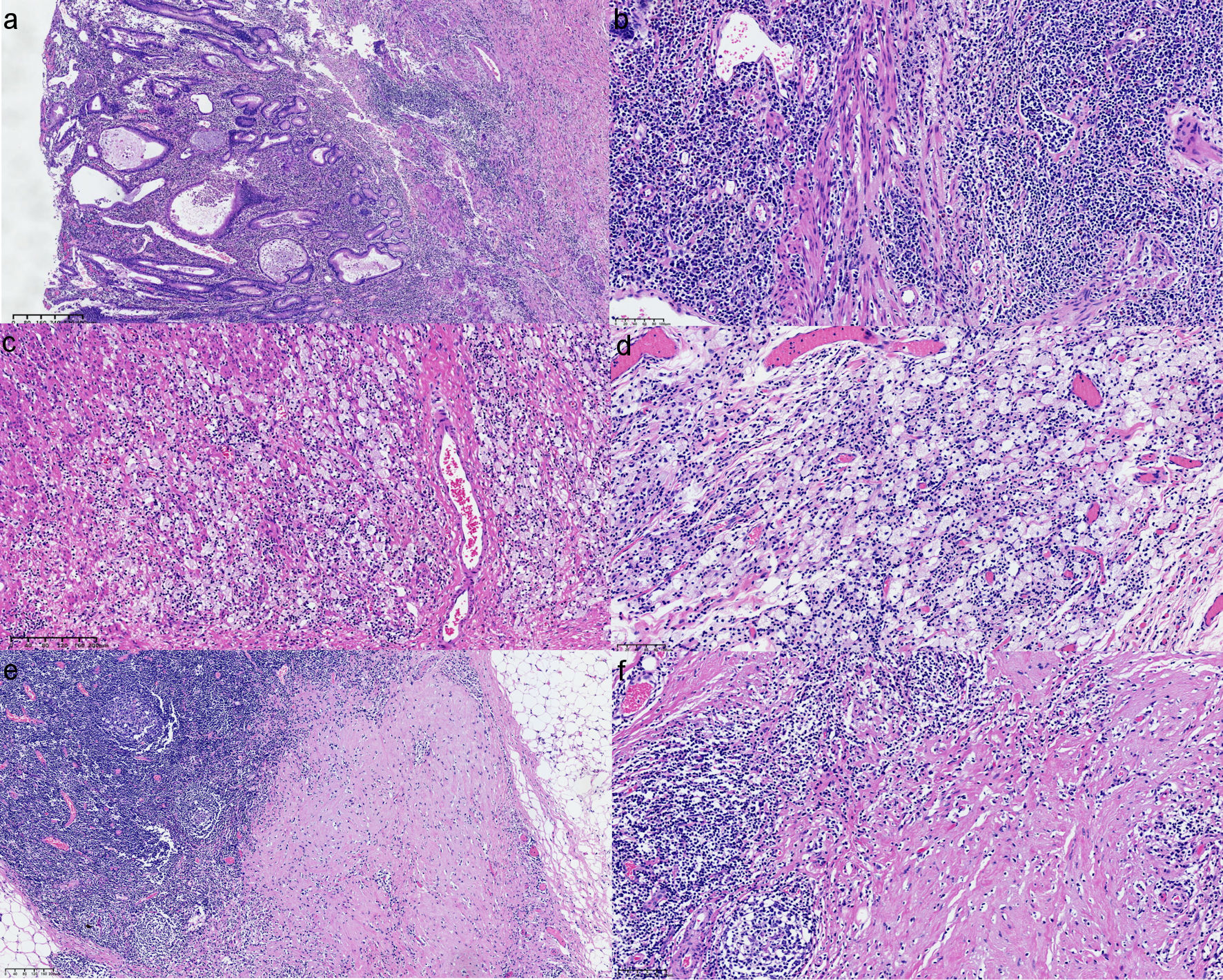 Click for large image | Figure 4. Post-treatment surgical resection specimen showing complete pathological regression in the examined gastric and nodal tissue (tumor regression grade 0). (a, b) Primary tumor bed with extensive stromal fibrosis and inflammatory cell infiltration, no viable tumor cells identified (hematoxylin and eosin (H&E) staining; original magnification, × 10 (a) and × 20 (b)). (c, d) Foamy histiocytes and stromal fibrosis (H&E staining; original magnification, × 10 (c) and × 20 (d)). (e, f) Lymph node showing post-treatment reactive changes without metastatic carcinoma (H&E staining; original magnification, × 10 (e) and × 20 (f)). |
| Discussion | ▴Top |
ICI-containing systemic therapy followed by conversion surgery
This narrative review focuses on original reports of ICI-containing systemic treatment followed by conversion surgery in initially unresectable GC. Planned preoperative treatment of initially resectable disease, chemotherapy-alone cohorts, case reports, and meta-analyses were not combined in a single response-rate denominator.
A previous study [6] reported the outcomes of ICI-based conversion therapy in 73 patients with initially unresectable GC (75.3% stage cIV). The pathological complete response (pCR) and major pathological response (MPR) rates were 24.7% and 37.0%, respectively, with the complete (R0) resection rate of 82.2%. The median overall survival was 41.3 months in the entire cohort. Nishi et al [7] reported conversion surgery in 11 of 36 initially unresectable metastatic patients after systemic treatment; 34 of the 36 received ICI plus chemotherapy.
Cadonilimab and HER2-directed treatment in GC
Cadonilimab simultaneously targets PD-1 and CTLA-4 [8]. A separately published single-arm meta-analysis of cadonilimab-containing regimens reported a pooled pCR estimate of 23% across varied treatment settings [9].
Potential contributions of the treatment components
This patient received SOX chemotherapy, cadonilimab, and disitamab vedotin concurrently. The HER2 3+ biopsy supported the use of the HER2-directed antibody-drug conjugate disitamab vedotin. SOX also had cytotoxic activity; the high Ki-67 index indicated high proliferation activity, which may have heightened chemotherapy sensitivity. Cadonilimab provided dual immune checkpoint blockade. The KEYNOTE-811 trial studied a different HER2-directed agent and checkpoint-inhibitor combination in advanced HER2-positive cancer [10], it cannot quantify the contribution of any drug in this case. Because all components were administered together, their individual effects and possible interactions cannot be separated.
Biomarker interpretation
Mismatch repair deficiency and PD-L1 expression have been associated with response to immune checkpoint blockade in advanced GC [11, 12], but findings across advanced-disease and preoperative settings should not be treated as validated predictors of pCR after conversion treatment. This patient had pMMR, a PD-L1 CPS of 30, and negative Epstein–Barr virus testing. These findings neither prove nor exclude a response to the combined regimen.
Clinical implications of the combined regimen
HER2-directed treatment plus chemotherapy has previously enabled conversion surgery. Hayano et al [13] reported surgery in six of 11 patients treated with trastuzumab-based chemotherapy, with R0 resection in four. In a multicenter retrospective cohort, Liang et al [14] reported conversion surgery in 50 of 118 patients receiving trastuzumab-based chemotherapy plus immunotherapy. Those approaches differ from the present combination of a HER2-directed antibody-drug conjugate, dual PD-1/CTLA-4 blockade, and SOX. The gastric, nodal pCR and resorption of metastatic lesions in this case add a pathological observation supporting further investigation of this combination as a conversion strategy.
The combination raises the hypothesis that targeting HER2 while blocking both PD-1 and CTLA-4 could deepen responses and increase opportunities for surgery compared with HER2-directed chemotherapy or conventional ICI-containing chemotherapy. However, this example is merely a case report, and this hypothesis still requires further large-scale prospective studies to be confirmed.
In a phase II study of disitamab vedotin in previously treated advanced GC, adverse events included cytopenias, fatigue, and elevated aminotransferases [15]. These toxicities may overlap with those of SOX; immune-mediated adverse events are an additional concern with checkpoint blockade [4]. Blood counts, liver function, and immune-related symptoms therefore require careful assessment during treatment and before surgery. The patient did not experience any significant adverse reactions, which is an encouraging result; however, the safety of this combination therapy still requires further validation.
Conversion surgery after a deep response
These findings also raise questions about the additional benefit of gastrectomy after a deep response to systemic treatment. Although a firm gastric mass remained at surgery, the resected tumor bed contained no viable carcinoma. Thus, a pCR was established retrospectively through examination of the surgical specimen, rather than known when surgery was selected. This discrepancy highlights the difficulty of identifying patients who may already have achieved pathological clearance. Conversely, regression on imaging does not provide pathological confirmation at unsampled metastatic sites. The present case cannot determine whether surgery improved survival or could safely have been omitted. Future studies should assess residual disease, durability of response, operative risk, and outcomes with continued systemic therapy versus conversion surgery.
Several limitations should be acknowledged: (1) it is a single case report with limited generalizability; (2) the follow-up duration is relatively short; (3) it is difficult to distinguish the effects of SOX, cadonilimab, and disitamab vedotin (moreover, while complete pathological response was confirmed in the sampled gastric and nodal tissue, the regressed liver lesions on imaging were not sampled); and (4) no tissue-based immune profiling was performed.
Conclusions
This case report demonstrates that for some patients with initially unresectable HER2-positive GC, an intensive systemic treatment regimen combining HER2-targeted therapy, dual PD-1/CTLA-4 immune checkpoint inhibition, and chemotherapy may create an opportunity for conversion gastrectomy. However, the complete pathological remission achieved by this patient postoperatively also raises questions regarding whether surgery can still provide additional benefits for such patients after they have achieved a deep remission with systemic therapy. Therefore, extensive prospective studies are still needed to explore the relationship among tumor response, treatment toxicity, and surgical benefits in this patient population.
Acknowledgments
We sincerely thank the patient for granting permission to publish this case report.
Financial Disclosure
This work was supported by the Cancer Innovative Research Program of Sun Yat-sen University Cancer Center (No. CIRP-SYSUCC-0030 to LX).
Conflict of Interest
The authors declare that there are no conflicts of interest regarding the publication of this case report.
Informed Consent
Written informed consent for publication, including radiological, intraoperative ultrasound, and pathological images, was obtained from the patient. The consent form was written in Chinese (the patient’s native language). All patient-identifiable information has been removed to protect patient privacy.
Author Contributions
Xin Shi: data curation, writing – original draft, resources. Wei Jun Wang: data curation, surgery, resources. Ke Ji He: data curation, surgery, resources. De Chen Wang: data curation, resources. Xiao Qin Li: pathological evaluation, supervision. Li Xu: conceptualization, MDT evaluation of synchronous liver-metastatic lesions, writing – review and editing, supervision. All authors have read and approved the final version of the manuscript.
Data Availability
The raw clinical data are not publicly available due to patient-privacy restrictions. Deidentified data supporting the findings of this report are available from the corresponding author upon reasonable request.
AI Use Declaration
No AI-based tools were used in preparing this manuscript.
| References | ▴Top |
- Janjigian YY, Shitara K, Moehler M, Garrido M, Salman P, Shen L, Wyrwicz L, et al. First-line nivolumab plus chemotherapy versus chemotherapy alone for advanced gastric, gastro-oesophageal junction, and oesophageal adenocarcinoma (CheckMate 649): a randomised, open-label, phase 3 trial. Lancet. 2021;398(10294):27-40.
doi pubmed - Rha SY, Oh DY, Yanez P, Bai Y, Ryu MH, Lee J, Rivera F, et al. Pembrolizumab plus chemotherapy versus placebo plus chemotherapy for HER2-negative advanced gastric cancer (KEYNOTE-859): a multicentre, randomised, double-blind, phase 3 trial. Lancet Oncol. 2023;24(11):1181-1195.
doi pubmed - Xu J, Jiang H, Pan Y, Gu K, Cang S, Han L, Shu Y, et al. Sintilimab plus chemotherapy for unresectable gastric or gastroesophageal junction cancer: the ORIENT-16 randomized clinical trial. JAMA. 2023;330(21):2064-2074.
doi pubmed - Shen L, Zhang Y, Li Z, Zhang X, Gao X, Liu B, Wang Y, et al. First-line cadonilimab plus chemotherapy in HER2-negative advanced gastric or gastroesophageal junction adenocarcinoma: a randomized, double-blind, phase 3 trial. Nat Med. 2025;31(4):1163-1170.
doi pubmed - Yoshida K, Yamaguchi K, Okumura N, Tanahashi T, Kodera Y. Is conversion therapy possible in stage IV gastric cancer: the proposal of new biological categories of classification. Gastric Cancer. 2016;19(2):329-338.
doi pubmed - Li S, Xu Q, Yu W, Liu Z, Cui X, Wei M, Shi D, et al. Survival and multi-omics analysis of immunotherapy-based conversion treatment for initially unresectable gastric cancer. Front Immunol. 2025;16:1753749.
doi pubmed - Nishi M, Wada Y, Takasu C, Tokunaga T, Nakao T, Kashihara H, Yoshimoto T, et al. Conversion surgery following combination treatment with immune checkpoint inhibitors and chemotherapy for initially unresectable gastric cancer. World J Surg. 2026;50(6):1631-1638.
doi pubmed - Keam SJ. Cadonilimab: first approval. Drugs. 2022;82(12):1333-1339.
doi pubmed - Yang L, Li J, Wang X, Yu X, Pei Z. Efficacy and safety of cadonilimab combined with chemotherapy for gastric or gastroesophageal junction adenocarcinoma: a single-arm meta-analysis. Front Immunol. 2026;17:1693179.
doi pubmed - Janjigian YY, Kawazoe A, Bai Y, Xu J, Lonardi S, Metges JP, Yanez P, et al. Pembrolizumab plus trastuzumab and chemotherapy for HER2-positive gastric or gastro-oesophageal junction adenocarcinoma: interim analyses from the phase 3 KEYNOTE-811 randomised placebo-controlled trial. Lancet. 2023;402(10418):2197-2208.
doi pubmed - Pietrantonio F, Randon G, Di Bartolomeo M, Luciani A, Chao J, Smyth EC, Petrelli F. Predictive role of microsatellite instability for PD-1 blockade in patients with advanced gastric cancer: a meta-analysis of randomized clinical trials. ESMO Open. 2021;6(1):100036.
doi pubmed - Kim ST, Cristescu R, Bass AJ, Kim KM, Odegaard JI, Kim K, Liu XQ, et al. Comprehensive molecular characterization of clinical responses to PD-1 inhibition in metastatic gastric cancer. Nat Med. 2018;24(9):1449-1458.
doi pubmed - Hayano K, Watanabe H, Ryuzaki T, Sawada N, Ohira G, Kano M, Uesato M, et al. Prognostic benefit of conversion surgery for HER2 positive stage IV gastric cancer; a case series study of eleven patients treated with trastuzumab-based chemotherapy. Surg Case Rep. 2020;6(1):219.
doi pubmed - Liang H, Liang C, Zhang J, Sun X, Huang K, Zhang H, Li G, et al. Conversion surgery after trastuzumab-based chemotherapy and immunotherapy for stage IV HER2-positive gastric cancer: a retrospective multicenter cohort study. Ann Surg Oncol. 2025;32(10):7556-7566.
doi pubmed - Peng Z, Liu T, Wei J, Wang A, He Y, Yang L, Zhang X, et al. Efficacy and safety of a novel anti-HER2 therapeutic antibody RC48 in patients with HER2-overexpressing, locally advanced or metastatic gastric or gastroesophageal junction cancer: a single-arm phase II study. Cancer Commun (Lond). 2021;41(11):1173-1182.
doi pubmed
This article is distributed under the terms of the Creative Commons Attribution 4.0 International License (CC BY 4.0), which permits unrestricted use, distribution, and reproduction in any medium, including commercial use, provided the original work is properly cited.
Gastroenterology Research is published by Elmer Press Inc.