| Gastroenterology Research, ISSN 1918-2805 print, 1918-2813 online, Open Access |
| Article copyright, the authors; Journal compilation copyright, Gastroenterol Res and Elmer Press Inc |
| Journal website https://gr.elmerpub.com |
Review
Volume 19, Number 6, December 2026, pages 303-320

Reassessing the Role of Probiotics in Functional Dyspepsia: Insights From Current Evidence, Pitfalls, and Future Directions
Konstantinos Ekmektzogloua, b, Vasileios Samelisa, Theodore Rokkasa
aMedical School, European University of Cyprus, Nicosia, Cyprus
bCorresponding Author: Konstantinos Ekmektzoglou, Medical School, European University of Cyprus, Nicosia, Cyprus
Manuscript submitted September 21, 2026, accepted October 22, 2026, published online November 27, 2026
Short title: Probiotics in Functional Dyspepsia
doi: https://doi.org/10.14740/gr2200
| Abstract | ▴Top |
Functional dyspepsia (FD) is a multifactorial disorder in which classical gastric sensorimotor disturbances do not account for symptomatology. Recent evidence has moved the pathophysiological orientation to a gastroduodenal model, focusing on duodenal micro-inflammation, altered intestinal permeability, and microbial dysbiosis. This paradigm change has affected therapeutic strategies, shifting from acid suppression and prokinetics to immune modulation and microbial homeostasis. Currently, a lot of research has been done on the role of probiotics in FD, mainly due to their potential to restore gut barrier integrity, regulate immune responses, and rebalance microbiota composition. Experimental evidence implies, however, that certain strains can inhibit inflammatory signaling, increase epithelial function and promote beneficial metabolites. On the other hand, in clinical trials, including those on people with upper gastrointestinal symptoms who fail to meet FD criteria, probiotics have been shown to alleviate postprandial discomfort and epigastric pain. PubMed, Embase, Cochrane Central Register of Controlled Trials, Scopus, and Web of Science electronic databases were searched for randomized clinical trials (RCTs), cohort studies, pediatric studies, as well as non-human (in vivo) studies reporting on the effect of prebiotics in the clinical and experimental setting of FD. Overall, evidence suggests that certain probiotic formulations may improve selected symptoms in selected FD populations, but the available studies do not establish a consistent class-wide therapeutic effect. Microbiome-based biomarkers may eventually help characterize disease heterogeneity and identify patients who could benefit from specific interventions, but their clinical utility remains to be established. Overall, microbiome-directed approaches represent a promising area of investigation that may complement, rather than replace, established FD management strategies, including acid suppression, prokinetics, and neuromodulators. Future well-designed clinical trials should prioritize standardized FD diagnostic criteria, clearly defined symptom subtypes, strain-specific interventions, clinically meaningful primary endpoints, sufficient sample sizes, and longer post-treatment follow-up. These measures would help determine whether the observed benefits are reproducible, clinically meaningful, and sustained.
Keywords: Functional dyspepsia; Probiotics; Treatment; Efficacy
| Introduction | ▴Top |
Functional dyspepsia (FD), a disorder of gut-brain interaction characterized by symptoms of gastroduodenal origin (early satiation, postprandial fullness, epigastric pain, and epigastric burning), in the absence of organic, systemic, or metabolic disease that would explain the symptoms, is one of the most common disorders encountered on a daily basis in primary care [1]. Over the years, our knowledge (and, hence, our diagnostic criteria) regarding FD has evolved from the Rome I (1994) and II (2000) Consensus, which defined dyspepsia as primarily upper abdominal pain or discomfort centered in the upper abdomen and therefore did not account for meal-related symptoms, to the newest Rome III (2006), IV (2016) and V (2026) Consensus, which characterized dyspepsia by the presence of symptoms that are considered to originate from the gastroduodenal region and share a clear correlation with meals; postprandial distress syndrome (PDS) is clearly distinguished from epigastric pain syndrome (EPS), with meal-related symptoms relevant to PDS but not required for all FD patients [2, 3].
The most recent data according to the Rome IV definition report that FD worldwide prevalence is 7.2% (ranging from 2.2% to 12.3%), affecting predominantly women and decreasing in numbers in geriatric populations, with the most prominent subtype being that of PDS [4]. Pathophysiologically, based on a novel biopsychosocial conceptual model, FD is associated with alterations in the host’s immune function, gastrointestinal (GI) motility, epithelial permeability, and the microbiome, as well as abnormalities in how patients perceive visceral stimuli and processes these stimuli within the central nervous system. However, FD treatment remains a matter of ongoing debate, with long-term regimens sometimes being less than efficacious. To make things even more complicated, inflammation and the individuals’ genetic and psychological background render therapeutic efficacy problematic [2].
Regarding treatment options, as no etiological therapy is available to date, lifestyle modifications (aerobic exercise, dietary therapies, etc.), acid suppression through proton pump inhibitors (PPIs) and histamine-2-receptor antagonists (H2RAs), Helicobacter pylori (HP) eradication, gut-brain neuromodulators (tricyclic antidepressants and antipsychotics), prokinetics and cognitive behavioral therapy in combination with interpersonal psychodynamic informed psychotherapy are suggested as probable pharmacological (and non-pharmacological) alternatives. Interestingly, some of these options are not endorsed by all governing bodies worldwide due to the low level of evidence that accompanies their efficacy (different FD subtypes respond better to specific drugs), highlighting, once more, the perplexity of FD’s pathophysiological cascade [5–7].
In an attempt to add to our therapeutic armamentarium, novel agents, aiming at different pathophysiological pathways, are being investigated. Modulation of the gastric and enteric microecology can serve as a promising new strategy for treating (or at least alleviating) FD symptoms. Dietary microorganisms, capable of modulating or regulating gastric microecology and intestinal flora and, thereby, influencing GI function, are being explored as a promising therapeutic strategy against FD [8, 9]. Probiotics, i.e. “live microorganisms which when administered in adequate amounts confer a health benefit on the host” [10], are constantly being investigated either in preclinical or clinical settings for functional gastrointestinal diseases (FGIDs) with data presented on network meta-analyses in an attempt to elucidate the probiotic(s) with the best efficacy [11].
Unfortunately, up to now, data provided have shown such a strong heterogeneity that they preclude or limit quantitative pooling, rendering the undertaking of a systematic review and/or (network) meta-analysis ambiguous. All previous attempts to do so include narrative reviews [9, 12, 13], expert opinions and insights into the pathophysiology of intestinal/duodenal microbiota changes and their metabolites expressing low-grade inflammatory changes in the development of FD [13–16], and a solitary meta-analysis that failed to provide robust data on the use of probiotics to improve the symptoms of FD; the small number of included studies and patients, the presence of an active HP infection, an unclear risk of bias, subjective, dichotomous results, rather than mechanical endpoints, and the short treatment duration (up to a 12 weeks) may have failed to provide enough power to detect any meaningful difference in efficacy [17].
We undertook the task of presenting, via a concise systematic review, all new and previous clinical data regarding the efficacy of probiotics in FD patients, also focusing on current research pitfalls and considering possible ways to overcome them in the future clinical setting.
| Materials and Methods | ▴Top |
Medical Subject Headings (MeSH) terms: (“functional, dyspepsia” [MeSH Terms]) OR (“functional” [All Fields] AND “dyspepsia” [ALL FIELDS]) OR (“functional dyspepsia” [All Fields] OR (“functional” [All Fields] AND “dyspepsia” [All Fields]) were utilized in a computerized search for studies published in the PubMed, Embase, Cochrane Central Register of Controlled Trials, Scopus, and Web of Science electronic databases up to March 2026. Only manuscripts with full text in English were included. KE and VS assessed studies for inclusion after duplicate removal. All references of all eligible studies were searched manually to identify potential studies missed during the first search. Randomized clinical trials (RCTs), cohort studies, pediatric studies, as well as non-human (in vivo) studies were included in this review. Editorials, narrative reviews, conference abstracts, studies that did not detail patient information, and case reports/series were excluded.
Methodological quality and risk of bias were assessed according to study design. RCTs were evaluated using the Cochrane Risk of Bias 2 (RoB 2) tool, which considers bias arising from the randomization process, deviations from intended interventions, missing outcome data, measurement of the outcome, and selection of the reported result. Each domain was assessed in relation to the relevant study outcome, and an overall risk-of-bias judgment was assigned according to the tool’s decision rules. Observational cohort studies were assessed using ROBINS-I or the Newcastle–Ottawa Scale. The assessment considered the methodological limitations relevant to the selected framework, including participant selection, comparability of study groups, ascertainment of exposure and outcomes, and the potential for confounding, as applicable. Any adaptations to the original assessment criteria were documented, together with the rationale for those modifications. For each study, the assessment was performed by KE and VS independently. Disagreements were resolved through adjudication by a third reviewer (TR). The domain-level judgments and overall assessments were summarized descriptively. Because the studies included differed in design, population, interventions, and outcome measures, the assessments were interpreted within each study-design category rather than treated as directly interchangeable scores. The risk-of-bias findings were considered when interpreting the consistency and reliability of the reported evidence on probiotic efficacy in FD. Ultimately, 19 articles were selected for this systematic review (Fig. 1).
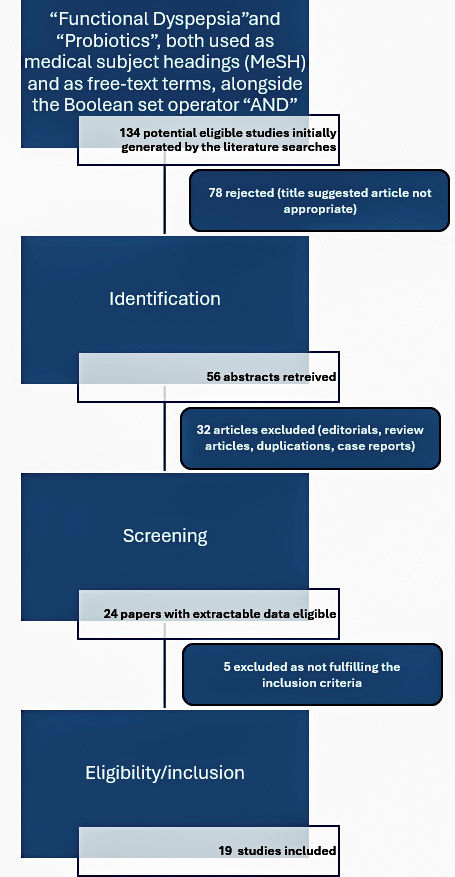 Click for large image | Figure 1. Flow chart describing the identification, screening, eligibility and inclusion of the studies in this analysis. |
So as to aid readers with data appraisal, we chose to categorize data according to the criteria used for FD definition (Rome IV, III, II/I) as well as all evidence from pediatric populations and experimental studies separately. Studies are presented from the earliest to the latest ones. Included studies were classified according to the population enrolled. Studies involving patients with FD diagnosed using established diagnostic criteria (e.g., Rome criteria) were considered direct evidence for the efficacy of probiotics in FD. Studies enrolling patients with nonspecific GI symptoms, symptom-defined dyspepsia without clearly documented diagnostic criteria, or broader GI disorders were considered indirect evidence. Pediatric and experimental studies were categorized separately because their findings may not be directly generalizable to adults with clinically diagnosed FD. This classification was considered when synthesizing and interpreting treatment outcomes.
Classification of microbial interventions
Microbial interventions were classified according to their viability and formulation as reported in the original studies. Preparations containing viable microorganisms were classified as live probiotics, whereas heat-killed or otherwise inactivated microbial preparations were identified separately as inactivated microbial products. The term “postbiotic” was used only where supported by the characteristics of the preparation and the terminology or evidence provided in the source study, as previously described [18]. Experimental studies involving live microorganisms, inactivated cells, or microbial-derived products were interpreted separately, considering differences in their potential mechanisms of action and the extent to which their findings could be translated to clinical practice.
We opted to focus on efficacy through symptom improvement and not safety, since all included studies (when reported) demonstrated generally good tolerability.
| Studies on FD and Probiotics Based on Rome IV Criteria | ▴Top |
Most studies on the efficacy of probiotics on FD were conducted in China. Very recently, Huang et al compared patients with FD accompanied by anxiety (n = 116) and those with FD without anxiety (n = 114) in an RCT. Participants in each group were randomly assigned to received conventional treatment (acid suppression, gastric mucosal protection, and prokinetic therapy) with or without oral probiotics (Bacillus licheniformis and Bifidobacterium). Both serum inflammatory factors and intestinal mucosal permeability markers (interleukin (IL)-1, IL-6, tumor necrosis factor (TNF)-α, lipopolysaccharide (LPS), zonulin, diamine oxidase (DAO), and intestinal fatty acid-binding protein (I-FABP)) as well as scoring systems for scale rating measurement (the Hamilton Anxiety Scale (HAMA) and the Patient Assessment of Gastrointestinal Disorders-Symptom Severity Index (PAGI-SYM)) were reported. Data revealed significant reductions in the PAGI-SYM scores (P < 0.001) in both FD groups (with and without anxiety). Even though lower I-FABP values (odds ratio (OR) = 0.999, P = 0.036), lower LPS values (OR = 0.998, P = 0.013), and probiotic intervention (OR = 5.138, P = 0.000) were significantly associated with symptom relief, these findings cannot be meaningfully interpreted without knowing the measurement scale and clinically relevant increment of I-FABP and LPS unless mediation analysis can be actually performed [19].
Zhang et al assigned 200 FD patients to receive placebo, a PPI (rabeprazole), or Bifidobacterium animalis subsp. lactis BL-99 (BL-99) (in either a low or a high dose) for an 8-week period. The clinical response rate (CRR) based on the FD score for the high-dose BL-99 group (45 (90.0%)) was significantly higher than that for the placebo (29 (58.0%), P = 0.001), the low-dose BL-99 (37 (74.0%), P = 0.044) and the positive control (35 (70.0%), P = 0.017) groups (an effect that was sustained for 2 weeks after treatment but disappeared after 8 weeks). Interestingly enough, no significant difference between the high- and low-dose BL-99 groups was reported [20].
Australian researchers reported a 4-week, double-blinded RCT involving 67 patients with self-reported FGID, in which a proprietary strain of deactivated Bacillus subtilis (BG01-4™) high in branched-chain fatty acids (BCFA) was used as the intervention. Data revealed a 10% FD improvement (P = 0.04) in the intervention group compared to the placebo group amongst the FGID patients [21].
A single-center, double-blind, RCT from Belgium randomly assigned 68 adult FD patients (on or off PPIs) to receive 8 weeks of treatment with Bacillus coagulans MY01 and Bacillus subtilis MY02 or placebo. The proportion of clinical responders (as expressed through the PDS score) was higher with probiotics (12 (48%) of 25) than with placebo (6 (20%) of 30) (relative risk 1.95 (95% confidence interval (CI), 1.07–4.11); P = 0.028) [22].
Two distinct cohort studies from China and Italy reported on the effect of the ingestion of members of the Lactobacillaceae family on its ability to relieve the symptoms of FD. In the former, a beverage containing Lactobacillus paracasei LC-37 (LC-37) managed to significantly decrease clinical symptom scores (abdominal pain and belching were significantly decreased after 14 days and almost absent after 28 days of treatment) in a small cohort of 26 patients. Meanwhile, relevant beneficial intestinal metabolites increased and harmful intestinal metabolites decreased [23]. In the latter, a cohort of 2,676 FD patients was enrolled (1,357 with PDS; 1,319 with EPS); a probiotic combination of Lacticaseibacillus rhamnosus LR04, Lactiplantibacillus pentosus LPS01, Lactiplantibacillus plantarum LP01, and Lactobacillus delbrueckii subsp. delbrueckii LDD01, alone or combined with prokinetics, antacids, or PPIs, was administered for 30 days. A clinical symptom questionnaire was administered at the start of the study and at 15 days after the end of probiotic treatment; all patients showed significant improvements in dyspeptic symptoms following treatment. More specifically, in patients with PDS, probiotic alone resulted in the lowest prevalence of symptoms following treatment, while patients with EPS showed no clear between-treatment differences [24].
The characteristics of the studies regarding the effectiveness of probiotics in treating FD patients (as defined by Rome IV criteria) are summarized on Table 1 [19–24] alongside their methodological quality and risk-of-bias assessment (Fig. 2).
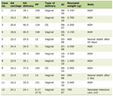 Click to view | Table 1. The Main Characteristics of the Studies Regarding the Efficacy of Probiotics in Patients With FD (as Defined Through the Rome IV Criteria) |
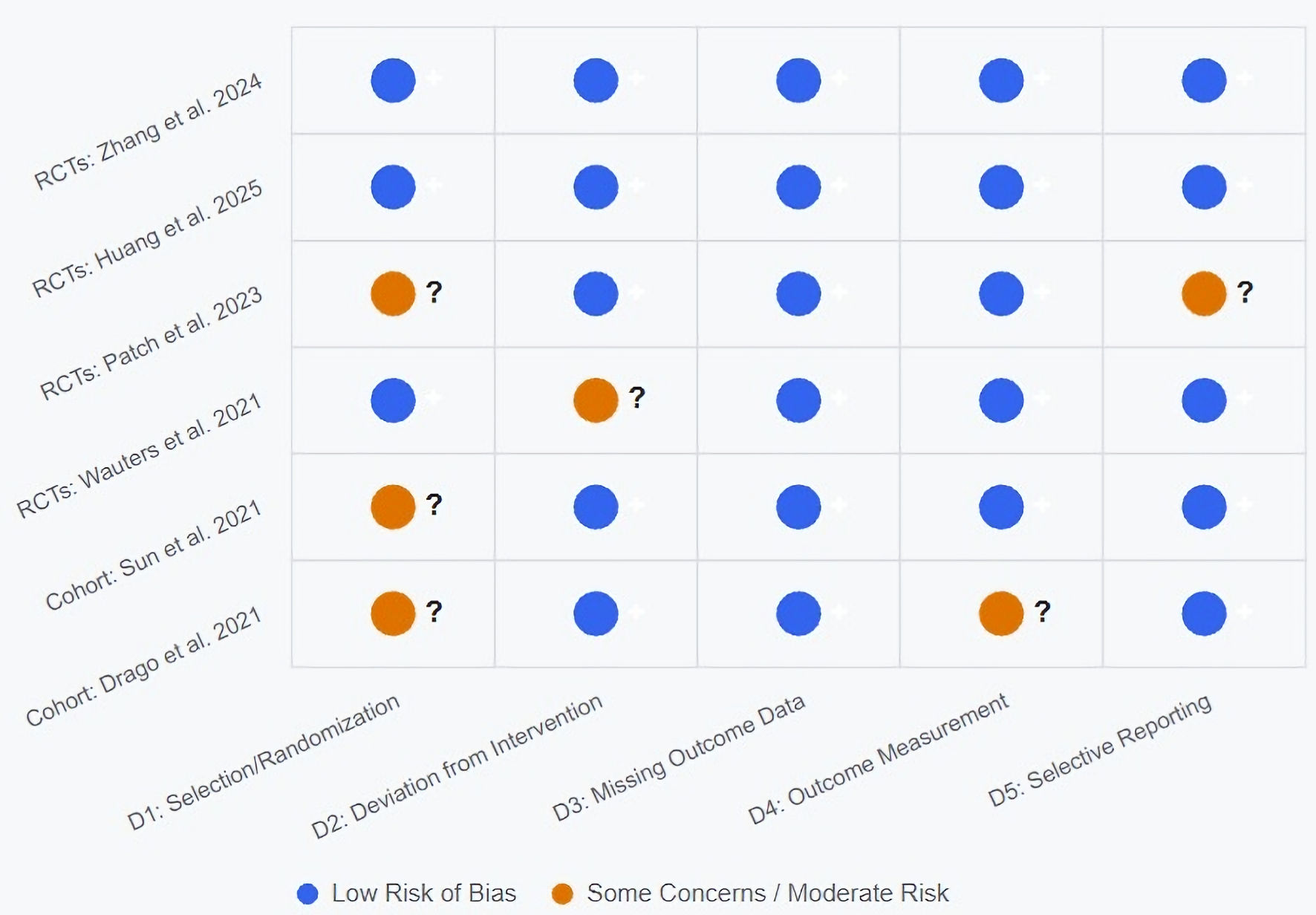 Click for large image | Figure 2. Methodological quality and risk-of-bias assessment across all included FD clinical trials and observational studies using Rome IV criteria. The matrix presents a study-by-study evaluation across five core bias domains using standardized parameters from the Cochrane RoB 2 tool (for RCTs) and ROBINS-I/Newcastle-Ottawa criteria frameworks (adapted for cohort designs). Blue circles indicate low risk of bias; orange circles (?) indicate some concerns or moderate risk of bias. No domains met criteria for high risk of bias. FD: functional dyspepsia; RCTs: randomized clinical trials. |
| Studies on FD and Probiotics Based on Rome III Criteria | ▴Top |
A prospective, randomized, double-blind, placebo-controlled, parallel-group study from India including 60 adults with symptoms of GI discomfort randomized 1:1 into intervention or placebo groups reported significant improvement in the Severity of Dyspepsia Assessment (SODA) score final scores and subscores on days 30 and 37 when a multistrain probiotic blend of Bacillus coagulans (SNZ 1969), Bacillus clausii (SNZ 1971), and Bacillus subtilis (SNZ 1972) was administered [25].
Data from Japan in three different studies performed in a total of nearly 250 adult participants revealed interesting findings on the use of Lactobacillus gasseri (OLL2716). Ohtsu et al reported that in 116 HP-negative patients allocated in a 1:1 ratio to placebo or probiotics, the elimination rate for major FD symptoms was 17.3 and 35.3% in the placebo and L. gasseri (OLL2716) groups, respectively (P = 0.048) [26]. Similar results were reported in two smaller studies [27, 28]. A small “proof of concept” Italian study reported a significant amelioration of FD symptoms (nausea, belching, “pain/discomfort in the abdominal upper quadrants” “postprandial gastric distension” and “postprandial fullness”, (P < 0.05)) when extra virgin olive oil enriched with probiotics was blindly added to the common diet of eight subjects for 7 days [29].
Studies reporting on the efficacy of probiotics in treating FD patients (as defined by Rome III criteria) are depicted in Table 2 [25–29] alongside their methodological quality and risk-of-bias assessment (Fig. 3).
Click to view | Table 2. The Main Characteristics of the Studies Regarding the Efficacy of Probiotics in Patients With FD (as Defined Through the Rome III Criteria) |
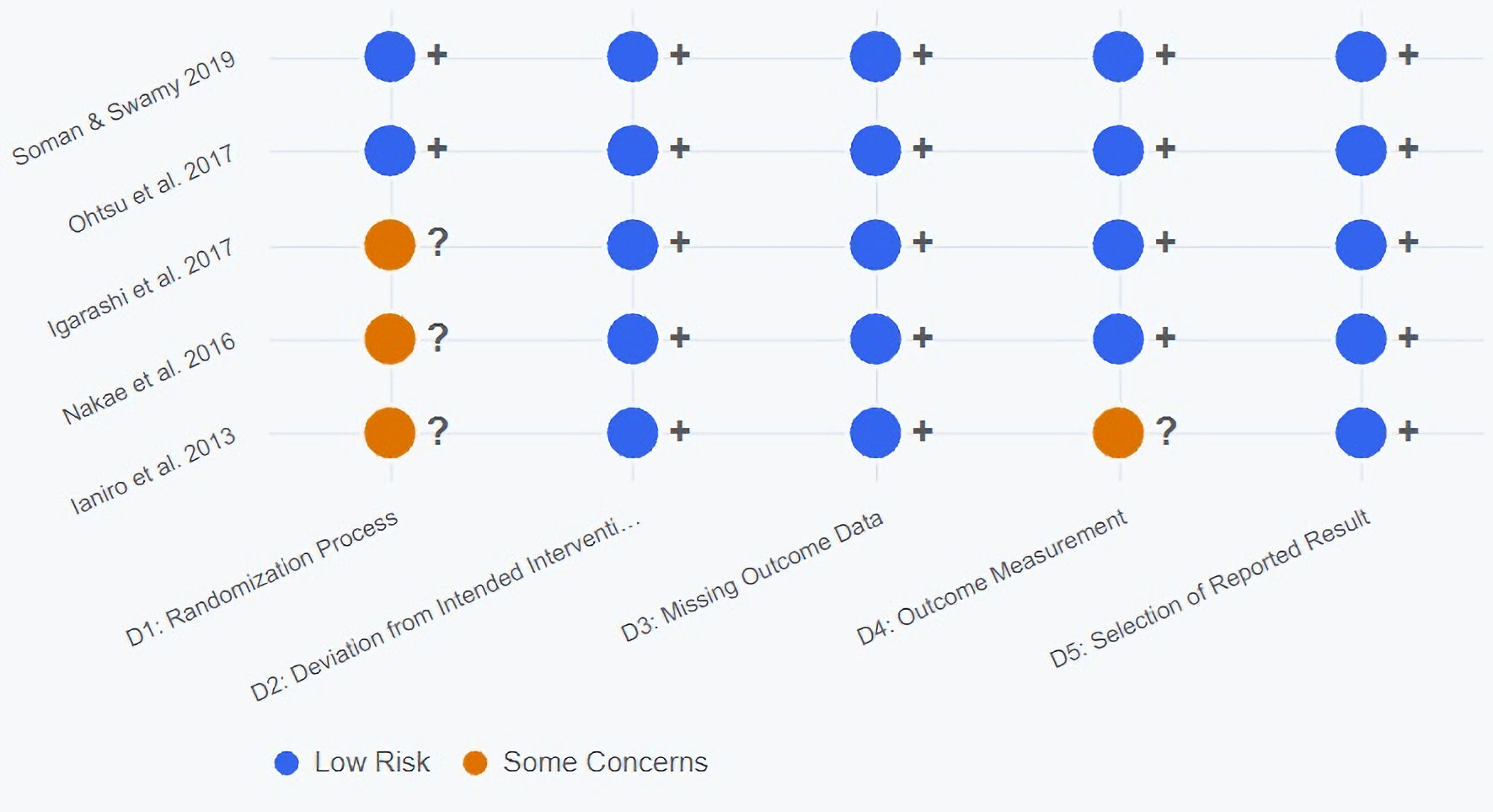 Click for large image | Figure 3. Methodological quality and risk-of-bias cross-tabulation matrix for all FD studies using Rome III criteria. Individual study parameters were evaluated across five critical domains based on the Cochrane risk-of-bias criteria. Blue circles (+) represent low risk of bias; yellow circles (?) indicate some concerns or moderate risk secondary to unblinded open-label configurations or pilot-scale sample sizes. No domains met criteria for high risk of bias. FD: functional dyspepsia. |
| Studies on FD and Probiotics Based on Earlier Rome Criteria | ▴Top |
Even though, then, FD (pain or discomfort centered in the upper abdomen) was considered a part of FGIDs as a whole and therefore, data cannot offer much guidance, a single study had already reported some preliminary interesting data.
A mixture of probiotics containing from five up to 12 species of Lactobacilli, Bifidobacteria, Saccharomyces, and Bacilli (Lactobacillus acidophilus, Bifidobacterium bifidum, Lactobacillus bulgaricus, Lactobacillus lactis, Lactobacillus brevis, Lactobacillus caucasicus, Lactobacillus fermenti, Lactobacillus leichmannii, Lactobacillus casei, Lactobacillus plantarum, Lactobacillus helveticus, and Saccharomyces boulardii) when administered for more than 12 weeks to a total of 48 patients with FGIDs failed to improve the Gastrointestinal Quality of Life Index (GIQLI) and visual analogue scale (VAS) for GI symptoms. However, clinical improvement in all GI symptoms was indeed evident [30].
| Studies on FD and Probiotics on Pediatric Populations | ▴Top |
A small Iranian RCT involving 16 pediatric patients with FD (as defined by Rome III criteria) on Lactobacillus reuteri and 13 patients on placebo revealed that 11 children (68%) showed a significant response to probiotic treatment, compared to the placebo group (P < 0.001), in terms of duration, severity, and frequency of pain [31].
The largest pediatric study of FD to date was a double-blind, randomized controlled trial in Indonesia. A total of 116 children who fulfilled the Rome III criteria for FD were randomized into two groups to receive either a mixture of Lactobacillus rhamnosus and Lactobacillus acidophilus or placebo for 2 weeks. Even though the probiotics and placebo groups were not significantly different in recovery from FD (29.3% vs. 13.8%, respectively; P = 0.432), in pain severity (P = 0.08) or pain duration (P = 0.091), the probiotics group had a significantly reduced frequency of pain compared to the placebo group (P = 0.0001) [32].
Interestingly enough, a multicenter, randomized, double-blind, placebo-controlled, crossover trial from Italy involving 25 pediatric FD patients failed to record significant improvement in terms of abdominal pain and quality of life (QoL) when a probiotic mixture of three Bifidobacteria (infantis M-63, breve M-16V, and longum BB536) was administered for 6 weeks. After a 2-week “washout” period, each patient was switched to the other group and followed up for a further 6 weeks [33].
Data from these studies (all defining FD according to the Rome III criteria) are summarized in Table 3 [31–33], as well as their methodological quality and risk-of-bias assessment (Fig. 4).
Click to view | Table 3. The Main Characteristics of the Studies Regarding the Efficacy of Probiotics in Pediatric Patients With FD |
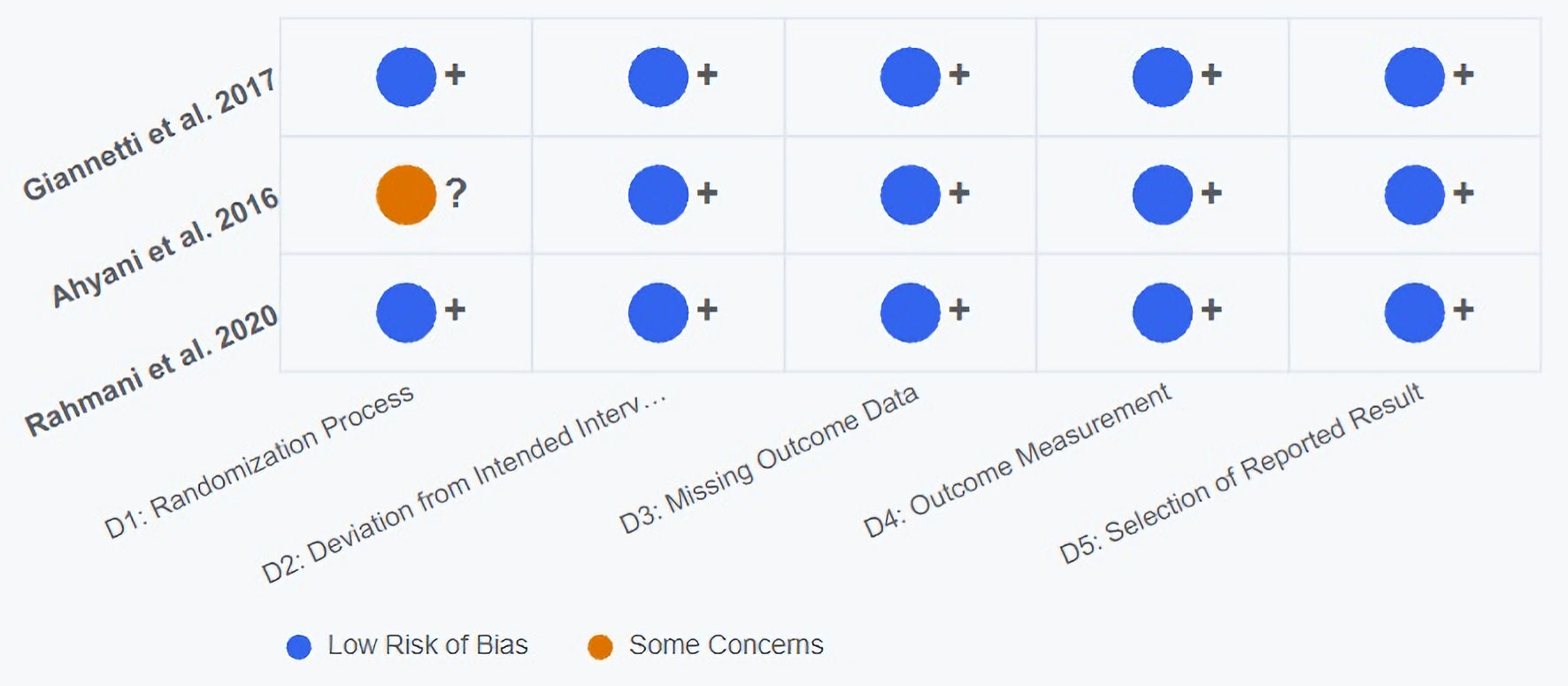 Click for large image | Figure 4. Methodological quality and risk-of-bias cross-tabulation matrix for FD pediatric studies. Individual study parameters were evaluated across five critical domains based on the Cochrane RoB 2 tool framework. Blue circles (+) represent low risk of bias; yellow circles (?) indicate some concerns or moderate risk secondary to unblinded open-label configurations or pilot-scale sample sizes. No domains met criteria for high risk of bias. FD: functional dyspepsia. |
| Experimental Studies | ▴Top |
The administration of heat-killed Lacticaseibacillus paracasei HP7 in a loperamide-induced FD mouse model improved gastric emptying and enhanced peristalsis; this was attributed to: (1) the upregulation of the expression of genes related to smooth muscle contraction (5HT4 receptor, anoctamin-1, ryanodine receptor 3, and smooth muscle myosin light-chain kinase); (2) the modulation of key GI hormones (gastrin, glucose-dependent insulinotropic peptide, and peptide YY); and (3) restoration of the activities of digestive enzymes (amylase and trypsin) [34, 35]. Even though, by definition, heat-killed Lacticaseibacillus paracasei HP7 cannot be strictly defined as a probiotic (but rather as a postbiotic since it is not a live microorganism), these non-viable heat-killed microbial cells or cell fractions still retain health benefits and can offer some insight into immune modulation [36].
Moreover, when a low-alcohol (1% alcohol content) beverage that contained probiotics, minerals, and vitamins was administered to FD Wistar rats, data revealed a significant decrease (P < 0.05) in the gastric residual rate and a corresponding significant increase (P < 0.05) in the amount of pepsin in the treatment group; researchers postulated that this beverage could regulate the expression of short-chain fatty acids (SCFAs) in the colon, and, thereby, increase ghrelin, motilin, and gastrin plasma concentrations [37].
Furthermore, when a probiotic mixture composed of Lactobacilli and Bifidobacteria (Lactobacillus acidophilus NCFM, Bifidobacterium lactobacillus HN-019, Bifidobacterium lactobacillus Bi-07, Bifidobacterium lactobacillus BL-04, Lactobacillus rhamnosus HN-001, Lactobacillus paracei LPC-37, YO-MIX 725 Lactic acid bacteria and YO-MIX 863 Lactic acid bacteria) was administered to 10 female Sprague-Dawley rats in an experimental FD model, abdominal distension and diarrhea improved (P < 0.001). The composition analysis of their cecal microflora, also, reported a decrease of the relative abundance of Streptococcus (P < 0.05) and an increase in the relative abundance of Anaeroplasma (P < 0.05) [38]; Anaeroplasma has been shown to have potential anti-inflammatory properties [39].
| Current Pitfalls | ▴Top |
Characteristics of the study populations
The included clinical studies differed in their population characteristics and diagnostic definitions. Some specifically enrolled patients with FD diagnosed according to established criteria, whereas others investigated probiotics in individuals with broader GI symptoms or populations in whom FD was not clearly established. These differences limit direct comparisons across studies. Findings from studies involving patients with formally diagnosed FD provide the most direct evidence regarding the efficacy of probiotics for this condition, whereas findings from broader symptom-based populations should be interpreted as indirect evidence.
HP (co)infection
When discussing FD patients, a lot of studies chose to include HP-infected individuals when addressing the efficacy of probiotics [40]. HP infection has been associated with dyspepsia symptoms through gastroduodenal motor and sensory dysfunction, an end result of chronic gastric and duodenal mucosal inflammation [41]. However, since “no evidence of organic, systemic, or metabolic disease that is likely to explain the symptoms on routine investigations (including at upper endoscopy)” is required for defining FD, we deliberately chose to exclude studies involving HP-positive patients with FD (or at least studies that specifically used the Rome criteria for patient inclusion) [1, 6]. Data can be even more challenging, when trying to evaluate microbial shifts after HP treatment regarding Bacteroides, Bifidobacterium, Clostridium, Enterobacteriaceae, and Lactobacillus strains and, therefore, their impact on dyspepsia [42, 43].
GI microbiota and metabolites
Proteobacteria, Firmicutes, Actinobacteria, and Bacteroidetes account for over 98% of the total gut microbiota promoting health in non-FD individuals. Lactobacilli enhance the systemic immune effect through the antibacterial action of their metabolites, regulate the production of anti-inflammatory cytokines, inhibit HP growth, and reduce the production of toxic metabolites. Bifidobacteria increase intestinal flora and antibody production and inhibit pathogenic bacteria. Bacillus coagulans enhances the specific defense against nonspecific antigens, and Streptococcus thermophilus produces vitamins and cofactors and affects bile salt concentration [12, 44].
Most studies have failed to address the issue of recording changes in GI microbiome analysis and/or GI microbiota metabolites in FD patients alone or in FD patients after the administration of probiotics, as small intestinal microbiota that have a key role in dysbiosis have long ago been identified in FD patients or in vivo models. Oral, gastric, duodenal, and fecal microbiome alpha diversity (number of species and their abundance in an FD patient) and beta diversity (the comparison of microbial community composition between two or more FD populations, showing how species change over time or space) are complex. Biological characterization of microbiomes in FD illustrates alterations of important bacterial taxa; however, microbiome findings are highly sensitive to anatomical sampling site, sequencing platform, antibiotic exposure and PPI use, diet and, even, body mass index (BMI). Even more so, microbiome signatures identified in observational studies are not necessarily reproducible biomarkers or therapeutic targets [45].
Geographical implications
FD exhibits a substantial global prevalence, with notable regional variations in its epidemiological profile; this is to be expected as the relationship between FD and intestinal microecology exhibits significant heterogeneity across different populations [4, 8]. The reported regional variations in HP incidence hinder, even more, the trough face of a an already problematic situation (Fig. 5) [46]. With the majority of studies undertaken in China and Japan, interpreting data and trying to extract useful information that can be adopted in a worldwide scale seems challenging, at least.
 Click for large image | Figure 5. Reported regional variations in FD incidence (as reported by the Rome IV Global Epidemiology Study) alongside relative HP incidences in the geographical regions of origin of the clinical studies presented. Figure is descriptive and does not establish an ecological association or causal relationship. FD: functional dyspepsia; HP: Helicobacter pylori. |
Age and gender-related data
Age-related analyses reveal a progressive decline in beneficial intestinal bacteria among elderly populations, potentially elevating FD risk, a fact attributed to the long-term effects of antimicrobial drugs on the composition of the human gut microbiota. As expected, this effect differs in strength and duration, depending on the antimicrobial drug group used [47]. It is well established that geriatric cohorts exhibit a greater amount of microecological dysbiosis. An associated increase in the compromise of intestinal barrier function, the physiological decrease in microbial diversity, and the impairment of microbiota stability, collectively contribute to more pronounced FD symptoms in elderly patients [8]. However, the aforementioned data fail to explain the decrease of FD incidence in geriatric populations (probably due to their higher prevalence of organic diseases, reduced gastric secretion due to atrophic gastritis or antisecretory drugs or even changes in reporting and perception of FD symptoms) [48].
Regarding gender differences in FD incidence, data report that women tend to exhibit differences in somatic (but not visceral pain perception), motility, and central processing of visceral pain. Perhaps in the near future, studies reporting on autonomic nervous system dysfunction, genetics and immunologic/microbiome alterations in female versus male FD patients (i.e., greater clinical response to selective serotonin receptors 5-HT3 antagonists in women) will provide further insights [49, 50].
Problems in data from pediatric cohorts
Except for a handful, most studies have investigated the efficacy of probiotics in the management of functional abdominal pain disorders in children, not accounting for FD children as a distinct subset [31–33]. The most recent Cochrane meta-analysis reporting on the administration of probiotics for the management of functional abdominal pain disorders in children failed to provide robust data due to the heterogeneity of the included RCTs, leading to very low-certainty evidence. Even though probiotics seemed to be more effective when compared with placebo (50% versus 33% success) (risk ratio (RR) = 1.57; 95% CI, 1.05–2.36; 554 participants; six studies; I2 = 70%; low-certainty evidence), researchers failed to prove whether probiotics are more effective than placebo for complete resolution of pain (42% versus 27% success) (RR = 1.55; 95% CI, 0.94–2.56; 460 participants; six studies; I2 = 70%; very low-certainty evidence). There were insufficient data to analyze by subgroups of specific functional abdominal pain syndrome (i.e., for FD) or by specific strain of probiotic [51].
Bias in the methodology from experimental models of FD
Even though experimental models of FD can give important insight into the pathophysiology of the disease by measuring parameters not usually assessed in clinical studies (changes in cecal microflora analyzed by 16SrRNA high-throughput sequencing technology, immunohistochemical changes on gastric tissues, measurement of key GI hormones and digestive enzymes, and the expression of smooth muscle contraction-related genes), the methodology applied to create a FD model are not widely accepted or endorsed by governing bodies [52].
Creating a rat model of spleen-stomach deficiency cold pattern (SSDCP) in terms of Traditional Chinese Medicine (as described in some experimental studies) [34, 35], so as to develop an animal model with FD involves a combination of dietary manipulation, herbal intervention, and environmental stressors that disrupt digestion, impair energy metabolism, and introduce cold-damp factors; clearly these are unacceptable experimental techniques that are not consistent with animal welfare and directives on protecting animals used for scientific purposes [52].
Timing and dosing schedules
We strongly believe, after collecting all available data, that the most troublesome fact is the vast variation of probiotics used (alone or as a mixture), often involving over-the-counter market products. Different dosages administered over different time frames (usually a few weeks or months) make it almost impossible not only to rate the efficacy of treatment but, even more so, to implement data on everyday clinical practice so as to aid the physician in planning an effective treatment plan.
Pitfalls with clinical study methodology and reporting outcomes
A handful of patients in some studies (resulting in inadequate statistical power), different criteria to define FD, the inclusion of patients with FGIDs, a relatively short follow-up period, and the diversity of the outcome reported make it challenging for practicing physicians to extract the data presented; it is no wonder that all attempts to group and present data through a meta-analysis have failed to provide robust data, as the heterogeneity and the reported risk of bias conflict with any sound methodological concept [17]. Notably, when it comes to establishing a causal relationship, all of the above fail to do so (except for suggesting possible associations). There is no unified conclusion as to which specific microbiota are closely related to the occurrence and development of FD or which probiotic(s), at which dose and for how long, can ameliorate FD symptoms.
| Discussion | ▴Top |
Interpreting the heterogeneous efficacy of probiotics in FD
The apparently conflicting findings across studies investigating probiotics in FD should be interpreted in the context of differences in study populations, sample sizes, probiotic formulations, treatment duration, outcome definitions, and follow-up. Although several studies report improvements in dyspeptic symptoms, the magnitude, clinical relevance, and persistence of these effects vary. Consequently, positive findings should not be interpreted as evidence of a uniform therapeutic effect across probiotic strains or across all patients with FD.
Sample size and robustness of treatment effects
The size and design of the included studies are important when evaluating the credibility of reported benefits. Small pilot studies may be useful for identifying potentially effective strains and generating hypotheses, but their estimates of treatment effects are often imprecise and may be exaggerated. For example, the pediatric study by Rahmani et al reported favorable responses to Lactobacillus reuteri over 4 weeks, whereas the study by Giannetti et al, involving a mixture of three Bifidobacterium strains, did not demonstrate significant improvements in abdominal pain or QoL in pediatric patients with FD [31, 33]. These findings cannot establish that one formulation is intrinsically superior because the studies differed in their interventions, populations, and potentially their statistical power. Conversely, a nonsignificant result in a small study should not automatically be interpreted as proof of no treatment effect.
The randomized trial by Zhang et al provides a more substantial quantitative signal [20]. Among 200 patients with FD allocated to four treatment groups, the reported difference between the high-dose group Bifidobacterium animalis subsp. lactis BL-99 and placebo corresponds to an absolute increase in response of 32 percentage points. However, the absence of a statistically significant difference between the high- and low-dose groups complicates the interpretation of a dose-response relationship. The findings are promising for this specific formulation and outcome, but replication in independent populations is needed before drawing broader conclusions about probiotic efficacy in FD.
Strain-specific effects and formulation heterogeneity
The included studies investigated different microorganisms, including single-strain preparations, multistrain combinations, a postbiotic in the form of a heat-killed Lacticaseibacillus paracasei HP7 and a deactivated Bacillus subtilis preparation. These interventions should not be regarded as pharmacologically interchangeable. The favorable findings reported with BL-99 and with the combination of Bacillus coagulans MY01 and Bacillus subtilis MY02, for example, do not establish that other probiotic products will have comparable effects [20, 22]. Similarly, a lack of benefit with one multistrain formulation does not invalidate the potential efficacy of a different strain. Differences in strain characteristics, dose, formulation, viability, and concomitant therapies may contribute to variation in response, although their individual contributions cannot be determined from the available evidence alone.
Treatment duration and persistence of benefit
Treatment duration is another important source of heterogeneity. Several studies assessed outcomes after relatively short interventions, making it difficult to distinguish transient symptom improvement from sustained clinical benefit. In the BL-99 trial, the reported benefit was maintained 2 weeks after treatment but was no longer evident at 8 weeks after treatment cessation [20]. This pattern suggests that the observed effect may depend on continued or recent administration rather than representing durable symptom remission. Other studies, including the 8-week trial of Bacillus coagulans MY01 and Bacillus subtilis MY02, reported favorable outcomes during treatment, but the evidence presented does not establish long-term persistence [22]. The distinction between efficacy during treatment and durability after discontinuation should therefore be explicit when interpreting these findings.
Clinical endpoints and the meaning of a positive result
The included studies used heterogeneous outcome measures, including composite FD symptom scores, PDS scores, individual symptoms, global assessments, quality-of-life measures, and biomarkers of intestinal permeability or inflammation. Such outcomes are not equivalent. Improvement in an individual symptom may be clinically relevant but does not necessarily demonstrate improvement in overall FD severity. Likewise, changes in biomarkers may support a possible biological mechanism but cannot substitute for a demonstrated clinical benefit. The reported associations between inflammatory or mucosal permeability markers and symptom improvement, for instance, do not by themselves establish that changes in these markers mediate the therapeutic effect of probiotics [19, 23].
The distinction between within-group improvement and a treatment effect relative to a comparator is particularly important. Functional GI symptoms may fluctuate over time, and improvement may occur in placebo groups. Therefore, greater emphasis should be placed on prespecified between-group differences, responder definitions, effect estimates, and CIs rather than on statistically significant changes from baseline alone. In addition, statistical significance should be distinguished from clinical importance, particularly when studies do not report a validated threshold for a clinically meaningful change.
Reconciling positive and negative findings
The negative or inconclusive findings in some studies do not necessarily contradict the positive findings from other trials [33]. Rather, they may reflect genuine strain-specific effects, differences in FD subtypes, variations in diagnostic criteria, insufficient statistical power, dissimilar endpoints, or differences in study quality. However, these explanations remain hypotheses unless directly tested. Differences in study design and outcome definitions also make it difficult to rank formulations reliably or to infer that one strain is more effective than another through indirect comparison. Findings from populations with nonspecific GI symptoms should be considered separately from those obtained in patients with clearly diagnosed FD, because their applicability to FD-specific treatment decisions is less direct.
Overall, the evidence suggests that certain probiotic formulations may improve selected symptoms in selected FD populations, but the available studies do not establish a consistent class-wide therapeutic effect. The most persuasive findings are those supported by adequately powered randomized trials, clinically relevant prespecified outcomes, appropriate comparator groups, transparent effect estimates, and follow-up after treatment discontinuation. Future trials should prioritize standardized FD diagnostic criteria, clearly defined symptom subtypes, strain-specific interventions, clinically meaningful primary endpoints, sufficient sample sizes, and longer post-treatment follow-up. These measures would help determine whether the observed benefits are reproducible, clinically meaningful, and sustained.
| Conclusions and Future Directions | ▴Top |
Our pathophysiologic insight into the development of FD has shifted over the years from the traditional view of gastric pathophysiology, in which research was focused on gastric sensorimotor disturbances (impaired accommodation, delayed gastric emptying, and hypersensitivity to gastric distention), to gastroduodenal pathophysiology, where duodenal micro-inflammation and microbial alterations are considered to provide the matrix for clinical FD semiology. The rationale behind this shift, which is accompanied by corresponding changes in treatment (from acid suppressants, prokinetics, and neuromodulators to therapies targeting micro-inflammation and microbial homeostasis), was the clinical observation that FD patients exhibited a poor association between symptoms in the different subgroups (EPS and PDS) and primary gastric pathophysiology; to put it simply, one symptom could not explain it all [53].
The rationale for the use of probiotics in FD (or even in healthy subjects) was exactly that: an altered duodenal microbiota, food antigens, or infection could precipitate duodenal micro-inflammation in a subset of FD patients (or patients with less severe symptoms that could not be included in the definition of FD). Since this dysbiosis could be linked to impaired intestinal permeability, indirect evidence regarding the potential pathophysiological role of microbiota imbalances in FD came into play [9, 54]. Lactobacillus rhamnosus (LGG) enhances intestinal barrier function, Lactobacillus plantarum (L15, LR) inhibits LPS-mediated nuclear factor-kappa B (NF-κB) activation and improves intestinal flora dysbiosis, Bifidobacterium lactis (A6) regulates immune activation and increases SCFA production, Bifidobacterium longum (BB536) improves intestinal permeability and inhibits intestinal barrier damage, Lactobacillus casei (Lcr35) reduces inflammation scores and restores bacterial homeostasis, Lactobacillus delbrueckii (pExu:hsp65) reduces inflammatory infiltration and increases intestinal IgA levels, Bifidobacterium infantis (JYBR-190) protects intestinal mucosa from pathogen damage and enhances antimicrobial activity, and Lactobacillus acidophilus (NCFM) improves metabolic disorders and enhances host metabolic regulation [8].
Gomi et al reported on their clinical experience with administering probiotics for 4 weeks in 100 “healthy” Japanese adults with temporary gastric symptoms and a modified frequency scale for symptoms of gastroesophageal reflux disease (m-FSSG) score ≥ 8 but who were not defined as having FD by the Rome IV classification. Researchers chose to administer Bifidobacterium bifidum YIT 10347 fermented milk, a typical probiotic that, by adhering to the gastric mucosa, has been shown to reduce symptoms in patients with FGIDs or HP-associated gastritis. Results reported a significantly higher relief rate of postprandial discomfort and greater changes in postprandial epigastric pain score from baseline than those in the placebo group [55].
This concept of gastric dysbiosis could even explain why a subset of HP-infected patients after eradication therapy have reduced FD-like symptoms, as this effect could not be the result of the successful HP eradication but rather the end result of alternations in the gastric microbiome due to the effect of the antimicrobials administered, especially since it has long ago been reported that the cure of HP infection may not improve symptoms in HP-infected patients with FD-like symptoms [56, 57].
Researchers, through GI microbiome analysis in clinical and experimental FD studies, have already confirmed a downregulation of the Bacteroidetes, Lactobacillus, and Prevotellaceae phylum, actinomycete, Atopobium collin, Leptotrichia trevisanii, Prevotella, and Veillonella and/or an upregulation of the Proteobacteria and Firmicutes phylum, Verrucomicrobia, Epsilonbacteraeota, Lachnospiraceae, Streptococcus, and Bifidobacterium and Clostridium [16]. The same applies to studies on advantageous GI microbiota metabolites (SCFAs (formic acid, acetic acid, propionic acid, butyric acid), and indole-derived (tryptophan)) that (1) regulate the pH value in the intestine; (2) promote water, sodium, calcium, magnesium absorption; (3) inhibit the multiplication and growth of pathogenic bacteria and the activity of intestinal inflammatory mediators; (4) maintain the integrity of gap junctions in the intestine; (5) regulate the brain-gut axis; and (6) protect against stress-induced damage in the GI tract, and hazardous metabolites (lipids (cholesterol, LPS, peptidoglycan, sphingolipids)) that (1) disrupt the immune system; and (2) induce inflammatory responses [16]. Perhaps, in the near future, the routine identification of these bacteria and metabolites in the clinical setting can help identify the FD patient more effectively or guide treatment decision-making.
Gut microecological assessment to assist in the diagnosis of FD, novel gut microbial detection technologies in FD, biomarkers of FD and intestinal microecology, and personalized dietary microbial regulation programs for patients with FD can mark the light at the end of the tunnel when it comes to how we can approach and treat FD patients in the distal future [8]. By combining multi-omics technologies, investigators will hopefully analyze in a systematic function the multilevel and dynamic interaction network between gut microbes and patients, with research focusing on the complex interactions between the gut microbiota and the host immune and neuro-endocrine systems.
Up to now, the most recent data from clinical and experimental studies have failed to answer the simple questions of which probiotic(s) should be used, at which dose, for how long, and for which subtype of FD. Establishing a causal relationship between the “correct” probiotic that can target one or more FD pathophysiological cascades and symptom improvement still eludes us. The interpretation of probiotic efficacy in FD is complicated by heterogeneity in the populations studied. Evidence derived from patients with formally diagnosed FD should be distinguished from evidence obtained in individuals with nonspecific GI symptoms or broader GI disorders. Although the latter studies may provide useful information about the potential effects of probiotics on GI symptoms, their findings cannot automatically be extrapolated to FD. Differences in diagnostic definitions, symptom profiles, age groups and underlying conditions may contribute to variation in treatment response. Consequently, positive findings in broader GI populations should not be interpreted as definitive evidence of efficacy in FD, while negative findings in these populations do not necessarily exclude a benefit in appropriately defined FD subgroups. The overall conclusions should therefore prioritize studies involving patients with clearly established FD and acknowledge the indirect nature of evidence from other populations.
Future research should prioritize rigorously designed clinical trials capable of establishing the clinical relevance, reproducibility, and durability of probiotic interventions in FD. Studies should recruit patients meeting established diagnostic criteria and characterize the predominant FD subtype, particularly PDS and EPS, to facilitate comparisons across trials and explore potential differences in treatment response. Adequately powered, randomized, double-blind, placebo-controlled trials should prespecify the probiotic strain or strain combination, dose, formulation, viability, treatment duration, and primary endpoint. The adoption of standardized clinical outcomes is equally important. Future studies should use validated measures of dyspeptic symptom severity and disease-specific QoL, with clearly defined responder criteria and clinically meaningful thresholds for improvement. Results should be reported as between-group treatment effects with CIs, alongside absolute response rates, rather than relying solely on within-group changes or statistical significance. Consistent assessment time points would facilitate comparisons across studies and, where appropriate, future evidence synthesis.
Another promising direction is the integration of microbiome-based biomarkers into prospective clinical studies. Baseline and longitudinal microbiome profiling may help identify microbial characteristics associated with treatment response and clarify whether changes in microbial composition or function accompany clinical improvement. Future trials could combine stool microbiome profiling with relevant clinical variables, dietary information, medication exposure, and FD subtype to investigate whether baseline microbial signatures improve the prediction of response to specific probiotic formulations. However, microbiome associations should be interpreted cautiously because they may reflect confounding factors or consequences, rather than causes, of symptom improvement. Candidate biomarkers should therefore be prespecified where possible, evaluated using appropriate statistical methods, and validated in independent cohorts. Ultimately, their clinical value will depend on demonstrating that they improve treatment selection or patient outcomes beyond standard clinical assessment. Until such evidence is available, microbiome-guided probiotic treatment should be considered investigational rather than ready for routine clinical implementation.
Treatment should, ideally, be tailored based on the aforementioned GI microecological assessment in the diagnostic/treatment algorithm of FD patients. Certain probiotic strains or formulations may improve selected symptoms in selected FD populations, but current evidence does not establish a class-wide therapeutic effect of probiotics in FD. Until then, large multicenter RCTs should identify the heterogeneity of treatment effects by selecting specific FD populations, offer long-term follow-up, have similar primary outcomes that can allow comparison of data through (network) meta-analyses and, if possible, establish a causal relationship.
Acknowledgments
None to declare
Financial Disclosure
None to declare
Conflict of Interest
None to declare
Author Contributions
KE: conceptualization, formal analysis, and writing; VS: data collection; TR: review and editing.
Data Availability
The data supporting the findings of this study are available from the corresponding author upon reasonable request.
| References | ▴Top |
- Drossman DA, Hasler WL. Rome IV-functional GI disorders: disorders of gut-brain interaction. Gastroenterology. 2016;150(6):1257-1261.
doi pubmed - Drossman DA. Functional gastrointestinal disorders: history, pathophysiology, clinical features and Rome IV. Gastroenterology. 2016;150(6):1262-1279.e2.
doi pubmed - Rome V. A global framework for disorders of gut-brain interaction. https://theromefoundation.org/rome-v-a-global-framework-for-disorders-of-gut-brain-interaction/. Assessed June 1, 2026.
- Tack J, Palsson OS, Bangdiwala SI, Schol J, Carbone F, Van Den Houte K, Broeders B, et al. Functional dyspepsia and its subgroups: prevalence and impact in the Rome IV global epidemiology study. Aliment Pharmacol Ther. 2025;62(3):330-339.
doi pubmed - Black CJ, Paine PA, Agrawal A, Aziz I, Eugenicos MP, Houghton LA, Hungin P, et al. British Society of Gastroenterology guidelines on the management of functional dyspepsia. Gut. 2022;71(9):1697-1723.
doi pubmed - Moayyedi P, Lacy BE, Andrews CN, Enns RA, Howden CW, Vakil N. ACG and CAG clinical guideline: management of dyspepsia. Am J Gastroenterol. 2017;112(7):988-1013.
doi pubmed - Wauters L, Dickman R, Drug V, Mulak A, Serra J, Enck P, Tack J, et al. United European Gastroenterology (UEG) and European Society for Neurogastroenterology and Motility (ESNM) consensus on functional dyspepsia. Neurogastroenterol Motil. 2021;33(9):e14238.
doi pubmed - Huang Q, You F, Liang F, Ma C. Dietary microbes and functional dyspepsia: modulating the gut microecology for therapeutic benefit. Front Nutr. 2025;12:1625987.
doi pubmed - Marasco G, Fiocca M, Cremon C, Colecchia L, Maida M, Dajti E, Barbaro MR, et al. Therapeutic role of probiotics for the treatment of dyspepsia: a review of the literature. Neurogastroenterol Motil. 2025;37(10):e70057.
doi pubmed - Probiotics in food Health and nutritional properties and guidelines for evaluation. https://openknowledge.fao.org/server/api/core/bitstreams/382476b3-4d54-4175-803f-2f26f3526256/content. Assessed Dec 29, 2025.
- Rokkas T, Ekmektzoglou K, Tsanou E, Bricca L, Menni AE, Golfakis P, Kotzampassi K. Comparative effectiveness and safety of probiotics with psychotropic potential in mental health benefits in irritable bowel syndrome: a systematic review and network meta-analysis. Eur J Gastroenterol Hepatol. 2026;38(1):27-35.
doi pubmed - Shen X, Xie A, Li Z, Jiang C, Wu J, Li M, Yue X. Research progress for probiotics regulating intestinal flora to improve functional dyspepsia: a review. Foods. 2024;13(1):151.
doi pubmed - Tziatzios G, Gkolfakis P, Leite G, Mathur R, Damoraki G, Giamarellos-Bourboulis EJ, Triantafyllou K. Probiotics in functional dyspepsia. Microorganisms. 2023;11(2):351.
doi pubmed - Brown G, Hoedt EC, Keely S, Shah A, Walker MM, Holtmann G, Talley NJ. Role of the duodenal microbiota in functional dyspepsia. Neurogastroenterol Motil. 2022;34(11):e14372.
doi pubmed - Farcas RA, Grad S, Grad C, Dumitrascu DL. Microbiota and digestive metabolites alterations in functional dyspepsia. J Gastrointestin Liver Dis. 2024;33(1):102-106.
doi pubmed - Zhou L, Zeng Y, Zhang H, Ma Y. The role of gastrointestinal microbiota in functional dyspepsia: a review. Front Physiol. 2022;13:910568.
doi pubmed - Zhang J, Wu HM, Wang X, Xie J, Li X, Ma J, Wang F, et al. Efficacy of prebiotics and probiotics for functional dyspepsia: A systematic review and meta-analysis. Medicine (Baltimore). 2020;99(7):e19107.
doi pubmed - Vinderola G, Sanders ME, Salminen S. The concept of postbiotics. Foods. 2022;11(8):1077.
doi pubmed - Huang KM, Qiu HB, Liao DP, Jiang YY, Deng YH, Chen HB. Clinical efficacy of probiotics in improving intestinal mucosal permeability for functional dyspepsia patients with anxiety. Front Microbiol. 2025;16:1614705.
doi pubmed - Zhang Q, Li G, Zhao W, Wang X, He J, Zhou L, Zhang X, et al. Efficacy of Bifidobacterium animalis subsp. lactis BL-99 in the treatment of functional dyspepsia: a randomized placebo-controlled clinical trial. Nat Commun. 2024;15(1):227.
doi pubmed - Patch C, Pearce AJ, Cheng M, Boyapati R, Brenna JT. Bacillus Subtilis (BG01-4(TM)) improves self-reported symptoms for constipation, indigestion, and dyspepsia: a phase 1/2A randomized controlled trial. Nutrients. 2023;15(21):4490.
doi pubmed - Wauters L, Slaets H, De Paepe K, Ceulemans M, Wetzels S, Geboers K, Toth J, et al. Efficacy and safety of spore-forming probiotics in the treatment of functional dyspepsia: a pilot randomised, double-blind, placebo-controlled trial. Lancet Gastroenterol Hepatol. 2021;6(10):784-792.
doi pubmed - Sun E, Zhang X, Zhao Y, Li J, Sun J, Mu Z, Wang R. Beverages containing Lactobacillus paracasei LC-37 improved functional dyspepsia through regulation of the intestinal microbiota and their metabolites. J Dairy Sci. 2021;104(6):6389-6398.
doi pubmed - Drago L, Meroni G, Pistone D, Pasquale L, Milazzo G, Monica F, Aragona S, et al. Evaluation of main functional dyspepsia symptoms after probiotic administration in patients receiving conventional pharmacological therapies. J Int Med Res. 2021;49(1):300060520982657.
doi pubmed - Soman RJ, Swamy MV. A prospective, randomized, double-blind, placebo-controlled, parallel-group study to evaluate the efficacy and safety of SNZ TriBac, a three-strain Bacillus probiotic blend for undiagnosed gastrointestinal discomfort. Int J Colorectal Dis. 2019;34(11):1971-1978.
doi pubmed - Ohtsu T, Takagi A, Uemura N, Inoue K, Sekino H, Kawashima A, Uchida M, et al. The Ameliorating Effect of Lactobacillus gasseri OLL2716 on Functional Dyspepsia in Helicobacter pylori-Uninfected Individuals: A Randomized Controlled Study. Digestion. 2017;96(2):92-102.
doi pubmed - Igarashi M, Nakae H, Matsuoka T, Takahashi S, Hisada T, Tomita J, Koga Y. Alteration in the gastric microbiota and its restoration by probiotics in patients with functional dyspepsia. BMJ Open Gastroenterol. 2017;4(1):e000144.
doi pubmed - Nakae H, Tsuda A, Matsuoka T, Mine T, Koga Y. Gastric microbiota in the functional dyspepsia patients treated with probiotic yogurt. BMJ Open Gastroenterol. 2016;3(1):e000109.
doi pubmed - Ianiro G, Pizzoferrato M, Franceschi F, Tarullo A, Luisi T, Gasbarrini G. Effect of an extra-virgin olive oil enriched with probiotics or antioxidants on functional dyspepsia: a pilot study. Eur Rev Med Pharmacol Sci. 2013;17(15):2085-2090.
pubmed - L SK, Hilli L, Orlowski J, Kupperman JL, Baral M, R FW. Efficacy of probiotics and nutrients in functional gastrointestinal disorders: a preliminary clinical trial. Dig Dis Sci. 2006;51(12):2134-2144.
doi pubmed - Rahmani P, Ghouran-Orimi A, Motamed F, Moradzadeh A. Evaluating the effects of probiotics in pediatrics with recurrent abdominal pain. Clin Exp Pediatr. 2020;63(12):485-490.
doi pubmed - Ahyani T, Supriatmo S, Deliana M, Yudiyanto AR, Sinuhaji AB. Lactobacillus probiotics for treating functional dyspepsia in children. Paediatr Indones. 2016;56:37-42.
- Giannetti E, Maglione M, Alessandrella A, Strisciuglio C, De Giovanni D, Campanozzi A, Miele E, et al. A mixture of 3 bifidobacteria decreases abdominal pain and improves the quality of life in children with irritable bowel syndrome: a multicenter, randomized, double-blind, placebo-controlled, crossover trial. J Clin Gastroenterol. 2017;51(1):e5-e10.
doi pubmed - Lee D, Jeong JW, Kim JY, Shim JJ, Lee JH. Postbiotic potential of heat-killed Lacticaseibacillus paracasei HP7 in functional dyspepsia. J Microbiol Biotechnol. 2025;35:e2508029.
doi pubmed - Jeong JW, Lee D, Kim H, Gwon H, Lee K, Kim JY, Shim JJ, et al. Lacticaseibacillus paracasei HP7 improves gastric emptying by modulating digestive factors in a loperamide-induced functional dyspepsia mouse model. J Microbiol Biotechnol. 2025;35:e2412035.
doi pubmed - Maehata H, Arai S, Iwabuchi N, Abe F. Immuno-modulation by heat-killed Lacticaseibacillus paracasei MCC1849 and its application to food products. Int J Immunopathol Pharmacol. 2021;35:20587384211008291.
doi pubmed - Shao Z, Zhong J, Fang Y, Ma Y. Effect of kvass on improving functional dyspepsia in rats. Comput Math Methods Med. 2022;2022:5169892.
doi pubmed - Gao L, Niu X, Niu T, Wang X, Lu X, Feng Q, Yang X. Curative efficacy of extract from Ganjiangdazao recipe on functional dyspepsia in rats. J Tradit Chin Med. 2020;40(4):654-663.
doi pubmed - Beller A, Kruglov A, Durek P, et al. Anaeroplasma, a potential anti-inflammatory probiotic for the treatment of chronic intestinal inflammation. Annals Rheum Dis. 2019;78:A45-A46.
- Navarro-Rodriguez T, Silva FM, Barbuti RC, Mattar R, Moraes-Filho JP, de Oliveira MN, Bogsan CS, et al. Association of a probiotic to a Helicobacter pylori eradication regimen does not increase efficacy or decreases the adverse effects of the treatment: a prospective, randomized, double-blind, placebo-controlled study. BMC Gastroenterol. 2013;13:56.
doi pubmed - Crowe SE. Helicobacter pylori Infection. N Engl J Med. 2019;380(12):1158-1165.
doi pubmed - Ladirat SE, Schols HA, Nauta A, Schoterman MH, Keijser BJ, Montijn RC, Gruppen H, et al. High-throughput analysis of the impact of antibiotics on the human intestinal microbiota composition. J Microbiol Methods. 2013;92(3):387-397.
doi pubmed - Wang W, Liu Z, Zhang Y, Guo Z, Liu J, Li S, Huang J, et al. Diversity recovery and probiotic shift of gastric microbiota in functional dyspepsia patients after Helicobacter pylori eradication therapy. Front Microbiol. 2023;14:1288920.
doi pubmed - Huang X, Fan X, Ying J, Chen S. Emerging trends and research foci in gastrointestinal microbiome. J Transl Med. 2019;17(1):67.
doi pubmed - Pryor JC, Nieva C, Talley NJ, Eslick GD, Duncanson K, Burns GL, Hoedt EC, et al. Microbial-derived peptidases are altered in celiac disease, non-celiac gluten sensitivity, and functional dyspepsia: a systematic review and re-analysis of the duodenal microbiome. Gut Microbes. 2025;17(1):2500063.
doi pubmed - Chen YC, Malfertheiner P, Yu HT, Kuo CL, Chang YY, Meng FT, Wu YX, et al. Global prevalence of helicobacter pylori infection and incidence of gastric cancer between 1980 and 2022. Gastroenterology. 2024;166(4):605-619.
doi pubmed - Mulder M, Radjabzadeh D, Kiefte-de Jong JC, Uitterlinden AG, Kraaij R, Stricker BH, Verbon A. Long-term effects of antimicrobial drugs on the composition of the human gut microbiota. Gut Microbes. 2020;12(1):1795492.
doi pubmed - Walker MM, Talley NJ. Functional dyspepsia in the elderly. Curr Gastroenterol Rep. 2019;21(10):54.
doi pubmed - Napthali K, Koloski N, Walker MM, Talley NJ. Women and functional dyspepsia. Womens Health (Lond). 2016;12(2):241-250.
doi pubmed - Houghton LA, Heitkemper M, Crowell M, Emmanuel A, Halpert A, McRoberts JA, Toner B. Age, gender and women's health and the patient. Gastroenterology. 2016:150(6):1332-1343.e4.
doi pubmed - Wallace C, Gordon M, Sinopoulou V, Akobeng AK. Probiotics for management of functional abdominal pain disorders in children. Cochrane Database Syst Rev. 2023;2(2):CD012849.
doi pubmed - Directive 2010/63/EU on protecting animals used for scientific purposes. https://eur-lex.europa.eu/EN/legal-content/summary/protection-of-laboratory-animals.html. Assessed Mar 31, 2026.
- Ceulemans M, Wauters L, Vanuytsel T. Targeting the altered duodenal microenvironment in functional dyspepsia. Curr Opin Pharmacol. 2023;70:102363.
doi pubmed - Vanheel H, Vicario M, Vanuytsel T, Van Oudenhove L, Martinez C, Keita AV, Pardon N, et al. Impaired duodenal mucosal integrity and low-grade inflammation in functional dyspepsia. Gut. 2014;63(2):262-271.
doi pubmed - Gomi A, Yamaji K, Watanabe O, Yoshioka M, Miyazaki K, Iwama Y, Urita Y. Bifidobacterium bifidum YIT 10347 fermented milk exerts beneficial effects on gastrointestinal discomfort and symptoms in healthy adults: A double-blind, randomized, placebo-controlled study. J Dairy Sci. 2018;101(6):4830-4841.
doi pubmed - Koga Y, Ohtsu T, Kimura K, Asami Y. Probiotic L. gasseri strain (LG21) for the upper gastrointestinal tract acting through improvement of indigenous microbiota. BMJ Open Gastroenterol. 2019;6(1):e000314.
doi pubmed - Miwa H, Hirai S, Nagahara A, Murai T, Nishira T, Kikuchi S, Takei Y, et al. Cure of Helicobacter pylori infection does not improve symptoms in non-ulcer dyspepsia patients-a double-blind placebo-controlled study. Aliment Pharmacol Ther. 2000;14(3):317-324.
doi pubmed
This article is distributed under the terms of the Creative Commons Attribution 4.0 International License (CC BY 4.0), which permits unrestricted use, distribution, and reproduction in any medium, including commercial use, provided the original work is properly cited.
Gastroenterology Research is published by Elmer Press Inc.