

HFE-C282Y/C282Y Hemochromatosis Patients Have Lower Serum Transferrin and Strong Negative Correlations Between Iron, Ferritin, and Transferrin Saturation Versus Transferrin Compared With HFE-wt/wt Wild-Type Subjects
DOI:
https://doi.org/10.14740/gr2100Keywords:
Ethnic Danes, Ferritins, Hemochromatosis, HFE protein, Human, Iron, Transferrin, Transferrin saturationAbstract
Background: HFE-C282Y/C282Y hemochromatosis patients have lower serum transferrin levels than normal individuals, but the reason for this discrepancy has drawn little scientific attention and remains unclarified. The objective of this study was to examine transferrin levels and their correlations with other biochemical iron status markers in Danish patients with the C282Y/C282Y variant and compare with corresponding correlations in a population of healthy Danes with the HFE-wt/wt genotype.
Methods: The study comprised 21 patients (11 men) who completed a questionnaire about age, number of years with hemochromatosis, and at least 10 consecutive blood sample results, including ferritin, iron, transferrin and transferrin saturation (TSAT). The control group consisted of 958 persons (441 men).
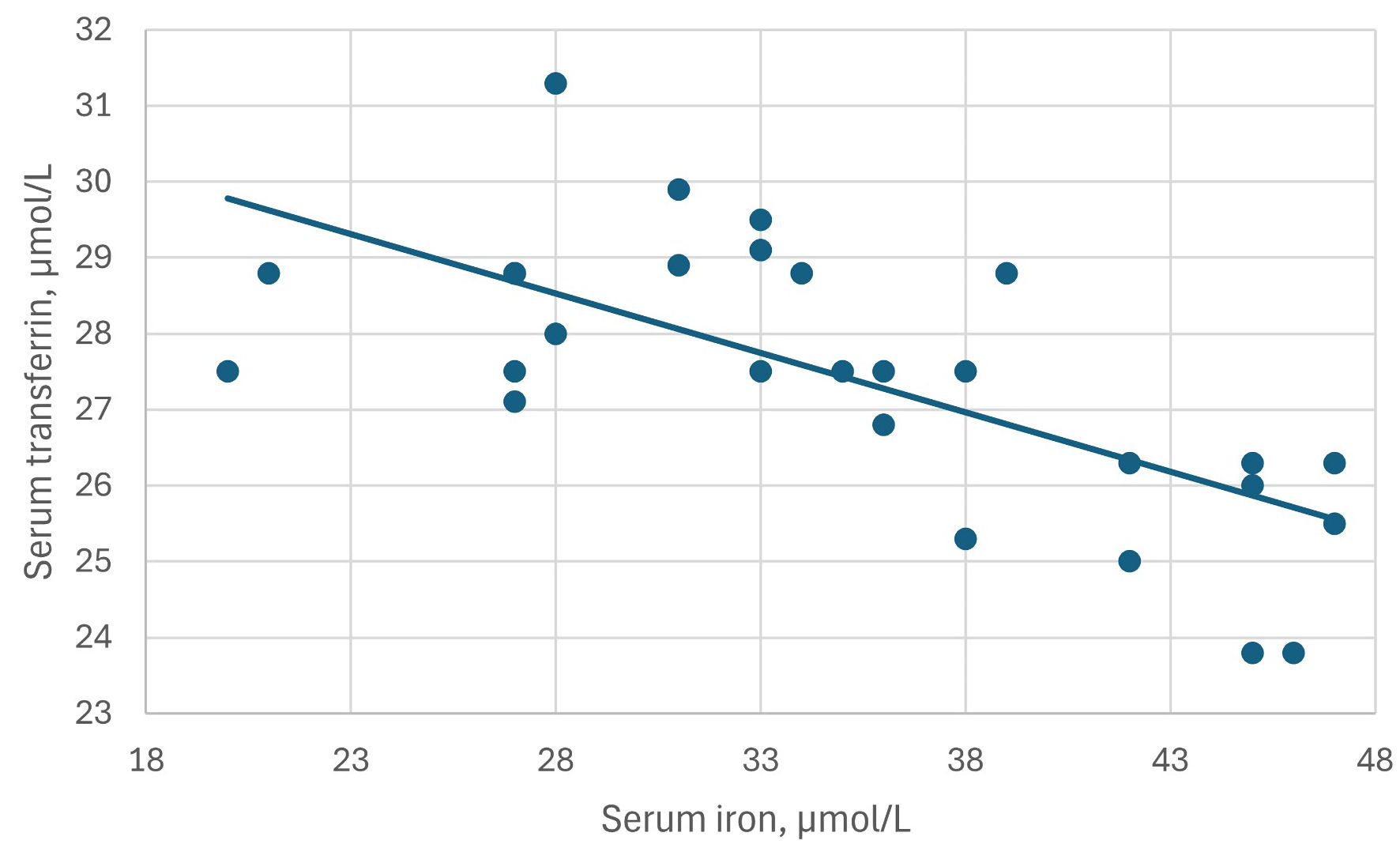
Results: The findings were comparable in both genders: 1) All but one patient had significantly lower transferrin levels than controls; 2) Serum iron and ferritin showed negative correlations with transferrin; 3) TSAT displayed strong negative correlations with transferrin; 4) Positive correlations were present between iron and ferritin, iron and TSAT, and ferritin and TSAT.
Conclusions: Hemochromatosis patients had lower transferrin levels than controls, contributing to a higher TSAT; the explanation for this remains unsolved. Patients displayed negative correlations between iron and ferritin vs. transferrin, as well as negative correlations between TSAT and transferrin, suggesting that high TSAT levels may accelerate the degradation of transferrin. In HFE-patients, transferrin metabolism is not clarified, and the potential influence of the C282Y/C282Y variant is unknown. Contrary to “normal” metabolism, which is primarily regulated by iron levels, many patients maintain low transferrin and high TSAT even after iron depletion. It would be valuable to explore whether this decrease in transferrin reflects reduced hepatic synthesis or increased degradation. There is a need for further investigation of this important dilemma in HFE-hemochromatosis.
Published
Issue
Section
License
Copyright (c) 2025 The authors

This work is licensed under a Creative Commons Attribution-NonCommercial 4.0 International License.