Mirtazapine in Treating Functional Dyspepsia: A Systematic Review and Meta-Analysis
DOI:
https://doi.org/10.14740/gr2157Keywords:
Mirtazapine, Functional dyspepsia, Disease of gut–brain interactionAbstract
Background: Functional dyspepsia (FD) is a disease of gut–brain interaction that impacts the quality of life of many patients with limited effective pharmacologic options. Neuromodulators are increasingly used for refractory symptoms, but the efficacy of mirtazapine remains poorly defined. Although multiple randomized trials have evaluated mirtazapine for FD, its effects have not previously been pooled in a focused meta-analysis. The objective of our study was to synthesize results of randomized controlled trials (RCTs) to clarify their efficacy in treating this condition.
Methods: A systematic search of PubMed, Embase, and Cochrane was performed to identify studies evaluating mirtazapine for FD from inception through November 2025 (PROSPERO ID: CRD420251237233). Ninety-three records were identified through databases and two through additional sources. After removal of duplicates and screening of abstracts, six full-text articles were assessed. Three were excluded for lacking an appropriate control group or failing to meet predefined eligibility criteria, while three RCTs were included (n = 154). Study-level effect sizes comparing mirtazapine and control groups at the end of treatment were calculated and pooled using a random-effects model. Heterogeneity was assessed using I2. Robustness was examined using leave-one-out analysis and influence diagnostics were visualized with a Baujat plot.
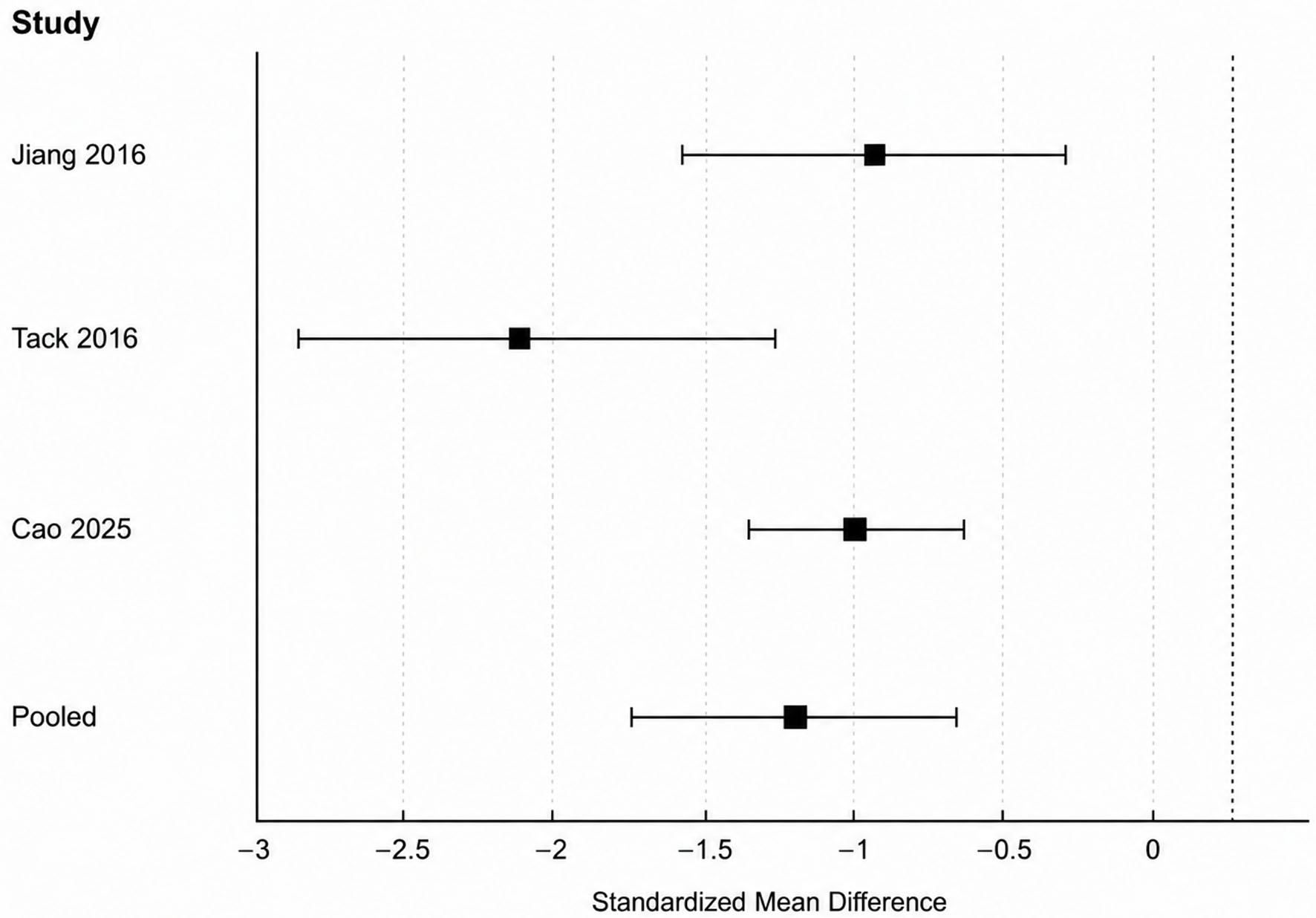
Results: Across three RCTs, mirtazapine was associated with significantly lower FD symptom severity compared with control treatment. The pooled effect size demonstrated a large benefit, with a standardized mean difference of −1.39 (95% confidence interval (CI): −2.00 to −0.78). Heterogeneity was substantial (I2 = 65.1%), which likely reflects variation in enrolled populations and dosing. Two trials focused on FD patients with associated weight loss, with one additionally requiring comorbid depressive symptoms. These studies also required washout of other gastrointestinal medications, while the third started continued background treatment. However, the overall pooled effect remained directionally consistent and clinically meaningful across all sensitivity tests, including leave-one-out analysis.
Conclusion: Mirtazapine was associated with significantly lower symptom severity compared with control treatment across available RCTs of FD. Increased heterogeneity may reflect differences in dosing, patient selection, and study design. Despite this, sensitivity analyses indicate that the observed effect is robust. Given the limited therapeutic options for refractory FD, mirtazapine may warrant consideration in select patient populations. However, larger and more methodologically uniform trials are needed to better define its role before considering clinical use.
Published
Issue
Section
License
Copyright (c) 2026 The authors

This work is licensed under a Creative Commons Attribution 4.0 International License.