

Hepatocellular Carcinoma–Related Mortality Trends Associated With Infective Versus Non-Infective Etiologies in ≥ 35 Years Age Group
DOI:
https://doi.org/10.14740/gr2129Keywords:
Hepatocellular carcinoma, Hepatitis B, Hepatitis C, Metabolic dysfunction–associated fatty liver disease, Alcohol-associated liver disease, CDC WonderAbstract
Background: Hepatocellular carcinoma (HCC) is a leading cause of cancer-related mortality worldwide, with evolving etiologic patterns. While viral hepatitis has historically been the predominant cause, non-infective etiologies such as alcohol-associated liver disease and metabolic dysfunction–associated fatty liver disease (MAFLD) are increasingly driving the disease burden. We evaluated long-term trends in HCC-related mortality in the United States by etiology and demographic subgroups.
Methods: Mortality data from 1999 to 2020 were obtained from the Centers for Disease Control and Prevention’s Wide-ranging ONline Data for Epidemiologic Research (CDC WONDER) database. HCC-related deaths were classified as infective (viral hepatitis–associated) or non-infective (liver disease and metabolic disorder) using International Statistical Classification of Diseases and Related Health Problems, 10th Revision (ICD-10) codes. Age-adjusted mortality rates (AAMRs) were extracted using CDC WONDER. Joinpoint regression was used to assess temporal trends and estimate annual percent change (APC) and average annual percent change (AAPC). Analyses were stratified by sex, age, race/ethnicity, geographic region, and urbanization.
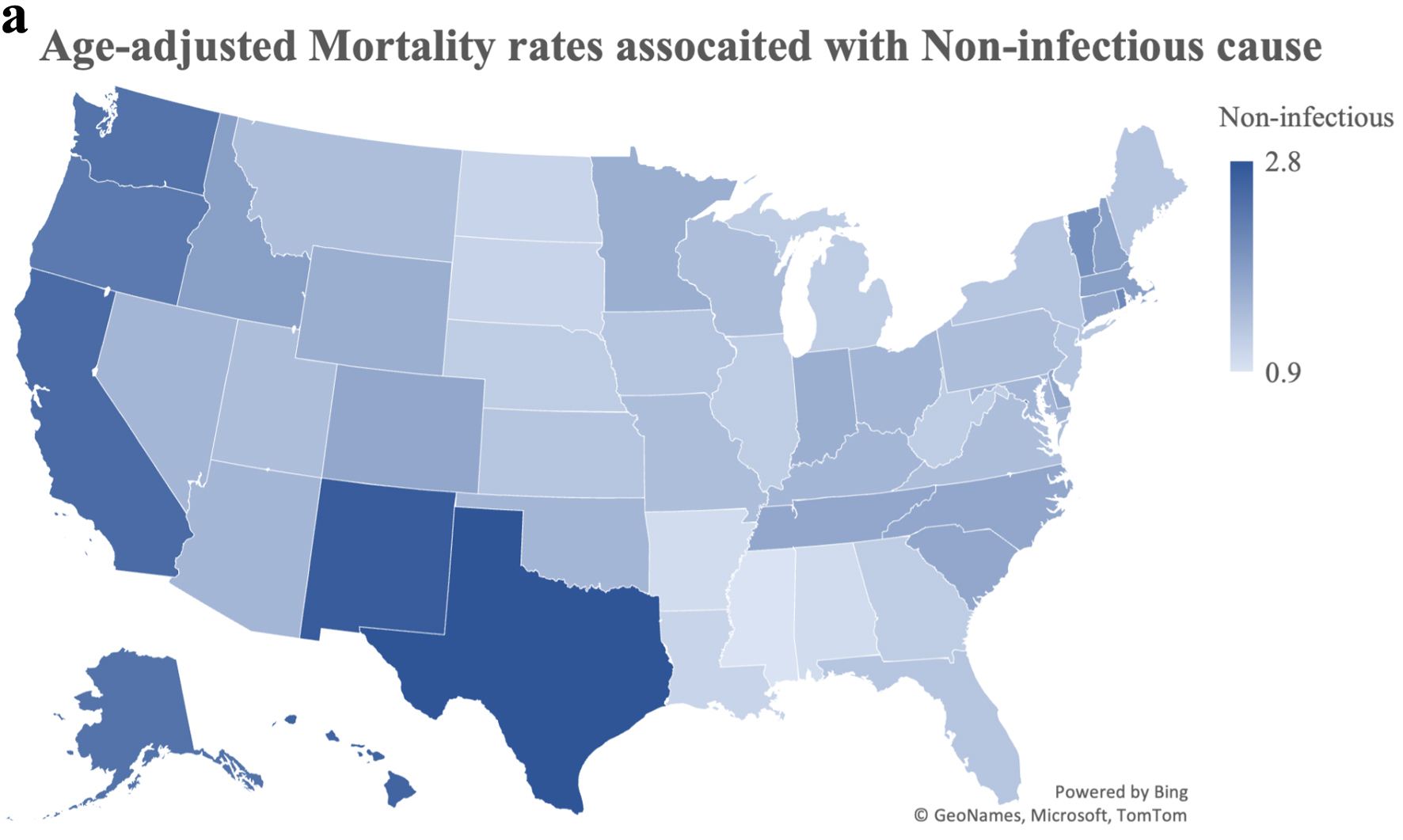
Results: Overall HCC-related mortality increased substantially from 1999 to 2020, driven predominantly by non-infective etiologies. Infective AAMRs rose from 1999 to 2013 followed by a significant decline, whereas non-infective AAMRs increased persistently from 1999 to 2020. Mortality rates were consistently higher in males than females. Infective mortality was highest among Asians, while non-infective mortality disproportionately affected Hispanic and American Indian populations. Western US states exhibited the highest mortality rates, and non-infective etiologies accounted for most deaths among individuals aged ≥ 65 years.
Conclusions: HCC-related mortality in the United States has increased over the past two decades, largely driven by non-infective etiologies. Targeted public health strategies addressing metabolic risk factors, alcohol use, and demographic disparities are urgently needed to curb this growing burden.
Published
Issue
Section
License
Copyright (c) 2026 The authors

This work is licensed under a Creative Commons Attribution 4.0 International License.