


Prescribe, Co-Manage, or Refer? A Practical Approach for Incretin-Based Obesity Therapy in Gastroenterology Practice
DOI:
https://doi.org/10.14740/gr2182Keywords:
Obesity, Incretin-based therapy, Gastroenterology, Advanced practice providers, Clinical pharmacists, Multidisciplinary careAbstract
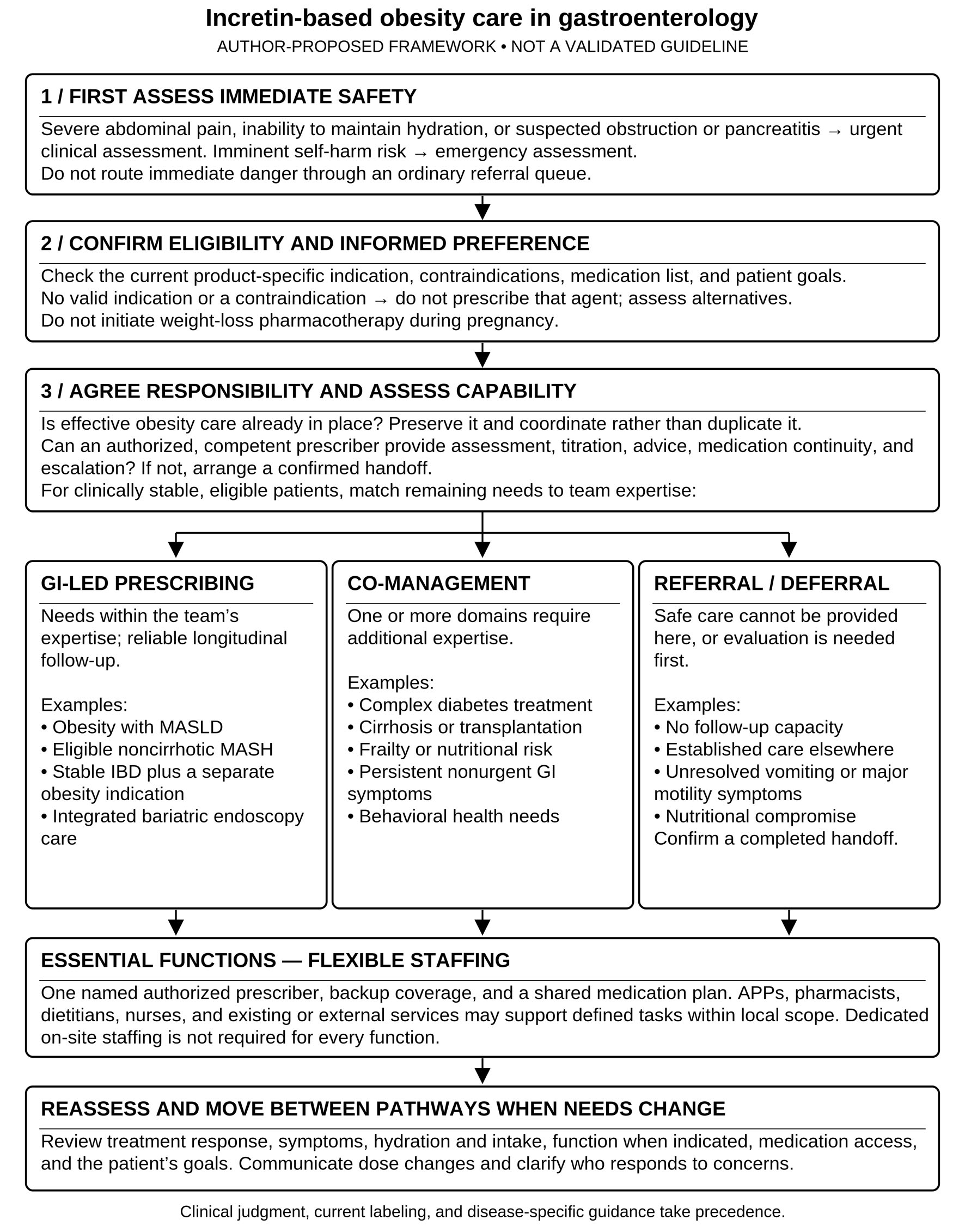
Incretin-based therapies create opportunities for gastroenterology (GI) services to treat obesity, but drug efficacy does not determine prescribing responsibility. We propose a practical care-allocation framework. A targeted narrative synthesis of adult clinical studies, professional guidance, labeling, and service evaluations informed the framework. A supplementary evidence map distinguishes treatment evidence from implementation extrapolation; selection was non-systematic. GI-led prescribing, co-management, and referral are organized around patient preference, indication, complexity, existing care, prescriber competence, and follow-up capacity. Product-specific precautions are separated from proposed routing criteria. Advanced practice providers and clinical pharmacists can provide defined functions within authorized scopes, although non-GI service evidence does not establish equivalent GI outcomes. Essential safety functions are distinguished from desirable staffing. Safeguards address nutrition, advanced liver disease, behavioral health, medication continuity, and fragmentation; candidate measures address response, persistence, safety, access, and patient experience. Prepared GI services may provide incretin therapy without making prescribing obligatory in every practice. The proposed prescriber-accountable framework should complement existing care and undergo prospective evaluation.
Published
Issue
Section
License
Copyright (c) 2026 The authors

This work is licensed under a Creative Commons Attribution 4.0 International License.