

Oil-Blotting Paper-Assisted Specimen Handling and Histological Yield in Endoscopic Ultrasound-Guided Tissue Acquisition for Pancreatic Cancer
DOI:
https://doi.org/10.14740/gr2192Keywords:
Pancreatic cancer, EUS-guided tissue acquisition, Comprehensive genomic profiling, Precision oncology, Oil-blotting paperAbstract
Background: Endoscopic ultrasound-guided tissue acquisition (EUS-TA) is the principal method for obtaining pancreatic cancer tissue for pathological diagnosis and comprehensive genomic profiling (CGP). However, inadequate tissue volume and specimen preservation may limit histological diagnosis and genomic testing. We evaluated the impact of oil-blotting paper-assisted specimen handling on histological yield and pathologist-based preassessed CGP eligibility in clinical practice.
Methods: This single-center retrospective study included 47 patients with pancreatic cancer who underwent EUS-TA between June 2022 and December 2023. The specimens were processed using either conventional direct formalin immersion (n = 23) or oil-blotting paper-assisted fixation (n = 24). The specimen containing the largest amount of tissue obtained from a single puncture was evaluated. Histological and cytological diagnostic yields, quantitative histological parameters, and the rate of pathologist-based preassessed CGP eligibility were compared between the groups.
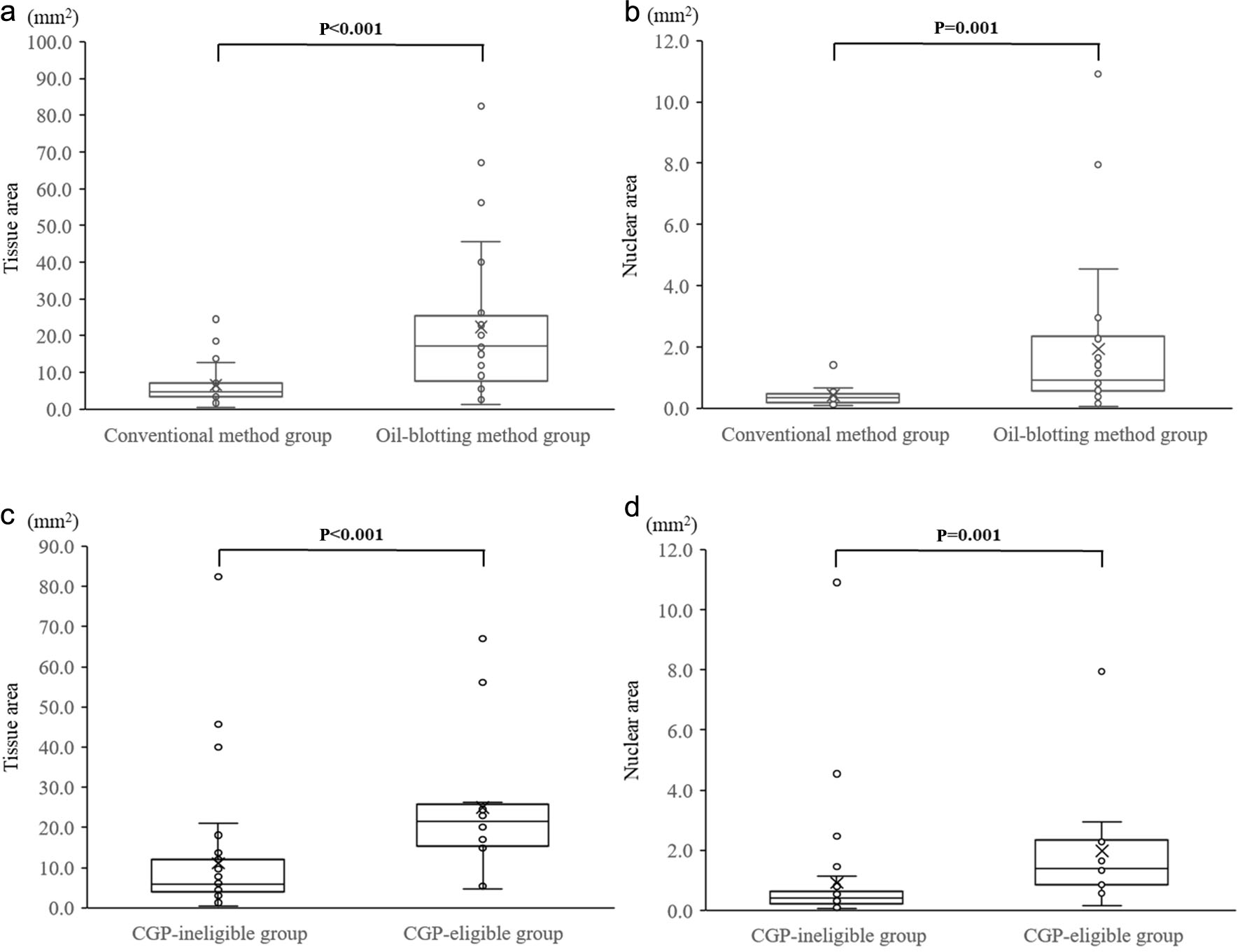
Results: The cytological diagnostic yield was comparable between the conventional and oil-blotting paper groups (87.0% vs. 95.8%, P = 0.348), whereas the histological diagnostic yield was significantly greater in the oil-blotting paper group (56.5% vs. 87.5%, P = 0.024). The tissue and nuclear areas were significantly larger in the oil-blotting paper group. The rate of preassessed CGP eligibility was also higher with oil-blotting paper-assisted handling (8.7% vs. 37.5%, P = 0.036). The tissue and nuclear areas were significantly larger in the specimens judged eligible than in those judged ineligibles for CGP.
Conclusions: Oil-blotting paper-assisted specimen handling was associated with increased histological diagnostic yield and a higher rate of pathologist-based preassessed CGP eligibility during EUS-TA for pancreatic cancer.
Published
Issue
Section
License
Copyright (c) 2026 The authors

This work is licensed under a Creative Commons Attribution 4.0 International License.