Real-World Patient-Reported Outcomes With Piromal in Gastroesophageal Reflux Symptoms
DOI:
https://doi.org/10.14740/gr2160Keywords:
Gastroesophageal reflux, Patient-reported outcomes, Medical device, Mucosal protectantAbstract
Background: Gastroesophageal reflux and acid-related symptoms substantially impair quality of life. Proton pump inhibitors (PPIs) remain the first-line therapy, but concerns regarding their long-term use and the persistence of symptoms in a significant proportion of patients highlight the need for complementary mucosal protection strategies. Real-world patient-reported outcomes (PROs) for barrier-forming medical devices (MDs) in individuals with reflux symptoms remain limited.
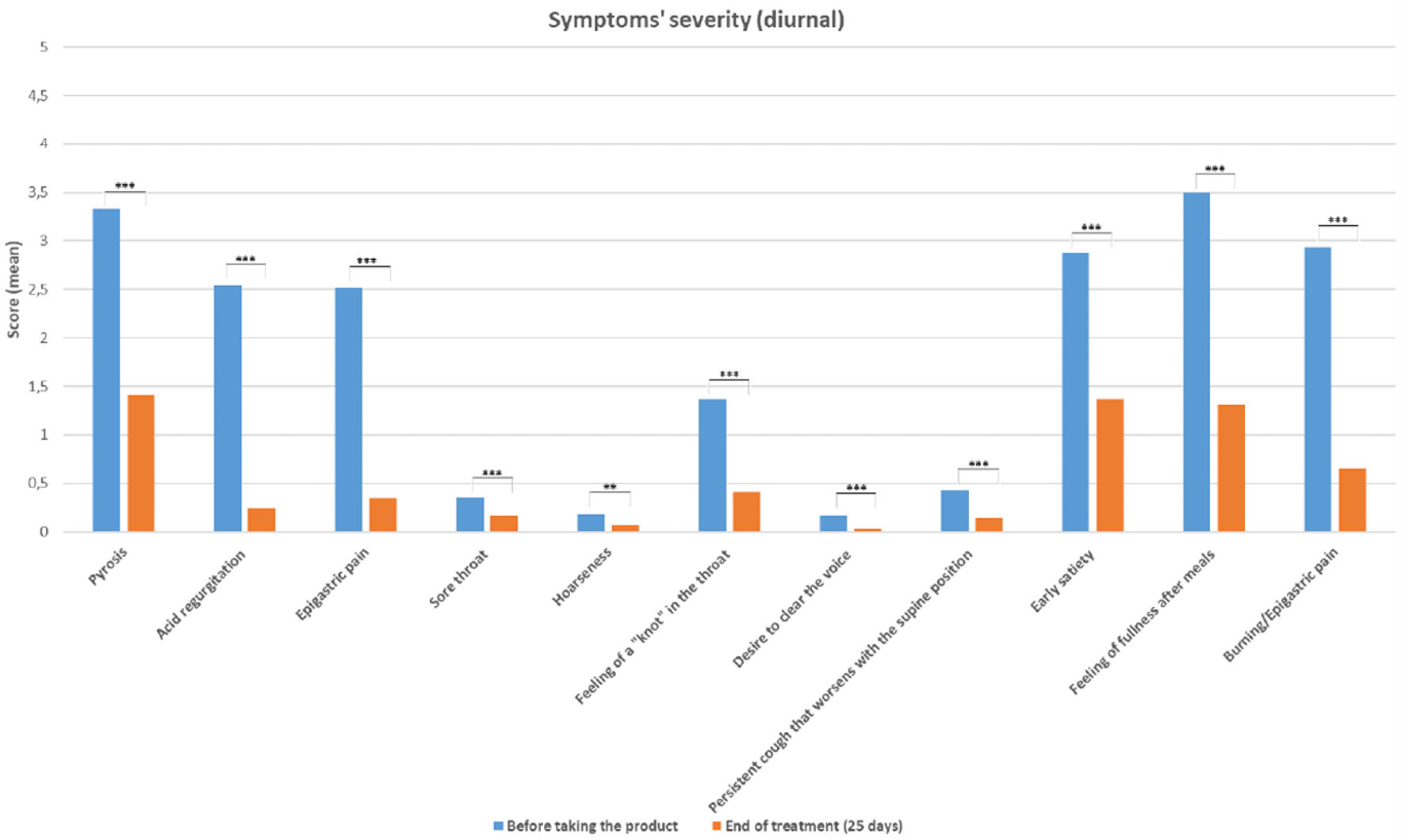
Methods: An anonymous questionnaire was administered to 155 adults presenting with reflux-related symptoms. Assessments were conducted at baseline and after 7, 15, and 25 days of using the MD Piromal®. Symptom domains included typical reflux manifestations (heartburn, regurgitation, epigastric pain), atypical/extra-esophageal symptoms (sore throat, hoarseness, globus, throat clearing, supine cough), and dyspeptic symptoms (early satiety, postprandial fullness), rated using Likert-type severity (0–5) and frequency (0–4) scales. Nocturnal disturbances and quality-of-life impact (Verbal Numeric Rating Scale (VNRS) 0–10 for daily and social interference) were also evaluated. Changes over time were analyzed using Wilcoxon signed-rank tests. Exploratory comparisons between the MD alone (n = 133) and MD + PPI (n = 22) were performed using Wilcoxon rank-sum tests.
Results: Participants had a mean age of 53.2 ± 16.7 years; 55.5% were female, and 85.8% reported predominantly typical reflux symptoms. All diurnal and nocturnal symptoms showed significant reductions at 25 days (severity/frequency P < 0.0001, except hoarseness P = 0.004), with progressive improvements observed at 7 and 15 days. Quality-of-life interference decreased markedly (daily: 7.90 ± 0.87 to 2.85 ± 1.16; social: 8.86 ± 0.89 to 2.74 ± 1.01; both P < 0.0001). Overall satisfaction was high, with 90.4% reporting outcomes exceeding expectations. The most frequently reported adverse events were nausea (23.9%) and flatulence (14.8%).
Conclusions: In routine clinical practice, the use of MD was associated with substantial improvements in patient-reported upper gastrointestinal symptoms and quality-of-life measures over 25 days. Exploratory subgroup findings did not show a consistent advantage of adding PPIs across most symptom domains, suggesting that meaningful symptom relief was already observed with the MD alone in this survey. However, these findings should be interpreted as hypothesis-generating. Further controlled studies are needed to clarify the role of the MD within integrated management strategies for reflux-related symptoms.
Published
Issue
Section
License
Copyright (c) 2026 The authors

This work is licensed under a Creative Commons Attribution 4.0 International License.