

Understanding the Relationship Between Sarcopenia and Perioperative Outcomes Among Patients Undergoing Transjugular Intrahepatic Portosystemic Shunt: A Nationwide Analysis (2016–2022)
DOI:
https://doi.org/10.14740/gr2162Keywords:
Transjugular intrahepatic portosystemic shunt, Sarcopenia, Hepatic encephalopathy, CirrhosisAbstract
Background: Sarcopenia which is characterized by the loss of muscle mass, strength, and function is a common complication in patients with chronic liver disease and contributes to poor clinical outcomes. While transjugular intrahepatic portosystemic shunt (TIPS) has shown some improvement in muscle mass and body mass index in patients with sarcopenia, the impact of sarcopenia on post-TIPS morbidity and mortality has not been examined at a national level. This study aims to evaluate the effect of sarcopenia on outcomes in patients undergoing TIPS, to enhance management and improve clinical outcomes.
Methods: We analyzed data from National Inpatient Database (NIS) database from 2016 to 2022, using ICD-10 codes to identify adult patients who underwent TIPS. Patients were classified into two groups, those with and without sarcopenia, based on ICD-10 sarcopenia codes. We compared the prevalence of perioperative adverse outcomes between the groups and used multivariate logistic and linear regression to assess the impact of sarcopenia on these outcomes.
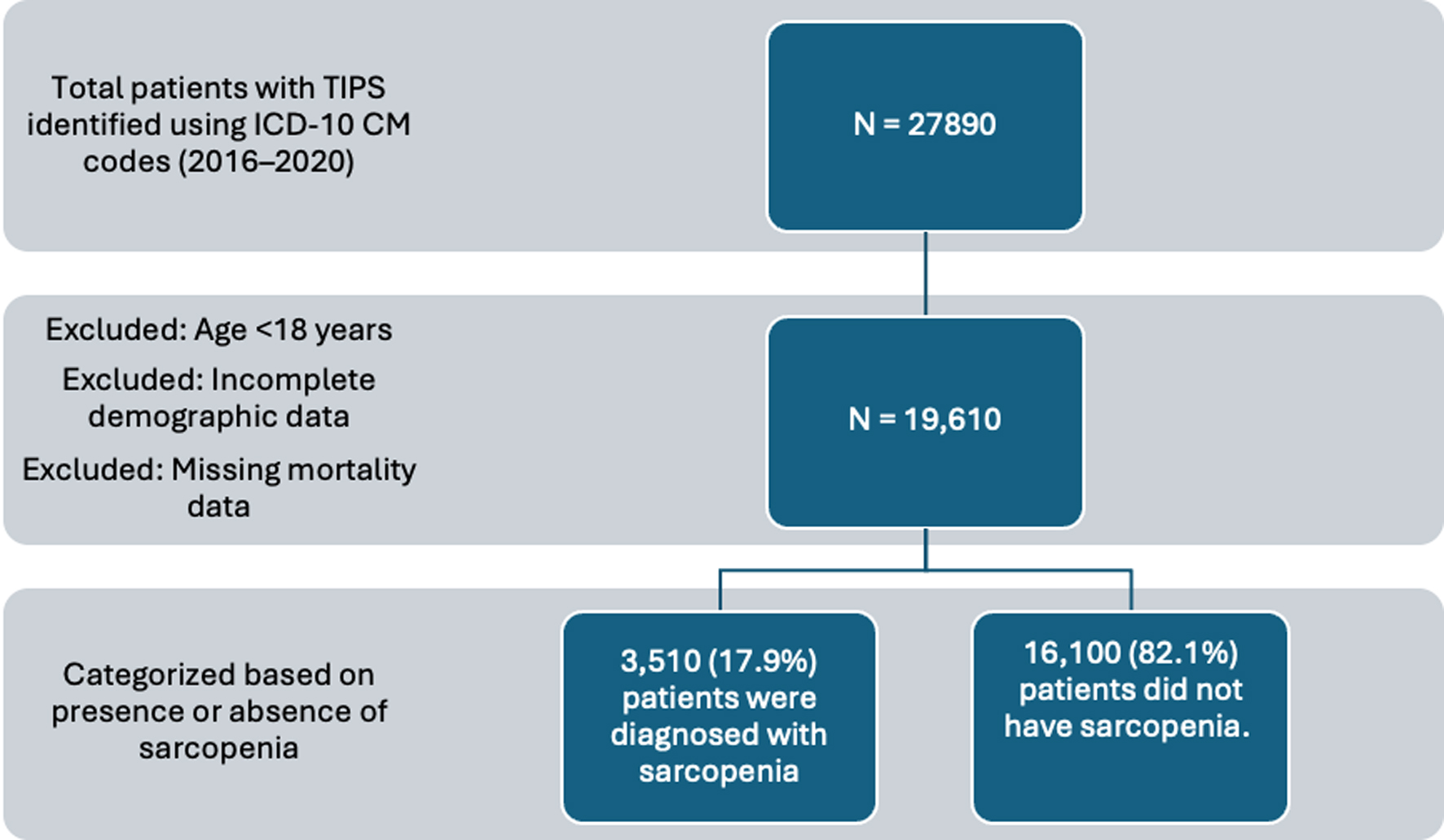
Results: A total of 19,610 patients who underwent TIPS were included in the study, with 3,510 (17.9%) diagnosed with sarcopenia. Patients with sarcopenia had a higher incidence of in-hospital mortality (11.8% vs. 7.7%, P < 0.001) and a greater overall complication rate (56.4% vs. 38.8%, P < 0.001), including gastrointestinal (10.3% vs. 3.6%, P < 0.001), cardiovascular (36.9% vs. 27.2%, P < 0.001), pulmonary (23.5% vs. 12.2%, P < 0.001), and infectious (14.1% vs. 5.5%, P < 0.001) complications. Patients with sarcopenia also had a significantly longer mean length of stay (14.7 vs. 7.0 days) and higher mean total charges ($280,818 vs. $159,272).
Conclusion: This study demonstrates that patients with sarcopenia have worse outcomes and increased resource utilization in patients undergoing TIPS. Early identification and assessment of sarcopenia are crucial for identifying at-risk patients and guiding targeted interventions to improve recovery and reduce complications.
Published
Issue
Section
License
Copyright (c) 2026 The authors

This work is licensed under a Creative Commons Attribution 4.0 International License.