

Systems Biology and Machine Learning Reveal Oxidative Stress Hubs and Therapeutic Targets in Diarrhea-Predominant Irritable Bowel Syndrome
DOI:
https://doi.org/10.14740/gr2172Keywords:
Oxidative stress, Machine-learning algorithm, Hub gene, Immune infiltrationAbstract
Background: Diarrhea-predominant irritable bowel syndrome (IBS-D) is a common functional gastrointestinal disorder, and accumulating evidence suggests that oxidative stress is involved in its pathophysiology. This study explored oxidative stress–related mechanisms in IBS-D and screened potential diagnostic biomarkers and therapeutic targets through integrative bioinformatics analysis.
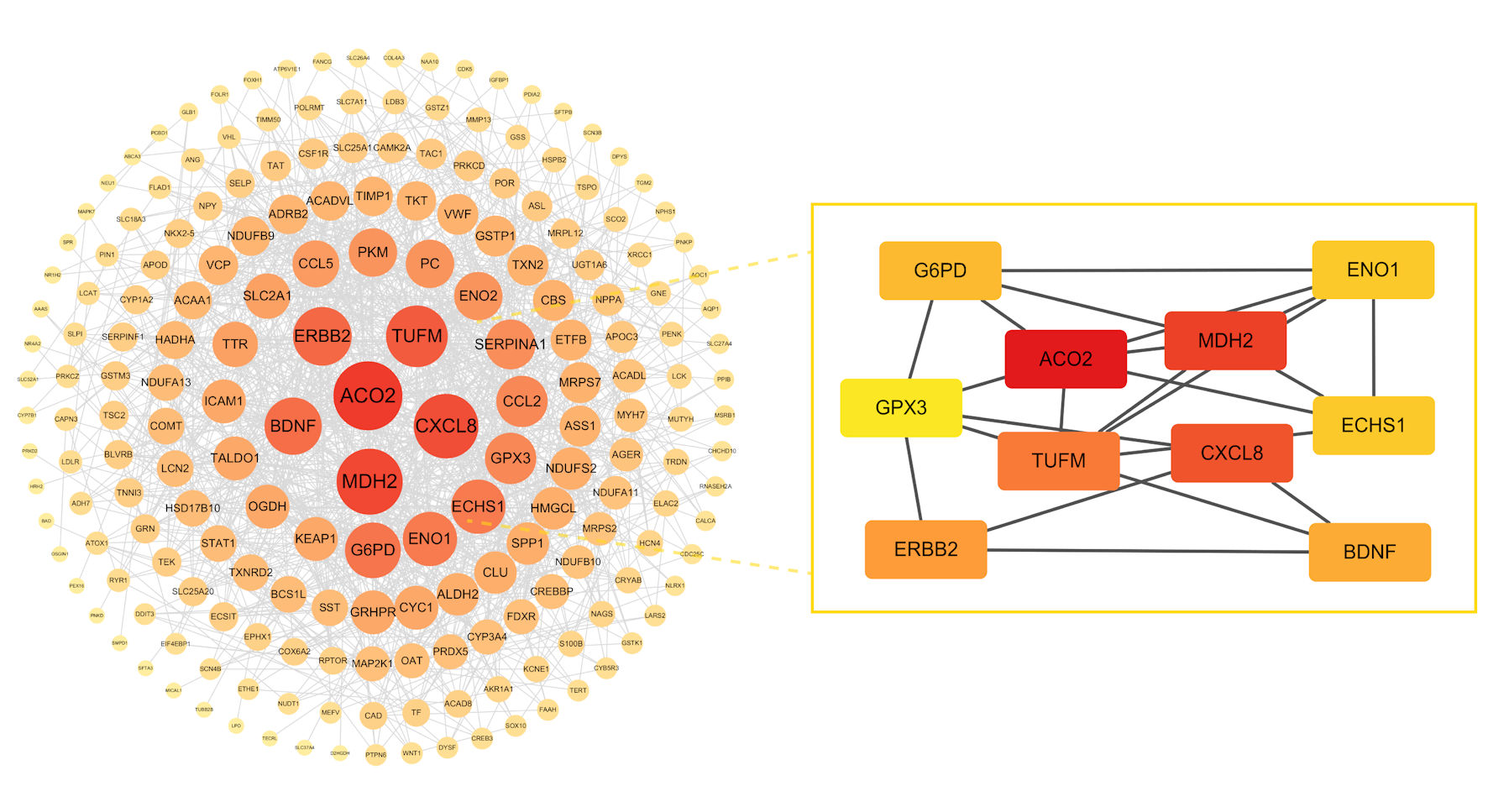
Methods: Transcriptomic datasets from the National Center for Biotechnology Information (NCBI)-Gene Expression Omnibus (GEO) database were analyzed using integrative bioinformatics approaches to identify oxidative stress–related core genes in IBS-D. Eight potential biomarkers were identified and evaluated for diagnostic performance via receiver operating characteristic (ROC) analysis. Among these, the key gene ACO2 was further investigated using Kyoto Encyclopedia of Genes and Genomes (KEGG)-based gene set enrichment analysis (GSEA) and immune correlation analyses to explore the association between ACO2 expression and disease-related biological processes. In addition, the eight target proteins were used for reverse screening of potentially therapeutic traditional Chinese medicines and their active compounds.
Results: In total, 206 oxidative stress–related genes were identified, with predominant enrichment observed in mitochondrial energy metabolism and cellular stress–response pathways, including oxidative phosphorylation and hypoxia-inducible factor 1 (HIF-1) signaling. The eight potential diagnostic biomarkers demonstrated robust diagnostic performance (area under the ROC curve (AUC) = 0.896) in distinguishing IBS-D patients from healthy controls. Notably, ACO2 emerged as a key hub gene associated with distinct metabolic and immune-related pathway enrichment profiles. In parallel, a competing endogenous RNA (ceRNA) regulatory network centered on ACO2 was established, providing additional insight into its potential post-transcriptional regulatory mechanisms. Furthermore, reverse screening based on the eight target proteins identified luteolin, phillygenin, quercetin, and wogonin as candidate active compounds from Forsythia suspensa. Molecular docking further indicated favorable binding affinity between these compounds and the biomarker proteins.
Conclusions: This integrative bioinformatics study identifies oxidative stress–related molecular signatures and potential biomarkers in IBS-D. Reverse screening and molecular docking further suggest that luteolin, phillygenin, quercetin, and wogonin from Forsythia suspensa may represent potential candidate compounds targeting these biomarkers. These findings provide a theoretical basis for further experimental validation.
Published
Issue
Section
License
Copyright (c) 2026 The authors

This work is licensed under a Creative Commons Attribution 4.0 International License.