

Pathological Complete Response in Stage IV Human Epidermal Growth Factor Receptor 2-Positive Gastric Cancer With Synchronous Liver Metastases After Conversion Therapy With SOX Plus Cadonilimab and Disitamab Vedotin
DOI:
https://doi.org/10.14740/gr2193Keywords:
Gastric cancer, Pathological complete response, Systemic therapy, Cadonilimab, Conversion surgeryAbstract
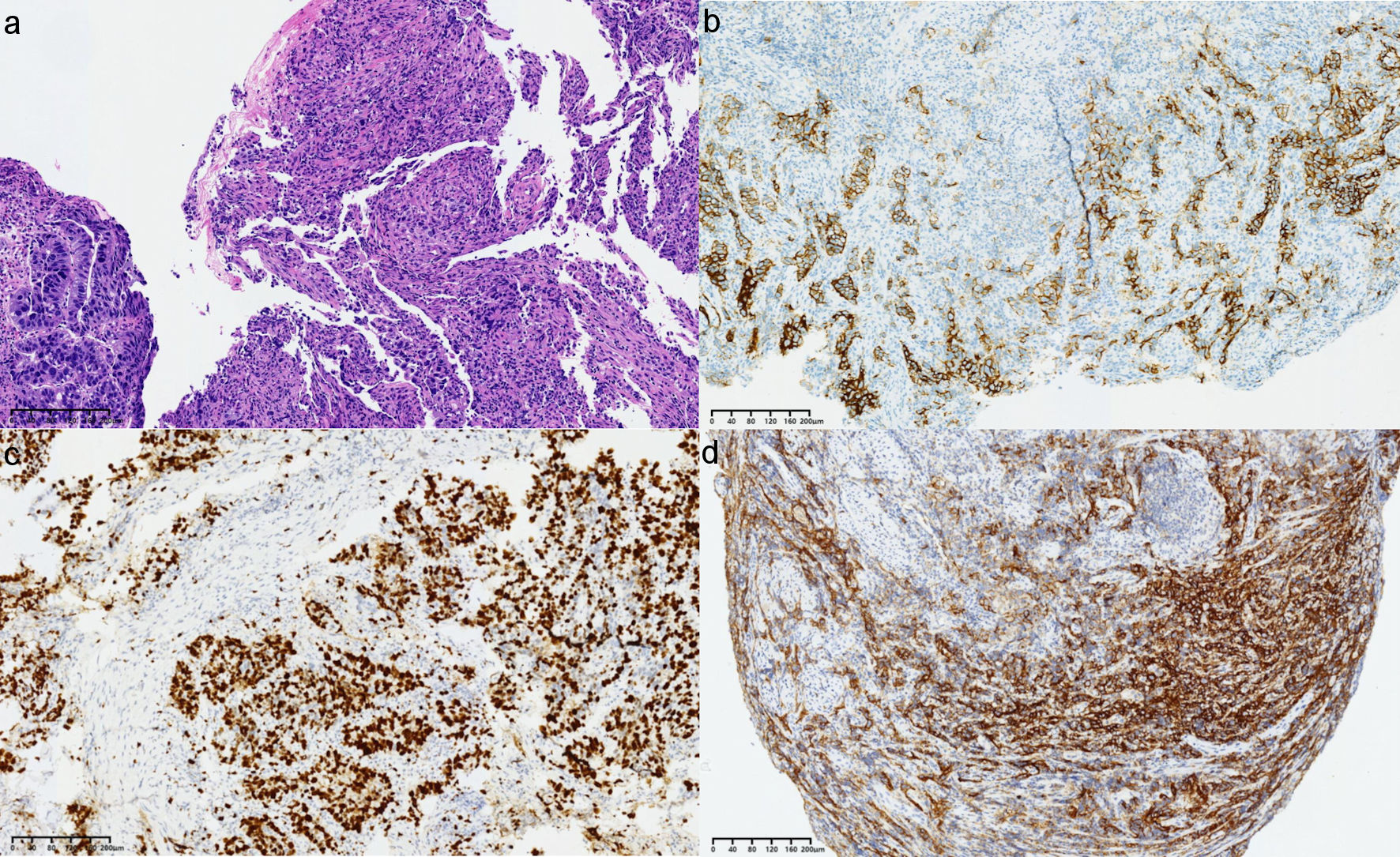
Initially unresectable stage IV gastric cancer is usually treated with systemic therapy. Conversion surgery may be considered in selected patients after a substantial response. Pathological complete response (pCR) in the resected gastric primary and lymph nodes after such treatment is uncommon. We report the case of a 51-year-old male diagnosed with gastric adenocarcinoma (cT3NxM1, clinical stage IV) with synchronous liver metastases. The tumor was human epidermal growth factor receptor 2 (HER2)-positive (3+), proficient in mismatch repair (pMMR), with a programmed death-ligand 1 (PD-L1) combined positive score (CPS) of 30. After three cycles of oxaliplatin + S-1 (SOX) combined with cadonilimab, and disitamab vedotin, computed tomography imaging demonstrated marked tumor regression with nearly complete resolution of liver metastases. The patient underwent radical distal gastrectomy with D2 lymphadenectomy. Postoperative pathology revealed tumor regression grade (TRG) 0—a complete pathological response—with all 33 lymph nodes negative for carcinoma and all surgical resection margins clear (R0). Intraoperative ultrasound confirmed no residual liver metastases. This case illustrates complete pathological regression in the examined gastric and nodal specimens after SOX, cadonilimab, and disitamab vedotin, the patient achieved a pathological complete remission after conversion surgery, accompanied by significant radiological regression of liver lesions. However, it also raises a series of questions for further consideration, such as whether conversion surgery can provide additional benefits after achieving deep tumor regression, the safety of combination therapy, and how to select appropriate candidates for surgery.
Published
Issue
Section
License
Copyright (c) 2026 The authors

This work is licensed under a Creative Commons Attribution 4.0 International License.